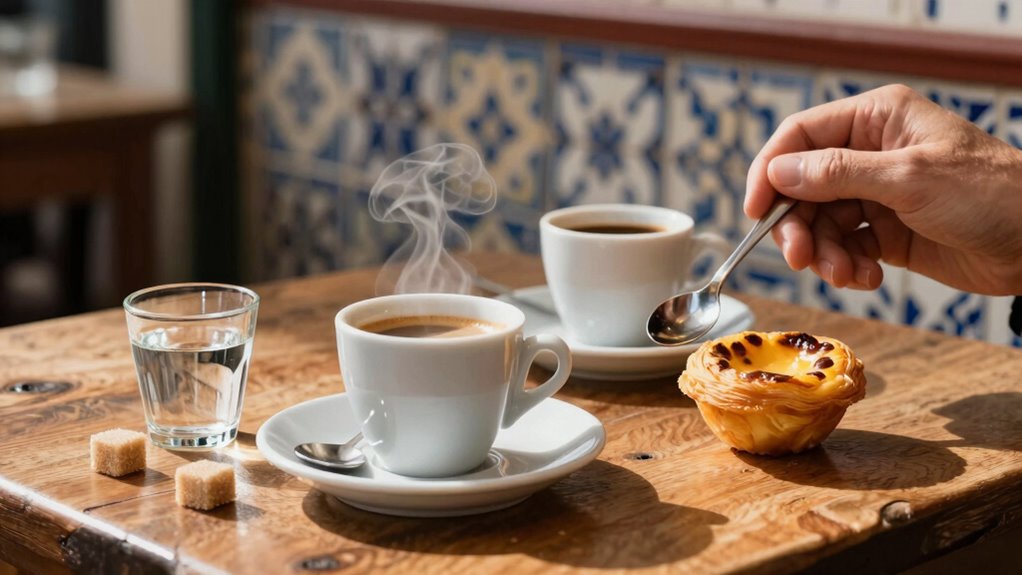

In Portugal, coffee at home reflects a mix of tradition and modern habits. You’ll start your day with a quick espresso or a milky galão, often enjoyed in the morning. Many use traditional methods like moka pots, but then try new techniques like pour-over or cold brew. Coffee moments are social, often shared with family or friends, and marked by specific varieties like bica or cheirinho. Discover how these customs shape everyday life and social bonds.
Key Takeaways
- Portuguese locals often prepare traditional coffees like bica and galão at home, emulating café-style routines.
- Home brewing methods include moka pots, filter machines, AeroPress, and pour-over to customize flavor and strength.
- Daily rituals, such as morning galão or post-lunch espresso, are replicated at home for routine and social connection.
- Careful maintenance of equipment and specific brewing techniques preserve authentic flavors and cultural heritage.
- Specialty and innovative methods like cold brew or third-wave brews are increasingly popular for personalized coffee experiences.
Top picks for "portugal culture home"
Open Amazon search results for this keyword.
As an affiliate, we earn on qualifying purchases.
The Daily Rituals of Portuguese Coffee Drinkers
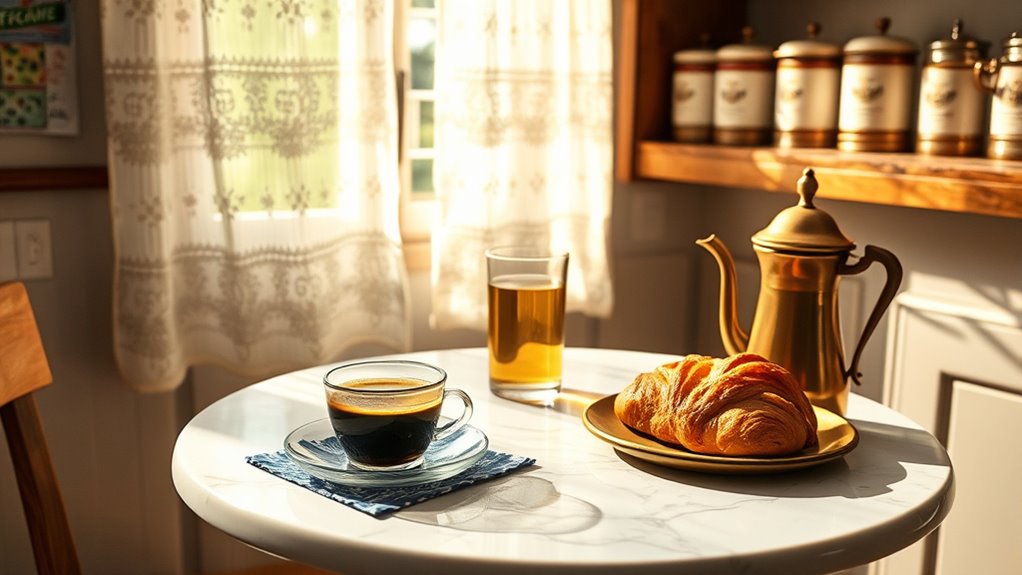
Portuguese daily coffee rituals are deeply ingrained in everyday life, shaping how people start and break up their day. You likely begin your morning with a bica or galão, often at a neighborhood café, as a way to kick-start your routine. Mid-morning, you might enjoy another small espresso, keeping you energized for work or errands. After lunch, a quick shot of espresso helps you reset. In the late afternoon, you might sit on a terrace, savoring a traditional brew while watching the world go by. These moments aren’t just about caffeine—they’re social rituals that connect you with friends, family, and your community. Whether at home or at a café, coffee acts as a daily anchor, punctuating your day with routine and warmth. Many of these practices are supported by the availability of a wide range of precious metals, which are often discussed in financial contexts like Gold IRAs. Additionally, the tradition of quality coffee beans ensures a rich and authentic flavor that enhances these daily experiences, reflecting the importance of authenticity in Portuguese coffee culture. The use of unique textures in coffee presentation can also elevate these moments, adding to their cultural significance.
Traditional Coffee Varieties and Their Roles
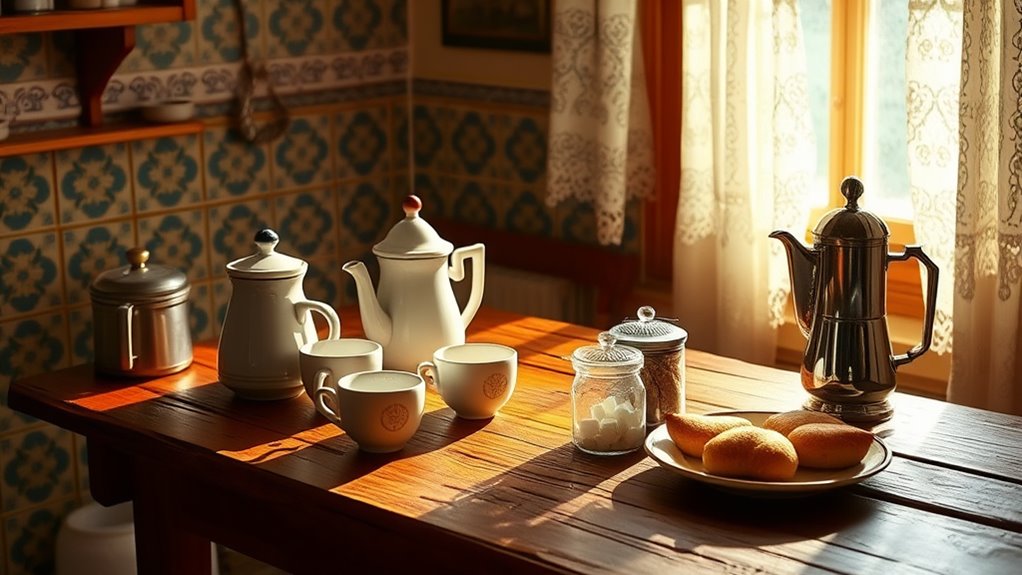
You probably recognize the iconic bica as Portugal’s go-to espresso, prized for its bold flavor and cultural importance. Alongside it, drinks like galão and cheirinho reflect the country’s diverse coffee traditions and social rituals. Exploring these varieties reveals how deeply coffee is woven into Portugal’s daily life and identity. Additionally, many local cafes adhere to traditional coffee preparation methods, highlighting the cultural significance of these beverages. The use of specific brewing techniques, such as coffee brewing methods, helps preserve the authentic flavors beloved by locals. Moreover, the cultural rituals surrounding coffee drinking demonstrate how these traditions foster community and social connection. Understanding these interior design basics, such as mood boards and narratives, can also help recreate the warm, inviting atmosphere found in Portugal’s coffee culture at home.
Classic Coffee Types
Traditional Portuguese coffee types reflect a rich cultural heritage rooted in simple yet distinctive brewing methods. When you enjoy these, you experience more than just a drink—you connect with centuries of tradition. The classic varieties include:
- Bica: A small, intense espresso made from a robust Arabica-Robusta blend, often your go-to morning shot.
- Galão: A larger, milky coffee perfect for starting the day with a hint of sweetness.
- Cheirinho: A tiny, aromatic late-night sip to relax and unwind.
- Cafe d’avó: A comforting mix of coffee and chicory, brewed slowly for a lower caffeine option, often enjoyed with pastries.
These types define daily routines, social interactions, and timeless rituals across Portugal’s café scene. Traditional coffee types embody the cultural significance of coffee, shaping social behaviors and daily life. Many of these drinks are prepared using traditional methods that have been passed down through generations, highlighting the importance of cultural heritage in Portuguese coffee culture. Additionally, the way coffee is enjoyed can be linked to local customs, which often involve specific preparation techniques that preserve the authenticity of each style. Proper maintenance of coffee equipment, such as using the right oils and ensuring effective filtration, can also affect the quality of these traditional brews, emphasizing the importance of equipment care in preserving authentic flavors. Embracing these methods can deepen your appreciation for the cultural heritage and enhance your overall coffee experience.
Cultural Coffee Significance
The unique coffee varieties across Portugal do more than satisfy daily caffeine needs—they embody centuries of cultural identity and social customs. Each type, from the small, intense bica to the milky galão, plays a specific role in daily routines and social interactions. Bica isn’t just a quick shot of caffeine; it’s a symbol of tradition, often enjoyed at neighborhood cafes as a social ritual. Galão, with its milk, marks morning leisure, while the cheirinho signals winding down late at night. These varieties reflect Portugal’s emphasis on community, shared moments, and daily rhythm. Coffee isn’t just a beverage here—it’s woven into lives, fostering connection and maintaining cultural continuity. Understanding these varieties helps you appreciate how deeply coffee influences Portuguese social and cultural fabric. Additionally, the ritual of enjoying coffee in Portugal often involves specific cultural symbols, highlighting the significance of coffee beyond mere consumption. Recognizing the traditional coffee varieties offers insight into Portugal’s unique social fabric and the role coffee plays in reinforcing communal bonds. This deep-rooted tradition is supported by local coffee customs, which emphasize the importance of shared experiences over individual consumption.
The Social Significance of Coffee in Portugal
Coffee holds a central place in Portuguese social life, serving as more than just a morning pick-me-up. It’s a key ingredient in everyday interactions, fostering connections and conversations. When you visit a neighborhood café, you’ll see locals gathering for quick chats or extended lingering sessions. Coffee acts as a social glue, bringing people together across generations. You might notice:
- The tradition of “Vamos tomar um café,” inviting friends or colleagues for a quick meet-up.
- Cafés functioning as communal living rooms, where neighbors exchange news.
- The role of historic cafés like Martinho da Arcada as cultural hubs.
- Coffee breaks providing essential pauses for social bonding throughout the day.
- The importance of attention to detail in maintaining high-quality coffee experiences that enhance social interactions. Maintaining the proper spresso extraction process ensures each cup fosters a welcoming environment. Additionally, proper equipment maintenance plays a vital role in preserving the authenticity and flavor of Portuguese coffee traditions. Good grind size and consistent brewing techniques are also crucial for delivering the ideal coffee experience that encourages social engagement. This social significance makes coffee more than a beverage—it’s an integral part of Portugal’s community fabric.
Home Brewing: From Classic to Modern Methods
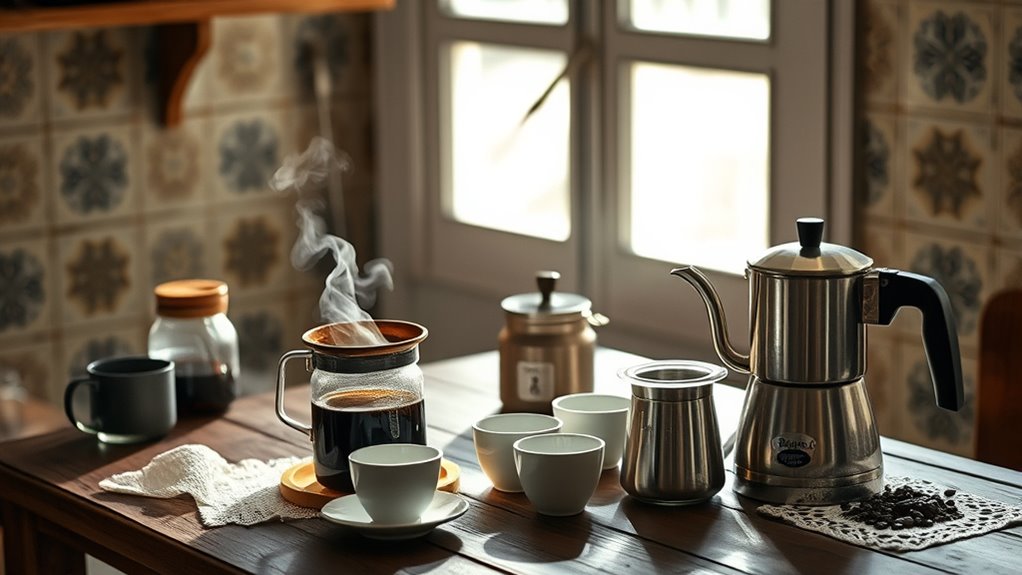
As home brewing evolves, many Portuguese enthusiasts are exploring a mix of classic methods and innovative techniques to enjoy their daily coffee. Traditional options like stovetop Bialetti moka pots and filter machines remain popular, offering rich, bold flavors. Meanwhile, modern methods such as AeroPress, pour-over, and cold brew bring new nuances to your routine. These techniques allow you to customize strength, temperature, and extraction, elevating your experience. Whether you prefer the quick robustness of an espresso or the smoothness of a cold brew, there’s a method for every taste. Here’s a quick overview:
| Method | Equipment | Coffee Style |
|---|---|---|
| Espresso | Espresso machine | Strong, concentrated |
| AeroPress | AeroPress device | Versatile, smooth |
| Pour-over | Dripper, kettle | Light, nuanced |
| French Press | Beaker, plunger | Full-bodied, rich |
| Cold Brew | Large jar, filter | Mild, invigorating |
Additionally, grind size plays a crucial role in extracting the best flavor from each method, allowing enthusiasts to refine their techniques further.
The Influence of Historical Coffee Trends
You can see how Portugal’s coffee culture reflects its colonial past, shaping the types of beans and brewing styles you enjoy today. The evolution of coffee machines, from early hand-pulled espresso devices to modern home brewers, has transformed how you prepare coffee at home. Recently, the rise of specialty brews like single-origin and pour-over highlights a shift toward appreciating unique flavors rooted in historical trends. Additionally, the influence of coffee machine technology has played a key role in making high-quality coffee more accessible for home enthusiasts. This technological advancement has also facilitated the customization of brewing methods, allowing individuals to tailor their coffee experience to personal preferences. As a result, home brewing innovations continue to empower coffee lovers to experiment and refine their craft, reflecting a broader trend towards personalized coffee experiences driven by technological progress. Furthermore, the increasing availability of specialty coffee equipment at home has encouraged a more refined appreciation of coffee’s diverse profiles.
Coffee’s Colonial Roots
The colonial history of Portugal deeply shaped its coffee culture, with the country playing a pivotal role in spreading coffee cultivation across its empire. During the 18th century, Portugal introduced coffee to Brazil, establishing its dominance in global coffee production. This legacy influenced Portugal’s own coffee traditions, blending local tastes with colonial legacies. You can see this history in iconic practices, such as brewing strong, concentrated espresso-like coffees. Additionally, colonial trade routes brought diverse coffee beans, enriching local flavors. The influence also extended to social customs, where coffee became a symbol of connection and sophistication. Notably, Portugal’s colonial trade routes facilitated the exchange of diverse coffee varieties, further shaping the nation’s coffee identity.
Evolution of Coffee Machines
Historical coffee trends have considerably shaped the evolution of coffee machines in Portugal, driving innovations that reflect changing tastes and brewing styles. You’ve seen how early machines aimed to replicate café-quality espresso at home, inspired by the popular bica. In the early 1900s, the introduction of espresso machines revolutionized home brewing, making the thick, potent shot accessible beyond cafés. As preferences shifted toward convenience, automatic espresso makers gained popularity, allowing quick, consistent brews. More recently, the third-wave movement sparked a surge in specialty coffee equipment like pour-over devices and AeroPresses, emphasizing precision and flavor. You now find a range of devices that cater to both traditional tastes and modern experimentation, embodying Portugal’s rich coffee history while embracing innovation.
Rise of Specialty Brews
As coffee tastes have evolved, Portugal’s embrace of specialty brews has gained momentum, blending tradition with innovation. You now see more cafes offering unique brewing methods and single-origin beans, reflecting a third-wave coffee movement. This shift appeals to younger drinkers who crave complex flavors and artisanal quality. You might notice:
- Pour-over and AeroPress methods gaining popularity in specialty shops.
- Focus on ethically sourced, single-origin beans for richer, distinct profiles.
- Creative drinks like caramel lattes and cold brews becoming trendy.
- New boutique coffee shops opening post-2019, emphasizing craftsmanship and innovation.
This movement is reshaping Portugal’s coffee scene, allowing you to explore a broader spectrum of flavors while still appreciating the country’s deep-rooted coffee traditions. It’s a perfect blend of history and modernity on your daily coffee journey.
The Rise of Specialty Coffee and New Tastes
Recently, Portugal’s coffee scene has shifted toward specialty brews, reflecting a growing desire for higher quality and unique flavors. You’re now exploring single-origin beans, pour-over methods, and AeroPress brewing at home, elevating your daily routine. This trend isn’t just about caffeine; it’s about appreciating nuanced tastes and craftsmanship. You might notice local shops offering beans from specific regions, highlighting distinct profiles like fruity, floral, or earthy notes. Younger generations are especially drawn to these new tastes, blending tradition with innovation. Coffee shops and roasters emphasize transparency about sourcing and roasting techniques, encouraging you to taste the difference. As your palate develops, you seek richer, more complex experiences, transforming your at-home coffee rituals into moments of discovery and appreciation.
Coffee Consumption During Different Times of Day
Throughout the day, Portuguese coffee habits shift to suit different moments and needs. In the morning, you start with a bica or galão at a café, energizing your day. Mid-morning, a quick espresso keeps you going. After lunch, many enjoy a strong shot of espresso to aid digestion and boost alertness. Late afternoon often calls for a traditional brew on a terrace, perfect for socializing or relaxing. Your daily routine might include:
- Morning: Bica or galão with breakfast
- Mid-morning: Quick espresso break
- Post-lunch: Espresso to refresh
- Late afternoon: Leisurely coffee on the terrace
These moments reflect a rhythm that balances tradition, social connection, and personal refreshment, shaping how you enjoy coffee throughout your day.
How Portugal’s Coffee Culture Is Evolving at Home
Portugal’s coffee culture is rapidly shifting toward home brewing, fueled by rising consumption and changing lifestyles. More locals now prioritize making coffee at home, especially since the COVID-19 pandemic boosted off-trade sales by 18%. You’re likely experimenting with traditional methods like preparing a slow-cooked cafe d’avó or tweaking your espresso machine for a perfect bica. The annual per-person intake of 4 kg of coffee supports frequent home brewing alongside cafe visits. Younger generations are exploring new styles like caramel lattes and cold brews, blending tradition with modern trends. Specialty shops and boutique roasters in Lisbon are booming, reflecting a broader shift toward quality and variety. This evolution means your daily coffee ritual is becoming more personalized, diverse, and integral to your lifestyle at home.
Frequently Asked Questions
What Are the Most Popular Homemade Portuguese Coffee Recipes?
You’ll love making traditional Portuguese coffee at home with a few easy recipes. Brew a strong bica using an espresso machine or stovetop moka for that authentic taste. For a milky start, prepare a galão with plenty of milk and a shot of espresso. You might also enjoy a café d’avó, blending coffee with chicory for a milder flavor. Pair these with pastries for a true Portuguese experience.
How Do Traditional Cafes Influence Home Coffee Brewing Techniques?
Traditional cafes influence your home brewing by inspiring you to replicate their boldness, richness, and ritual. You tweak your espresso machine to mimic the bica’s intensity, embrace slow brewing methods for cafe d’avó, and savor small, potent cups. You adopt the café’s social rhythm—morning, mid-morning, post-lunch, late afternoon—turning your kitchen into a lively haven, where every sip echoes Portugal’s vibrant coffee culture.
Are Kids and Teenagers Involved in Portugal’s Coffee Rituals?
Kids and teenagers in Portugal often join in coffee rituals by enjoying small, sweetened drinks like Cheirinho or sharing a cafézinho with family during gatherings. They’re encouraged to appreciate the social aspect from a young age, often accompanying adults at cafes or helping prepare coffee at home. This involvement helps them understand the cultural importance of coffee as a daily social tradition, creating bonds and establishing lifelong habits.
How Has COVID-19 Changed the Way Portugal Drinks Coffee at Home?
You might think COVID-19 only changed work routines, but it also boosted how you drink coffee at home. During the pandemic, you likely brewed more often, with an 18% increase in home coffee sales reflecting your shift from cafes to your kitchen. You probably experimented with new methods, like pour-overs or AeroPress, and enjoyed longer brewing times, making your daily coffee ritual more personal and comforting amid these unusual times.
What Are the Key Differences Between Portuguese Coffee and Other European Styles?
You’ll notice Portuguese coffee emphasizes small, strong espresso-based drinks like the bica, which packs a punch, unlike many European styles that favor larger, milder brews. While Italians excel at quick espressos, Portuguese also enjoy milky galãos and coffee-chicory blends like cafe d’avó. You’ll find locals cherish their café culture, blending tradition with modern trends, making Portugal’s coffee scene uniquely vibrant and social compared to other European nations.
Conclusion
As you embrace Portugal’s coffee rituals, imagine each cup as a bridge connecting tradition and modernity, a warm embrace that nurtures both your daily routine and social bonds. Like a steady flame, these rituals ignite your mornings and warm your evenings, symbolizing the heart of Portuguese life. Embrace this evolving culture at home, and let every sip remind you that coffee is more than a drink—it’s a timeless symbol of community and comfort.