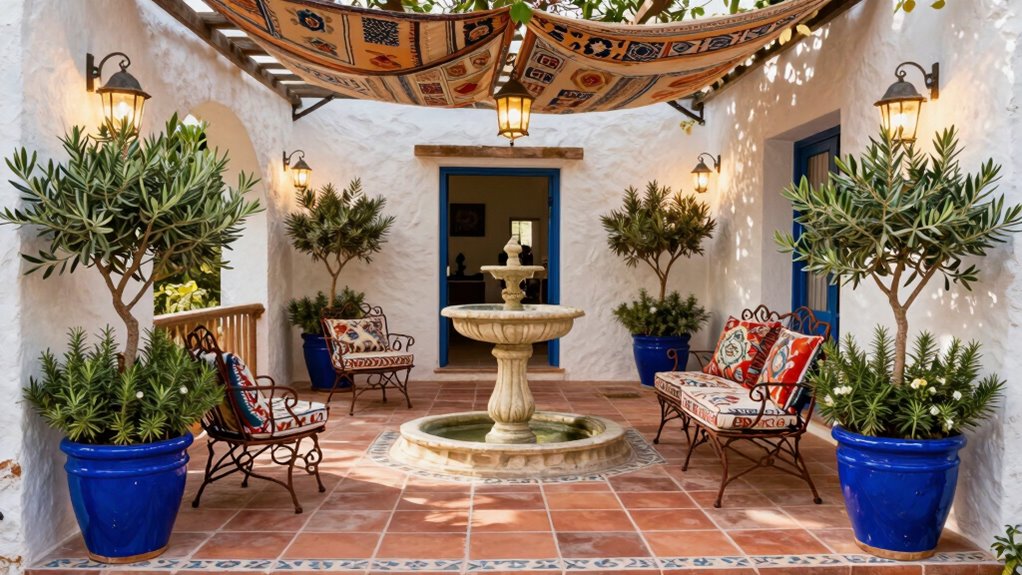

To achieve a Mediterranean patio style that screams ‘Europe,’ embrace rustic materials like natural stone and terracotta, bringing warmth and texture. Incorporate classic elements like arches, pergolas, and low walls for timeless charm. Layer greenery with drought-tolerant plants such as olive trees and lavender, while vibrant ceramics and colorful accents add lively character. Finish with warm lighting and cozy outdoor rooms to create an inviting atmosphere. Keep exploring to uncover more tips for this charming style.
Key Takeaways
- Embrace rustic materials like natural stone, terracotta, and textured stucco for an authentic Mediterranean feel.
- Incorporate classic architectural elements such as archways, pergolas, and low walls for timeless elegance.
- Layer with drought-tolerant Mediterranean plants like olive, lavender, and cypress for regional character.
- Use vibrant ceramics, mosaic accents, and colorful tiles to add handcrafted, lively details.
- Create cozy outdoor rooms with warm lighting, lanterns, and fire features for inviting evening ambiance.
Embrace Rustic Materials and Earthy Textures
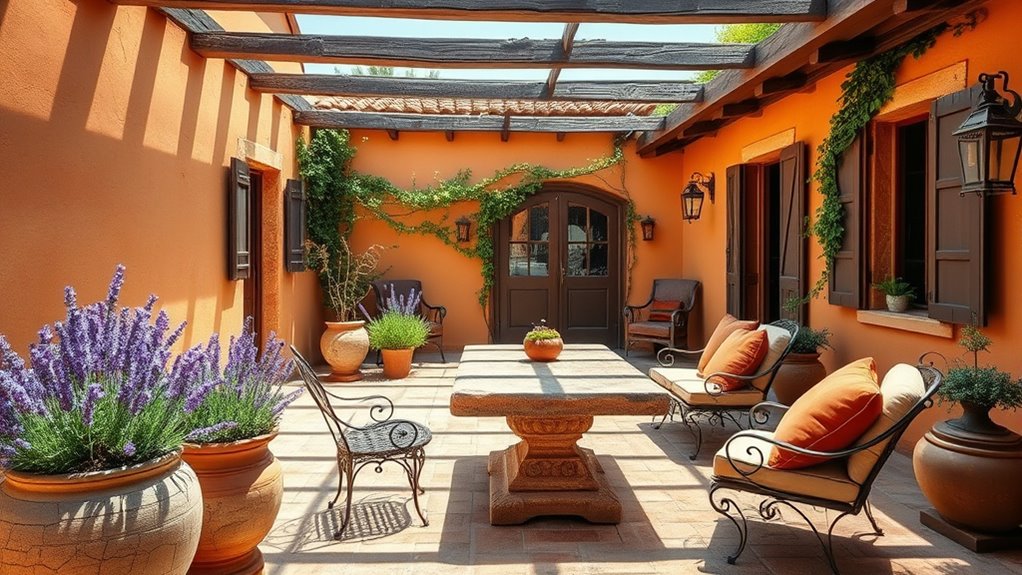
To achieve an authentic Mediterranean patio, you should prioritize rustic materials that showcase natural beauty and age gracefully. Use natural stone paving like flagstone, cobblestone, or reclaimed brick to evoke timeless European courtyards and create durable, textured hardscapes. Incorporate terracotta pots and tiles in warm, sunbaked tones that add genuine Mediterranean charm. Apply limewash or textured stucco on walls to simulate aged plaster, giving your space an authentic, breathable finish. For paths and courtyards, choose crushed gravel, decomposed granite, or crushed marble fines that drain well and stay cool underfoot. Adding patterned ceramic tiles or mosaic accents as focal points enhances handcrafted detail. These earthy textures and materials form a rich, layered backdrop that celebrates rustic elegance and regional character. Incorporating authentic regional materials further reinforces the Mediterranean aesthetic and ensures durability. Additionally, selecting environmentally sustainable materials aligns with sustainable design principles, supporting both regional authenticity and ecological responsibility. Incorporating local craftsmanship can also elevate the authenticity and uniqueness of your outdoor space. Using traditional construction techniques can help preserve the regional character and ensure long-lasting results.
Incorporate Classic Architectural Elements

Incorporating classic architectural elements instantly elevates your Mediterranean patio by creating a sense of timeless elegance and regional authenticity. Archways, pergolas, and columns define the space with graceful silhouettes, while low walls and raised planters create intimacy. These features echo European courtyards and estate gardens, adding structure and charm. Use materials like stucco, stone, or terracotta to reinforce the look. Punctuate your design with decorative details—ornate ironwork, textured surfaces, or vintage-inspired motifs—that evoke history and craftsmanship. The key is balancing formality with warmth, making your outdoor space feel both refined and inviting. Incorporating all-terrain strollers can also be a great way to enjoy outdoor spaces with active family members. Additionally, integrating projector technology can enhance outdoor gatherings by providing immersive entertainment in your Mediterranean setting.
Layer With Mediterranean-Inspired Plantings and Greenery

Mediterranean-inspired plantings bring vibrancy and authenticity to your courtyard, transforming hardscape elements into lush, inviting spaces. Focus on drought-tolerant species like olive, lavender, rosemary, and cypress to create instant regional character and reduce watering needs. Use potted plants in terracotta or ceramic containers to add flexibility and layered planting. Incorporate clipped boxwood or topiary to establish formal structure and geometric shapes. Climb climbing plants such as bougainvillea, wisteria, or ivy over arbors and archways to soften walls and create shaded vignettes. Prioritize evergreen and silver-foliaged plants for year-round texture and color. Mix these with colorful ceramics and patterned tiles for focal points. Layering greenery with carefully chosen containers and clipped forms evokes a classic Mediterranean landscape full of life and charm. Additionally, selecting vetted plant varieties ensures healthy growth and long-lasting beauty in your outdoor space. Incorporating sustainable planting practices can further enhance the ecological harmony of your Mediterranean-inspired courtyard. Exploring native planting strategies can also promote ecological balance and resilience in your garden design.
Use Patterned Ceramics and Vibrant Accents

Patterned ceramics and vibrant accents inject lively character into your Mediterranean courtyard, turning simple surfaces into eye-catching focal points. Incorporate colorful mosaic tiles on tabletops, stair risers, or small accent walls to add handcrafted European detail. Use bold, patterned ceramic planters and brightly glazed pots to highlight your plantings. Choose tiles with geometric or floral motifs in rich hues like cobalt blue, terracotta, or mossy green to evoke regional authenticity. Accentuate with textiles that feature traditional patterns, such as striped or toile cushions and woven throws, to enhance the layered look. These vibrant touches create visual interest and warmth, balancing neutral stone and plaster tones. Keep the patterning deliberate and restrained to preserve a sense of harmony, allowing your courtyard’s natural textures to shine through. Additionally, embracing spiritual awakening through mindful design choices can enhance the overall ambiance, creating a space that fosters relaxation and positive energy. Incorporating regional craftsmanship can further elevate the authentic Mediterranean feel, highlighting the artistry behind each piece.
Create Intimate Outdoor Rooms With Warm Lighting

Lighting transforms your courtyard into an inviting retreat after sunset, highlighting its architectural features and creating cozy zones for gathering. Use warm, layered lighting like lanterns, string lights, and wall sconces to cast a soft glow that mimics European plazas. Place lanterns on tables or hang them from pergolas to add intimacy. Incorporate low-voltage lighting along pathways and around seating areas to define spaces without overwhelming. Dim the lights to foster a relaxed atmosphere, perfect for evening conversations or leisurely meals. Add portable fire pits or brass burners for extra ambiance and seasonal warmth. Focus on warm tones and subtle illumination to enhance the natural textures of stone, terracotta, and plaster, turning your outdoor space into a charming, Mediterranean-inspired haven after dark. Creating an inviting outdoor environment can significantly enhance your outdoor living experience and bring a touch of European elegance to your home.
Frequently Asked Questions
How Can I Incorporate Modern Outdoor Amenities Without Losing Mediterranean Charm?
You can incorporate modern outdoor amenities by choosing sleek, minimalist designs that blend with Mediterranean materials like stone and terracotta. Opt for integrated lighting, built-in grills, or firepits with weathered metal finishes to maintain charm. Use contemporary furniture with rustic textures, and keep color palettes warm and neutral. Add tech discreetly, like hidden speakers or outdoor charging stations, ensuring they enhance without overpowering the authentic, timeless European courtyard feel.
What Are the Best Sustainable Materials for Mediterranean Courtyard Hardscapes?
You should choose natural, locally sourced materials like reclaimed stone, terracotta, and textured stucco to stay authentic and eco-friendly. Reclaimed bricks and cobblestones add durability and reduce waste, while crushed gravel or decomposed granite serve as sustainable, well-draining pathways. These materials not only enhance the Mediterranean aesthetic but also minimize environmental impact, helping you create a beautiful courtyard that’s both stylish and sustainable.
How Do I Balance Vibrant Colors With Muted Mediterranean Tones?
You blend vibrant colors with muted tones by creating a striking contrast that highlights each. Use sunbaked neutrals like ochre and sand as your backdrop, then add pops of cobalt blue or terracotta in accents like ceramics, textiles, or cushions. Juxtapose lively patterns with subdued surfaces—such as aged plaster or reclaimed stone—to keep the space lively yet authentic. This balance invites interest without overwhelming, capturing the essence of Mediterranean charm.
Can Mediterranean Patio Styles Work in Small or Urban Spaces?
Yes, Mediterranean patio styles work well in small or urban spaces. You can create intimate courtyards by using compact, terraced planting with drought-tolerant herbs and small trees like cypress. Incorporate vertical elements such as arbors, climbing plants, and wall-mounted planters to maximize space. Use warm stone or tile flooring to define zones, and choose furniture that’s scaled for tight spaces. Layer lighting and add charming details for an authentic, cozy European feel.
What Maintenance Routines Are Recommended for Mediterranean-Style Gardens and Hardscape?
Oh, so you want your Mediterranean garden to stay charming without turning into a wild jungle? You’ll want to prune your drought-tolerant plants like lavender and rosemary regularly, but not too much—they love a little wildness. Water sparingly, especially in summer, and clear debris from stone paths to prevent weeds. Clean and seal terracotta pots occasionally, and check your lighting fixtures for rust. Easy, right?
Conclusion
By blending rustic textures, classic architecture, lush greenery, vibrant ceramics, and warm lighting, you craft a Mediterranean patio that feels like stepping into a sun-kissed European village. These design moves are your passport to an outdoor space that breathes life and history into every corner. Think of it as planting seeds of timeless charm—soon, your patio will blossom into a Mediterranean retreat, whispering stories of old-world elegance with every breeze.