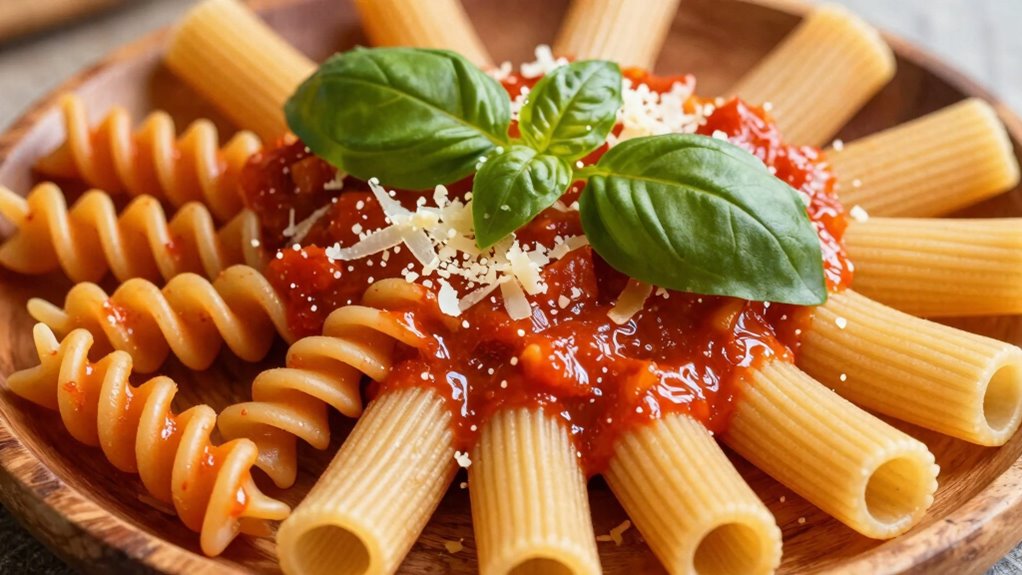

Choosing the right pasta shape is essential because each type is designed to hold certain sauces, which boosts flavor and texture. Tubular shapes like penne trap chunky sauces, while long, thin pastas like spaghetti suit delicate, oil-based sauces. Twisted and ridged shapes hold onto creamy or thicker sauces better. When you match the shape with the appropriate sauce, your dish will taste better and feel more balanced. Keep going to learn more about perfect pairings and tips.
Key Takeaways
- Pasta shapes are designed to hold specific types of sauces, enhancing flavor and texture.
- Ridges and grooves increase surface area for better sauce adherence.
- Hollow and twisted shapes trap sauces inside, intensifying taste and richness.
- Proper pairing balances sauce consistency with pasta shape for optimal dish harmony.
- Traditional Italian cuisine emphasizes matching shapes with sauces to preserve authenticity and enhance dining experience.

Tioncy 7 Pcs Pasta Making Tool Set Wood Gnocchi Board with Ravioli Stamp Ravioli Maker and Rolling Pin for Gnocchi Garganelli Italian Pasta Tools for Beginners and Home Cooks Kitchen Gift
All-in-one Pasta Making Set: this package includes a wooden pasta cutter, a ravioli rolling pin, a gnocchi board,…
As an affiliate, we earn on qualifying purchases.
As an affiliate, we earn on qualifying purchases.
Understanding the Different Types of Pasta Shapes
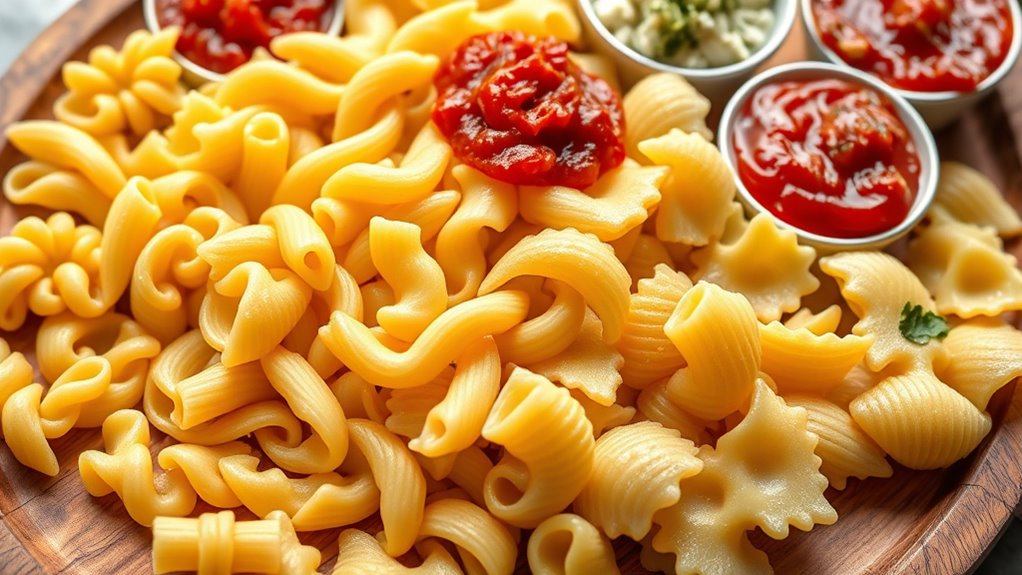
To understand the different types of pasta shapes, it helps to know that each shape is designed to hold certain sauces and ingredients best. Tubular pasta like penne and rigatoni have ridges and hollow centers, making them ideal for thick, chunky sauces or baked dishes. Long thin pasta such as spaghetti and linguine are perfect for lighter, oil-based or seafood sauces. Long thick shapes like pappardelle and tagliatelle work well with rich, meaty ragùs and creamy sauces. Twisted spiral varieties like fusilli and gemelli trap thicker sauces in their curves, while cup-shaped pasta like conchiglie and shells catch chunky sauces and fillings. Filled pastas such as ravioli and tortellini are best served with light sauces that won’t overpower their fillings. Understanding these shapes helps you choose the right pasta for your sauce. Pasta shape design influences how well the sauce adheres and complements the dish, and considering the sauce compatibility is essential for achieving the perfect pairing. Recognizing the texture and structure of each shape can also enhance the overall dining experience.

Spaghetti Pasta Measurer Tool, Portion Control Guide, Green, Set of 2
PORTION CONTROL: Features marked measurements to help you portion spaghetti servings accurately for 1-4 people
As an affiliate, we earn on qualifying purchases.
As an affiliate, we earn on qualifying purchases.
How Pasta Shapes Influence Sauce Pairings
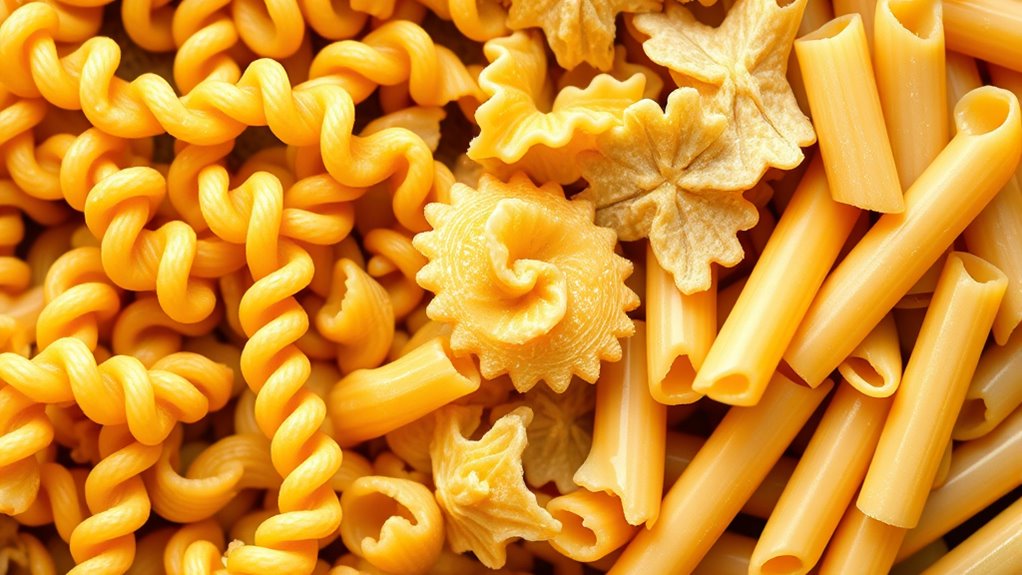
Ever wondered why certain pasta shapes work better with specific sauces? It’s all about how the shape interacts with the sauce’s texture and consistency. Tubular pastas like penne and rigatoni are great for chunky sauces because their hollows and ridges trap pieces of vegetables or meat, ensuring each bite is flavorful. Long, thin pastas like spaghetti and linguine work well with lighter sauces, such as oil-based or seafood-based ones, because their smooth surfaces don’t overpower delicate flavors. Twisted shapes like fusilli and gemelli cling to thicker, pesto, or creamy sauces thanks to their spirals, holding onto sauces better. Shell-shaped pasta captures chunky, heavy sauces inside, making every mouthful satisfyingly saucy. Choosing the right shape enhances how the sauce adheres and delivers flavor. Understanding pasta shapes can help you create more balanced and satisfying dishes by matching the right pasta to your sauce. Additionally, pasta shape and sauce compatibility is influenced by how the surface area and internal structure of each shape interact with different ingredients, further optimizing flavor distribution. Recognizing the importance of shape and texture can significantly improve the overall eating experience. Furthermore, the brand reputation of certain pasta shapes and their traditional pairings can also play a role in achieving authentic and satisfying dishes.

Barilla Rigatoni Pasta, 16 oz. Box (Pack of 12) – Non-GMO, Made with Durum Wheat Semolina – Kosher Certified
RIGATONI PASTA: The large diameter and ridges of Rigatoni make it ideal for retaining sauces on the entire…
As an affiliate, we earn on qualifying purchases.
As an affiliate, we earn on qualifying purchases.
The Best Sauces for Tubular Pasta Varieties
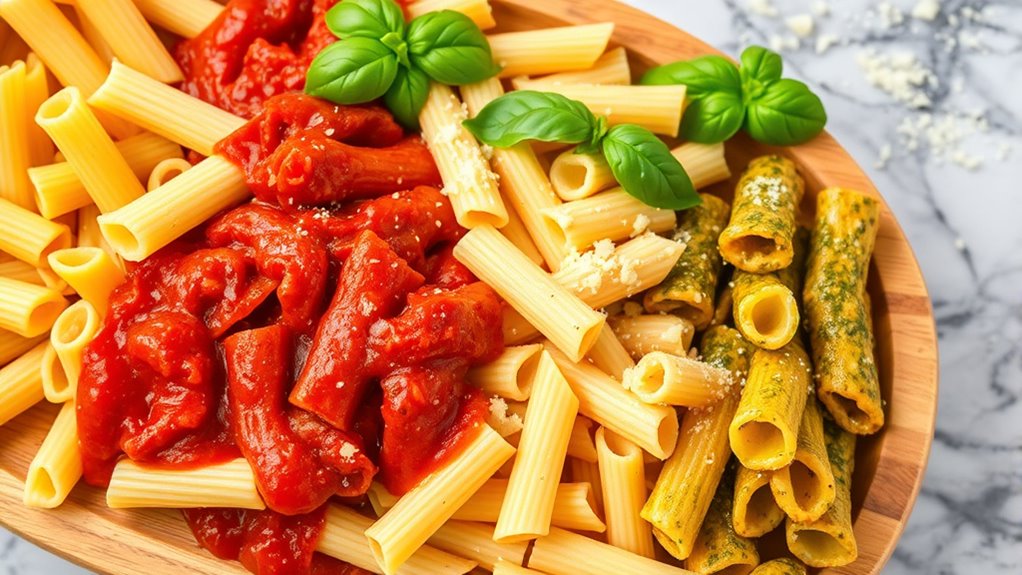
When choosing sauces for tubular pasta, consider whether they’re chunky or smooth, as this affects how well they cling to the shape. Light sauces work best with thinner tubes, while heavier, thicker sauces suit larger, chunkier varieties. Matching the sauce’s consistency with the pasta’s shape guarantees each bite delivers maximum flavor and texture. Additionally, understanding the science behind piercing care and hygiene can help you select the most effective tools for your skincare routine. Incorporating AI tools into your culinary exploration can also enhance recipe development and pairing options. Recognizing the importance of auditory feedback therapy in improving communication skills highlights the value of tailored approaches in achieving better results. Staying informed about emerging technologies in the culinary world, such as innovative kitchen gadgets, can elevate your cooking experience.
Chunky vs. Smooth Sauces
Tubular pasta shapes are versatile and can handle a variety of sauces, but choosing the right one depends on whether your sauce is chunky or smooth. Chunky sauces cling better to larger, textured tubes, while smooth sauces coat smaller, thinner shapes evenly. For example, rigatoni works well with hearty vegetable or meat chunks, and large shells catch thick Bolognese or heavy cream sauces. Conversely, penne pairs with smoother, oil-based sauces, and ziti suits creamy or meat sauces that need to stick inside the tube. Additionally, understanding the structure of pasta can help in selecting the ideal shape for your sauce. Recognizing the design of pasta shapes can enhance the pairing of sauces and improve the overall dish.
Light vs. Heavy Fillings
Choosing the right sauce for tubular pasta depends largely on whether the filling or sauce is light or heavy. If you’re working with light fillings like cheese, herbs, or seafood, opt for delicate sauces such as olive oil, lemon, or simple tomato sauces. These won’t overpower the filling and keep the dish balanced. For heavier fillings like meat, ricotta, or thick cheeses, pair them with richer sauces like Bolognese, creamy mushroom, or vodka sauce. Heavy sauces complement dense fillings without overwhelming them, creating a satisfying contrast. Keep in mind that lighter fillings are best showcased with thinner, more subtle sauces, while hearty fillings can stand up to thicker, more robust sauces. This balance ensures each element shines and the dish remains harmonious.
Sauce Thickness Compatibility
Matching sauce thickness with tubular pasta guarantees your dish has the right balance and texture. To achieve this, consider the pasta’s size and shape. Larger tubes like rigatoni or conchiglioni pair well with chunky, thick sauces that cling to their surface. Smaller tubes such as ziti or penne work best with smooth, medium-thick sauces that coat evenly. Thin, elongated shapes like spaghetti or vermicelli suit light, delicate sauces like olive oil, lemon, or seafood-based options. Twisted spirals like fusilli or gemelli hold onto thicker, chunkier sauces, making them ideal for pesto, hearty tomato, or mushroom sauces. Ensuring the proper food pairing enhances both the flavor and texture of your dish, elevating your culinary experience. Additionally, understanding pasta shape and sauce compatibility can help you create more balanced and flavorful meals every time.

De Cecco Linguine No. 7 Pasta, 16 Oz, Authentic, Slow Dried, Made with Durum Wheat, Versatile Pasta for Sauces & Recipes, Made in Italy
Authentic Italian Pasta: De Cecco Linguine No. 7 is a traditional Italian pasta with a flat, wide shape….
As an affiliate, we earn on qualifying purchases.
As an affiliate, we earn on qualifying purchases.
Delicate Sauces for Long Thin Pastas
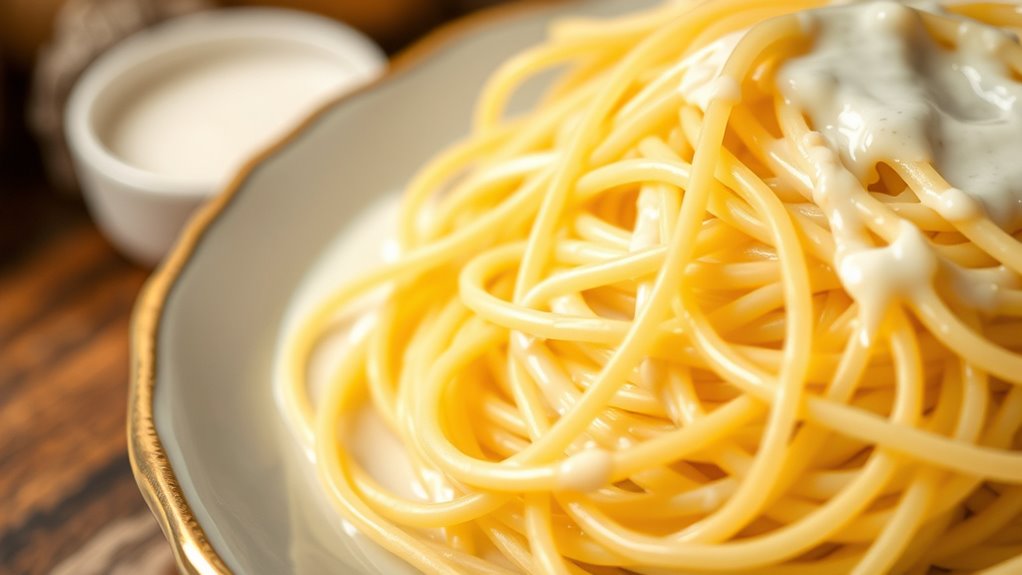
When pairing long, thin pastas with delicate sauces, you want to focus on light, complementary flavors that won’t overpower the pasta. Seafood sauces work perfectly here, adding freshness without heaviness, but it’s key to keep the texture firm to avoid mushiness. By choosing the right sauce and handling the pasta gently, you’ll enhance the flavor while maintaining perfect bite after bite. To ensure your pasta remains in top condition, using a durable, high-quality material pasta strainer can help prevent breakage and overcooking. Additionally, employing connected kitchen gadgets can provide precise timing and temperature control, further protecting your pasta’s texture.
Light Sauce Compatibility
Long thin pastas such as capellini, spaghettini, and vermicelli excel when paired with delicate sauces that won’t overpower their light texture. These shapes shine with sauces that enhance without overwhelming. To maximize their potential:
- Use light cream or oil-based sauces to preserve their subtle flavor.
- Incorporate seafood, like clams or shrimp, to add freshness.
- Keep ingredient chunks minimal to prevent clumping.
- Opt for simple flavor profiles, such as lemon, herbs, or garlic, that complement rather than dominate.
Avoid heavy, chunky, or tomato-based sauces, which can overshadow the pasta’s delicate nature. By choosing light sauces, you allow the pasta’s fine texture and subtle taste to truly stand out.
Seafood Pairing Tips
Seafood pairs beautifully with delicate long thin pasta shapes when you choose the right sauces. Opt for light, oil-based or subtle cream sauces that won’t overpower the seafood’s delicate flavors. Spaghetti and linguine are perfect choices, especially when combined with clam sauce, lemon, or a simple garlic and olive oil dressing. Vermicelli and capellini work well with light seafood preparations, like shrimp or scallops in a gentle white wine sauce. Keep sauces minimal to let the seafood shine—think fresh herbs, lemon zest, or a splash of white wine. Minimalist sauces help to highlight the natural sweetness and freshness of your seafood. When selecting pasta for seafood dishes, it’s important to consider the pasta shape to ensure the sauce adheres properly and complements the delicate texture. Choosing the appropriate pasta texture can enhance the overall harmony of the dish. Using the right cooking techniques can also make a significant difference in achieving a balanced and flavorful seafood pasta. Avoid heavy, creamy, or chunky sauces that can mask the seafood’s subtle taste. The goal is to enhance, not hide, the natural sweetness and freshness of your seafood. Using light sauces complements the delicate textures and flavors of the seafood, creating a balanced dish.
Maintaining Pasta Texture
To preserve the delicate texture of long thin pastas like spaghetti, linguine, or capellini, it is vital to handle them gently and avoid overcooking. Overcooked pasta becomes mushy and loses its refined bite, undermining the dish’s elegance. Here are four essential tips:
- Cook pasta al dente, testing frequently near the end of cooking.
- Reserve some pasta water to adjust sauce consistency without over-saturating the noodles.
- Toss pasta in sauce off the heat to prevent continued cooking.
- Serve immediately to maintain ideal firmness and prevent starchy clumping.
Chunky and Thick Sauces for Rigid and Flat Shapes
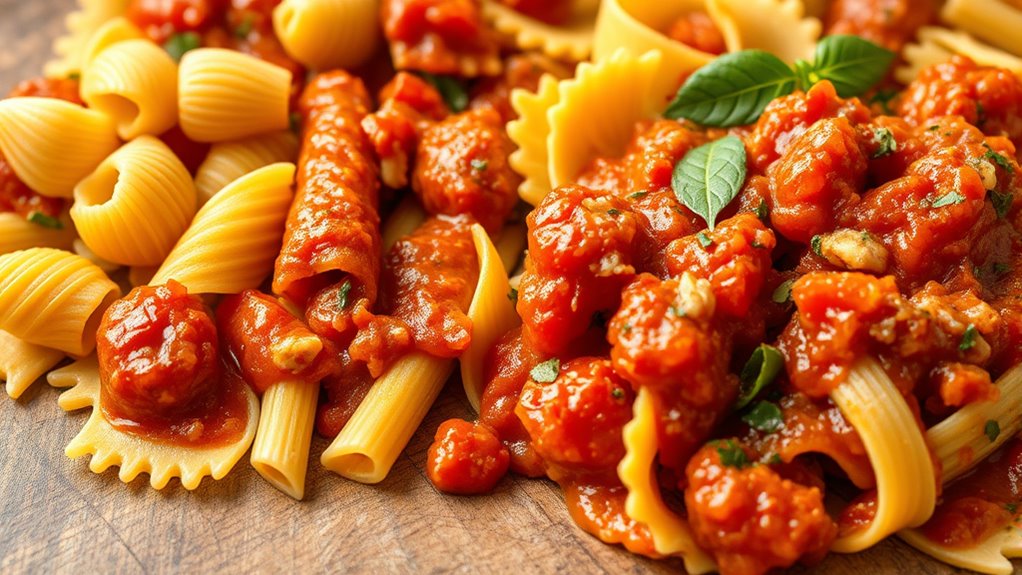
Rigid and flat pasta shapes are perfect for holding chunky and thick sauces because their broad surfaces and sturdy structures provide maximum contact. You’ll find that shapes like rigatoni, ziti, and large tubes easily trap hearty sauces, ensuring every bite is flavorful. The wide openings and thick walls support dense ingredients like vegetables, meat, and cheese, preventing the sauce from slipping off. Flat shapes such as pappardelle and tagliatelle also work well with substantial sauces, as their broad ribbons allow the sauce to cling and spread evenly. These pasta types are ideal when you want the sauce to coat every strand or tube thoroughly, enhancing the overall taste and texture. Additionally, wiring basics can help ensure your cooking setup is safe and efficient, especially when preparing large quantities of pasta and sauce. Understanding pasta shapes and sauce pairing can elevate your dish and ensure the sauce adheres better to the pasta. When selecting pasta shapes, considering their structural characteristics can make a significant difference in how well the sauce clings, leading to a more satisfying meal. So, choose these shapes when you’re serving thick, chunky sauces for a satisfying, well-coated meal.
Twisted and Spiral Pasta: Perfect for Pesto and Creamy Sauces
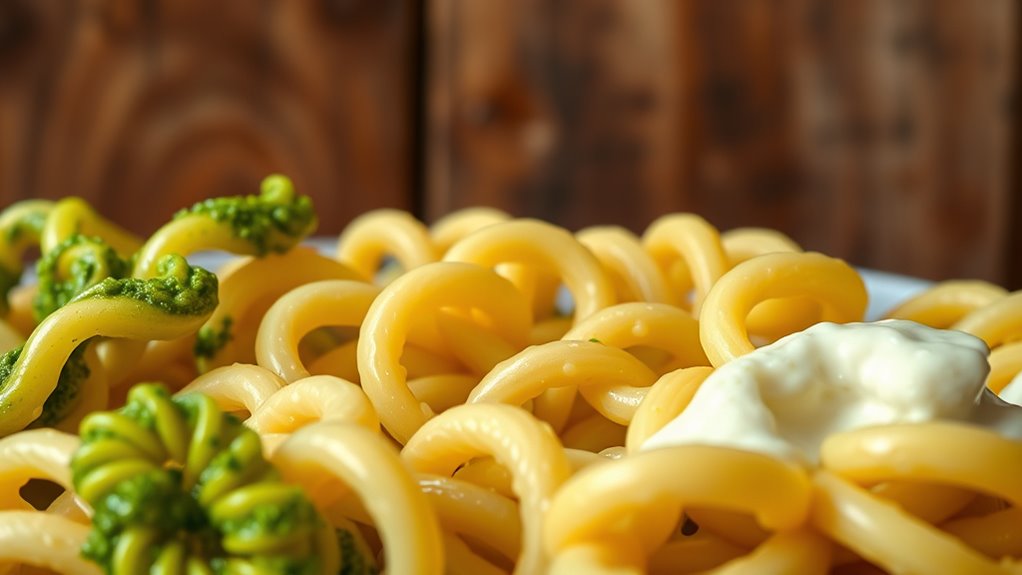
Twisted and spiral pasta shapes excel at capturing lighter, cream-based, and oily sauces thanks to their textured surfaces and intricate curves. Their shape creates a perfect grip for sauces that cling, ensuring each bite delivers flavor. Consider these options:
Twisted pasta shapes expertly hold onto light, creamy, and oily sauces for maximum flavor.
- Fusilli: Ideal with pesto, tomato-based sauces, and creamy mushroom blends.
- Trofie: Excellent for Genovese pesto and sun-dried tomato sauces, thanks to its tight spirals.
- Gemelli: Works well with smooth, oily sauces like basil pesto, thanks to its gentle twists.
- Vesuvio: Pairs with ragù, where its curves hold onto the sauce’s richness.
Using these shapes, you’ll maximize sauce adhesion, enhancing flavor and ensuring a satisfying pasta experience. Their design makes them excellent for lighter, cream-based, and oil-infused dishes.
Shaped Pastas and Their Ideal Sauces: Shells, Filled, and More
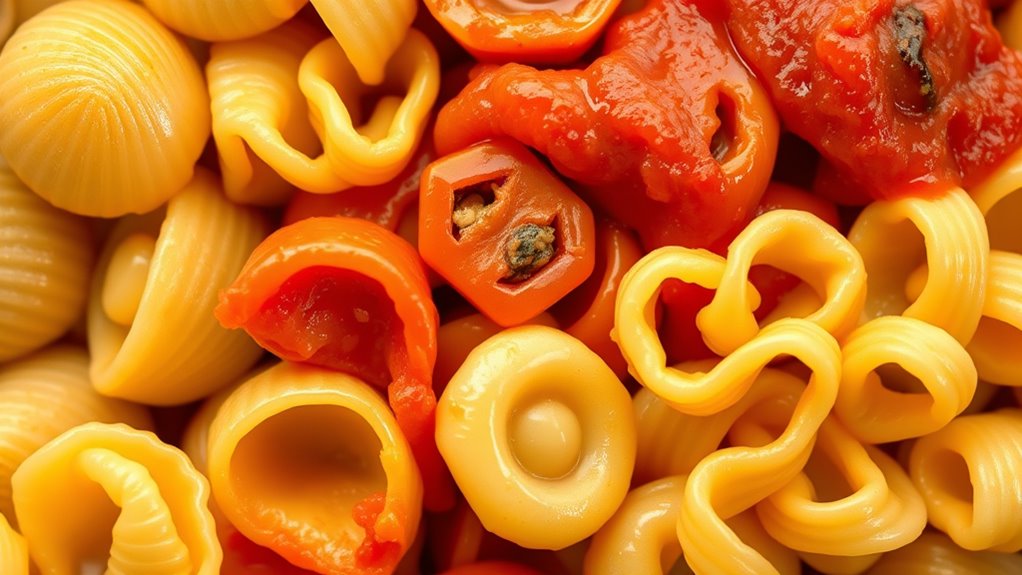
Shaped pastas like shells and filled varieties are designed to hold sauces securely and enhance each bite. Their shapes catch thicker sauces and fillings, making every mouthful flavorful. For example, conchiglie work well with rich, creamy sauces or stuffed with cheese, while lum shells are perfect for Bolognese or heavy meat sauces. Filled pastas like ravioli and tortellini are best served with light sauces to highlight their fillings, such as butter, sage, or a delicate cream. The following table shows ideal pairings:
| Pasta Shape | Ideal Sauces |
|---|---|
| Conchiglie | Thick, creamy, or cheese-based sauces |
| Lum shells | Bolognese, heavy meat sauces |
| Ravioli | Light butter, sage, or simple cream sauces |
| Tortellini | Light cheese or mushroom cream sauces |
Choose shapes to maximize sauce retention and flavor.
Tips for Combining Pasta Shapes With Complementary Sauces
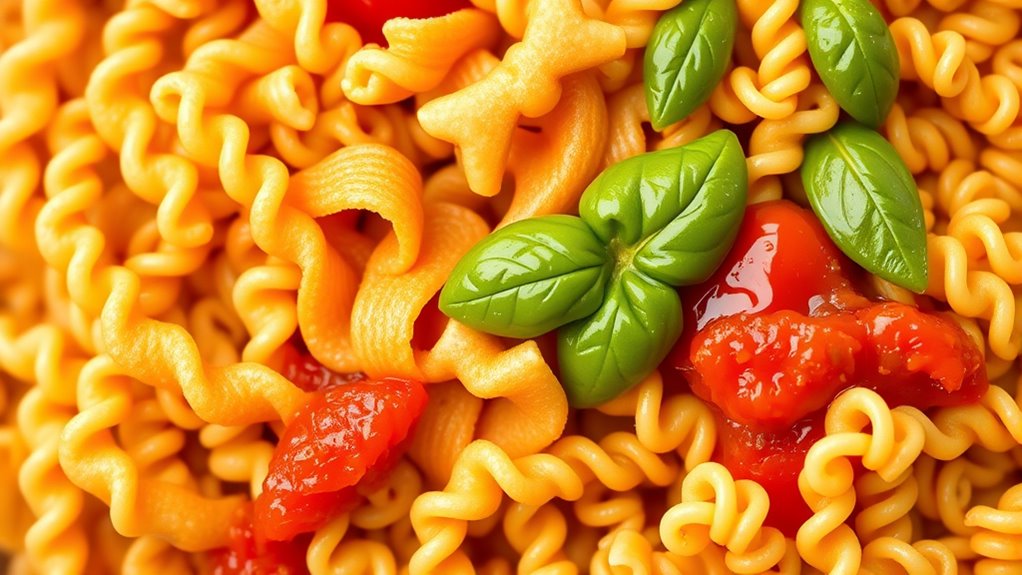
Matching the right pasta shape with a complementary sauce can elevate your dish and guarantee every bite is flavorful. To do this effectively, keep these tips in mind:
Pairing the right pasta shape with the perfect sauce ensures every bite is bursting with flavor.
- Match textures: Choose sturdy shapes like rigatoni or pappardelle for chunky, hearty sauces to hold up well.
- Consider surface area: Twisted or ridged shapes, such as fusilli or gemelli, trap sauces better, making each bite more flavorful.
- Think about sauce consistency: Light sauces like oil or broth pair best with delicate shapes like capellini or spaghetti.
- Use shape to complement ingredients: Hollow or cup-shaped pasta like conchiglie or shells catch thicker sauces or ingredients, ensuring nothing slips away.
Why the Shape of Pasta Affects the Overall Dish Experience
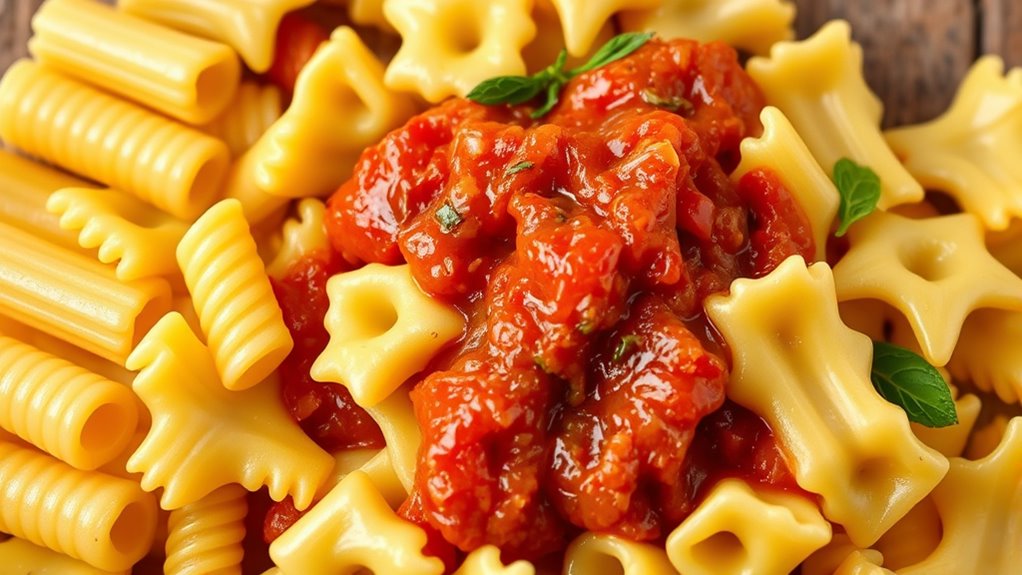
The shape of pasta plays a crucial role in how your dish tastes and feels with each bite. It influences how well sauces cling and how flavors develop. For example, tubular shapes like penne and rigatoni trap chunky sauces inside, creating bursts of flavor. Long, thin pasta like spaghetti offers a sleek surface perfect for light sauces, letting the sauce coat evenly. Twisted shapes like fusilli hold thicker, textured sauces thanks to their spirals. Shell-shaped pasta, such as conchiglie, scoops up heavier sauces or fillings, enhancing each bite. The shape also affects the overall texture—rigid shapes add chewiness, while delicate shapes provide finesse. Choosing the right shape ensures your pasta dish not only looks appealing but delivers the intended flavor and mouthfeel.
Frequently Asked Questions
How Do Pasta Shapes Impact Cooking Times and Texture?
Your pasta shape notably affects cooking times and texture. Tubular shapes like penne and rigatoni need longer boiling to become tender, offering a hearty bite. Thin shapes like capellini cook quickly, providing a delicate texture. Twisted or shell shapes, such as fusilli or conchiglie, hold sauces well and maintain firmness longer. Adjust cooking times based on shape to achieve the perfect al dente texture, balancing firmness with tenderness.
Can Pasta Shape Influence How Well the Sauce Sticks?
When it comes to how well sauce sticks, pasta shape makes all the difference. Think of it as fitting a key to a lock—you want the shape to hold onto the sauce, not let it slip. Tubular shapes like penne and rigatoni trap chunky sauces, while twisted spirals like fusilli cling to pesto and creamy dressings. Choosing the right shape guarantees your pasta and sauce are a match made in heaven.
Are Some Shapes Better for Baked Versus Stovetop Dishes?
Some pasta shapes are better for baked dishes, while others suit stovetop meals. You should use thicker, tubular shapes like ziti and rigatoni for baking because they hold up well and absorb flavors. For stovetop dishes, choose delicate shapes like spaghetti or linguine, which blend smoothly with lighter sauces. Larger or chunkier shapes work great in oven-baked casseroles, while finer shapes are ideal for quick, saucy pasta on the stove.
How Does Pasta Size Affect Portioning and Presentation?
Your pasta size influences both portioning and presentation. Larger shapes like rigatoni or pappardelle give a hearty look and serve bigger portions, making your dish appear more substantial. Smaller shapes like spaghettini or gemelli create a delicate, refined presentation and are perfect for lighter servings. When plating, choose shapes that balance well visually and proportionally, ensuring your dish looks appetizing and feels satisfying to eat.
Do Traditional Regional Uses Influence Pasta and Sauce Pairings?
Regional traditions influence pasta and sauce pairings because each region’s ingredients, climate, and culinary history shape their choices. You’ll notice that in Naples, they favor light tomato sauces with short, sturdy pasta, while in Emilia-Romagna, rich Bolognese pairs with wider, hearty ribbons. These regional differences matter because they honor local flavors and techniques, allowing you to enjoy authentic dishes that reflect Italy’s diverse culinary heritage.
Conclusion
Choosing the right pasta shape isn’t just culinary flair; it’s about crafting a harmonious dish that sings like a well-played lute. When you match shapes to sauces thoughtfully, you elevate your meal from mere sustenance to an artful experience. Remember, even in a modern kitchen, respecting tradition — like trusting a seasoned chef from a bygone era — guarantees your pasta turns out perfect. So, embrace the shape-sauce duo and create timeless, memorable meals.