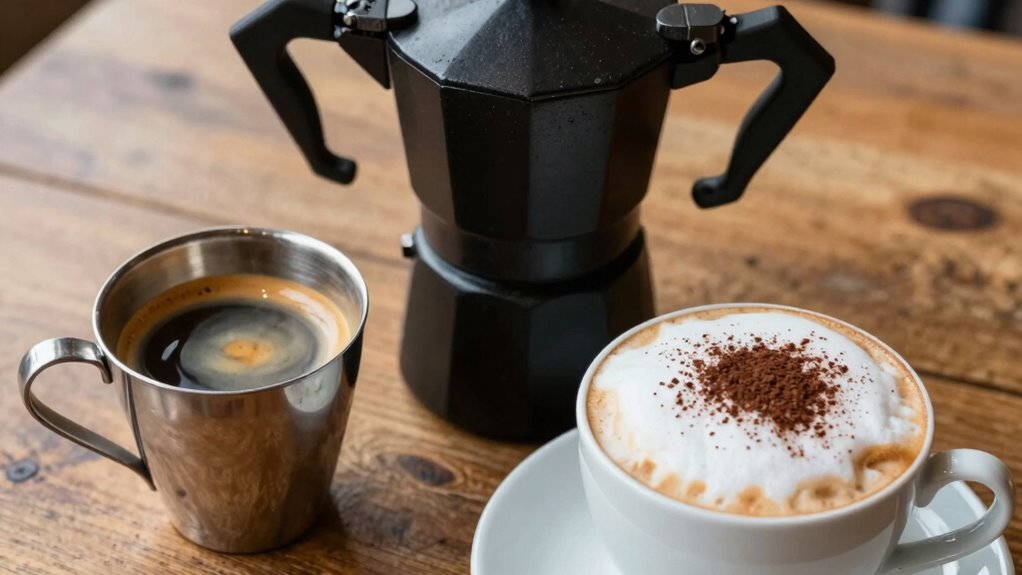

To make authentic Italian coffee at home, you need to understand the different techniques for espresso, moka, and cappuccino. Espresso requires a high-pressure machine, a fine grind, and precise timing. Moka is simpler, using steam pressure in a stovetop pot with a medium-fine grind. For a cappuccino, start with a strong espresso, then add steamed milk and foam. Mastering these methods involves proper equipment, grind size, and temperature—discover how to perfect each step as you explore further.
Key Takeaways
- Espresso requires high pressure (~9 bars) and a very fine grind, while moka uses steam pressure (<2 bars) and medium-fine grind.
- Proper water temperature (93-95°C) and brew time (25-30 seconds for espresso, 4-5 minutes for moka) are essential for flavor.
- Fresh beans, correct grind size, and proper ratios of coffee to water ensure rich flavor and crema.
- Cappuccinos combine a strong espresso shot with steamed milk and microfoam for layered texture and flavor.
- Regular cleaning and equipment maintenance are vital for consistent quality and authentic Italian coffee at home.
Understanding Espresso: The Classic Method

Have you ever wondered what makes a true espresso so rich and flavorful? It’s all about pressure and grind size. Espresso forces hot water through finely-ground beans under at least 9 bars of pressure, extracting concentrated flavors and creating a golden crema on top. The beans need to be ground very fine, like powdered sugar, to guarantee proper extraction. The process takes about 25-30 seconds, producing a small but intense shot—typically 1-2 ounces. This method emphasizes the coffee’s aroma, body, and nuanced taste. Unlike other brewing techniques, espresso’s high pressure pulls out oils and flavors that give it that signature richness. Proper temperature control is also essential to prevent over-extraction or under-extraction, ensuring the best flavor. Consistent pressure application is crucial for achieving the ideal extraction and flavor profile. Additionally, maintaining the correct brew time helps in extracting the optimal flavors without bitterness or weakness.
Mastering the Moka Pot: A Simple Stovetop Alternative
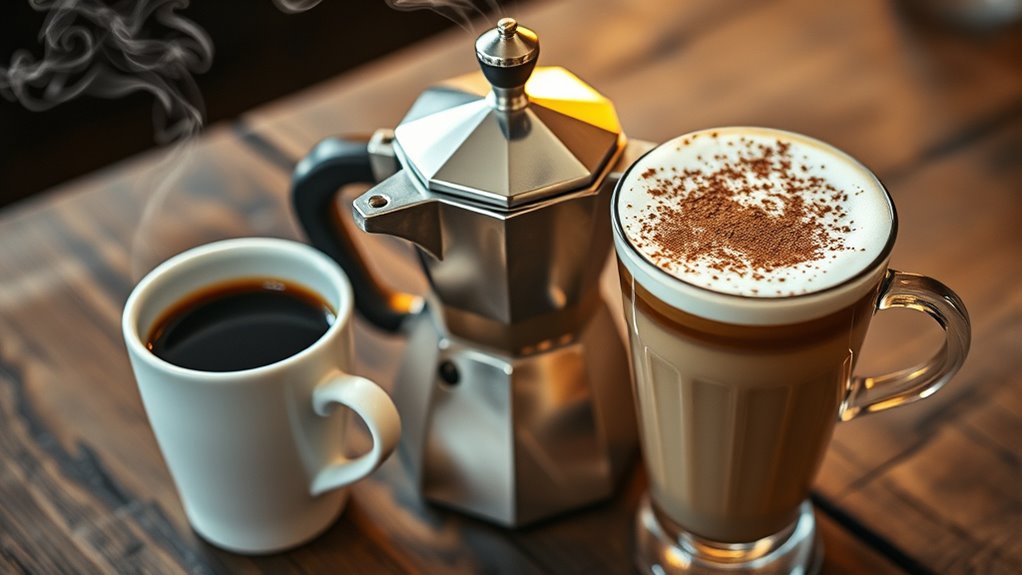
If you’re looking for an easy way to enjoy strong, Italian-style coffee without investing in an espresso machine, the Moka pot offers a straightforward stovetop solution. Fill the bottom chamber with hot water just below boiling to prevent bitterness. Add medium-fine ground coffee to the filter basket without tamping. Assemble the pot and place it over low heat; in 4-5 minutes, the coffee will fill the top chamber. To optimize flavor, use freshly ground beans and avoid overfilling. The Moka pot produces bold, strong coffee with steam pressure below 2 bars, mimicking espresso’s intensity.
| Step | Tip |
|---|---|
| Water | Use hot water in the base for quicker brewing |
| Grind | Medium-fine, salt-like consistency |
| Heat | Low to prevent bitterness |
Crafting the Perfect Cappuccino at Home
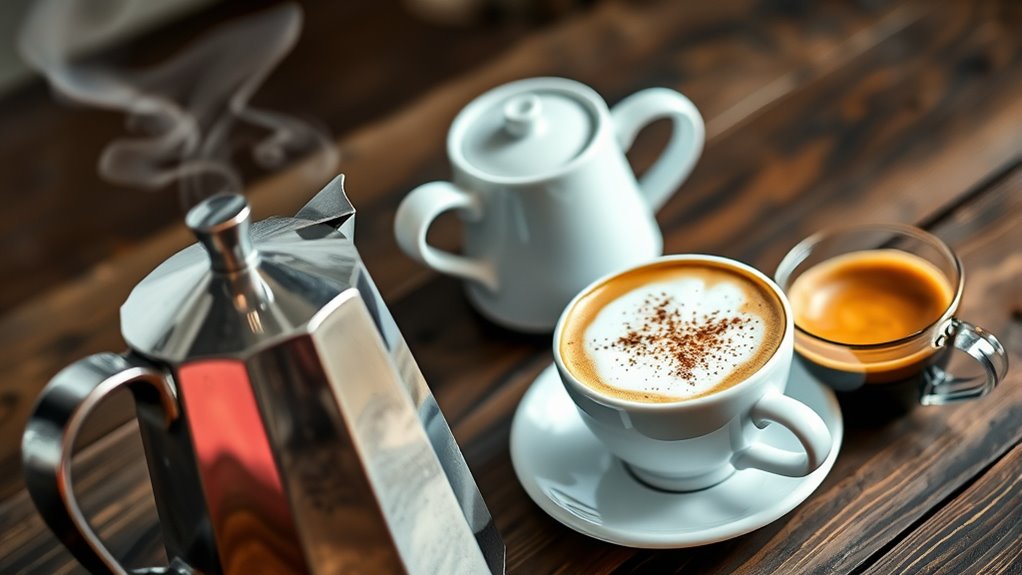
Creating a perfect cappuccino at home involves layering espresso, steamed milk, and frothy foam in a balanced way. To get it just right, start with a strong espresso shot as your base. Then, steam your milk until it’s velvety and doubles in volume, creating microfoam. Finally, spoon or pour the foam on top, aiming for a 1:1:1 ratio.
Master the art of home cappuccinos with balanced espresso, velvety steamed milk, and frothy foam.
Here are three tips to perfect your cappuccino:
- Use fresh, cold milk and a good frother or whisk to create smooth, dense foam.
- Pour the steamed milk gently over the espresso, holding back the foam initially, then add the foam on top.
- Serve immediately in a small cup to enjoy the layered textures at their best.
Key Differences in Brewing Techniques and Equipment

Your choice of brewing pressure and method directly impacts the coffee’s strength and crema, with espresso using high pressure and moka relying on steam at lower pressure. The grind size also varies, from very fine for espresso to medium-fine for moka, which affects extraction and flavor. Understanding the ratios of coffee to water helps you fine-tune each brew for authentic Italian taste at home. Additionally, selecting the appropriate airless paint sprayer type can influence the consistency and finish of your project, much like choosing the right brewing method affects coffee quality. Proper maintenance and calibration of your equipment ensure optimal results, much like selecting the right precious metal IRA options can enhance your investment portfolio. Being aware of investment risks is essential to making informed decisions and protecting your investments from market volatility. Furthermore, mastering the R sounds in speech therapy can improve communication clarity, paralleling the importance of understanding brewing techniques for the perfect cup.
Brewing Pressure and Method
Have you ever wondered why espresso has that rich crema while stovetop coffee lacks it? The key difference lies in brewing pressure and method.
- Espresso uses a high-pressure pump, forcing hot water through finely ground beans at about 9 bars, creating a concentrated shot with a thick crema.
- Moka pots rely on steam pressure below 2 bars, pushing water through medium-fine grounds, resulting in a strong but less crema-rich brew.
- The brewing method determines the pressure: espresso’s pump-driven process versus stovetop’s steam-driven technique, which influences flavor, texture, and crema formation.
Understanding these differences helps you choose the right technique for your desired coffee style. Your equipment’s pressure capability directly impacts the final result, making each method unique.
Grind Size and Ratios
The grind size you choose directly influences how your coffee extracts flavors and interacts with your brewing equipment. For espresso, use the finest grind, like powdered sugar, to allow high pressure to extract rich flavors quickly. Moka requires a medium-fine grind, similar to table salt, ensuring steam pressure extracts strong coffee without clogging the filter. Proper ratios are essential: espresso typically uses a 1:2 coffee-to-water ratio, while moka depends on the pot size, such as 7g per ounce. Using freshly ground beans enhances flavor. Maintain water temperature around 93-95°C for both methods to optimize extraction and prevent bitterness.
| Method | Grind Size | Ratio |
|---|---|---|
| Espresso | Powdered sugar | 1:2 |
| Moka | Table salt-like | 7g per 1 oz (adjust) |
| Cappuccino | Fine, espresso-like | Based on shot volume |
Choosing the Right Coffee Beans and Grind Size

Choosing the right beans and grind size is key to making authentic Italian coffee at home. You’ll want to pick fresh, high-quality beans suited for your brewing method and grind them to the right consistency. Getting these details proper guarantees your coffee tastes rich and true to tradition. Additionally, understanding coffee bean origins can enhance the flavor profile and authenticity of your brew. Selecting beans with specific quality and freshness ensures optimal flavor extraction during brewing.
Bean Selection Tips
Selecting the right coffee beans is essential for brewing flavorful Italian-style coffee at home. Your choice impacts aroma, taste, and overall quality. To get the best results, consider these tips:
- Choose fresh beans—look for recent roast dates and buy whole beans, grinding just before brewing.
- Opt for medium to dark roasts—these offer rich, bold flavors ideal for espresso, moka, and cappuccino.
- Match grind size to your method—finer for espresso, medium-fine for moka, ensuring consistent texture for *ideal* extraction.
Proper Grind Consistency
Achieving proper grind consistency is essential for extracting the best flavors from your coffee beans. When grinding, aim for uniform particles to ensure even extraction. For espresso, use a very fine, powdery grind similar to powdered sugar to allow hot water to pass through quickly and evenly. If you’re preparing Moka coffee, a medium-fine grind resembling table salt works best, providing enough resistance without clogging the filter. Uneven grinds can cause over-extraction or under-extraction, leading to bitter or weak coffee. Always grind fresh just before brewing to maintain flavor and aroma. Use a quality burr grinder for consistent results, and adjust grind size slightly depending on your equipment and taste preferences. Proper grind consistency is the key to achieving authentic Italian coffee at home. Additionally, understanding extraction quality can help fine-tune your grind size for optimal flavor, and paying attention to brew time can further enhance your coffee’s richness and balance. Incorporating proper tamping technique ensures even pressure and better extraction, resulting in a more balanced cup. Moreover, maintaining a consistent grind size helps prevent clogging and ensures a smoother brewing process.
Water Temperature and Brew Time Optimization
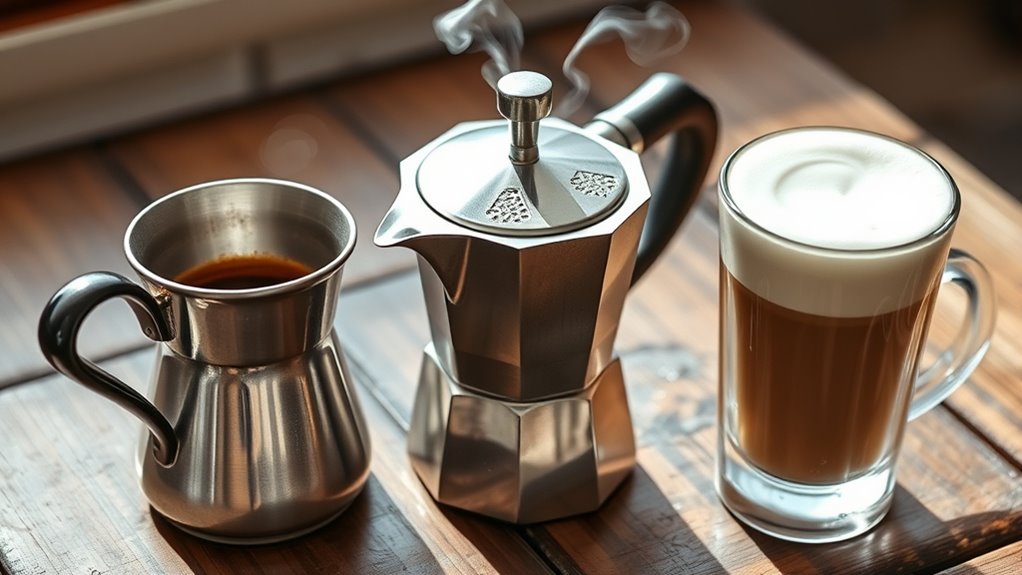
Optimizing water temperature and brew time is crucial for extracting the best flavors from your coffee without bitterness or under-extraction. When brewing, aim for water around 93-95°C (200-203°F) to ensure proper extraction. Too hot, and you risk bitterness; too cold, and flavors stay underdeveloped. For espresso, a quick 25-30 second brew maximizes richness, while a moka takes about 4-5 minutes at low heat. To optimize:
- Use just off-boil water (93-95°C) for consistent extraction.
- Keep brew times precise—don’t rush espresso shots or prolong moka brewing.
- Adjust heat to keep water at a steady temperature, avoiding sudden surges or drops.
- Maintaining consistent temperature throughout the process helps achieve a balanced extraction with each brew.
- Employing a thermometer can assist in monitoring water temperature more accurately for optimal results.
- Proper piercing techniques and careful handling of your coffee equipment contribute to a better brewing process and flavor extraction.
Fine-tuning these factors helps you achieve balanced, full-bodied coffee every time.
Tips for Achieving Rich Crema and Flavor Balance
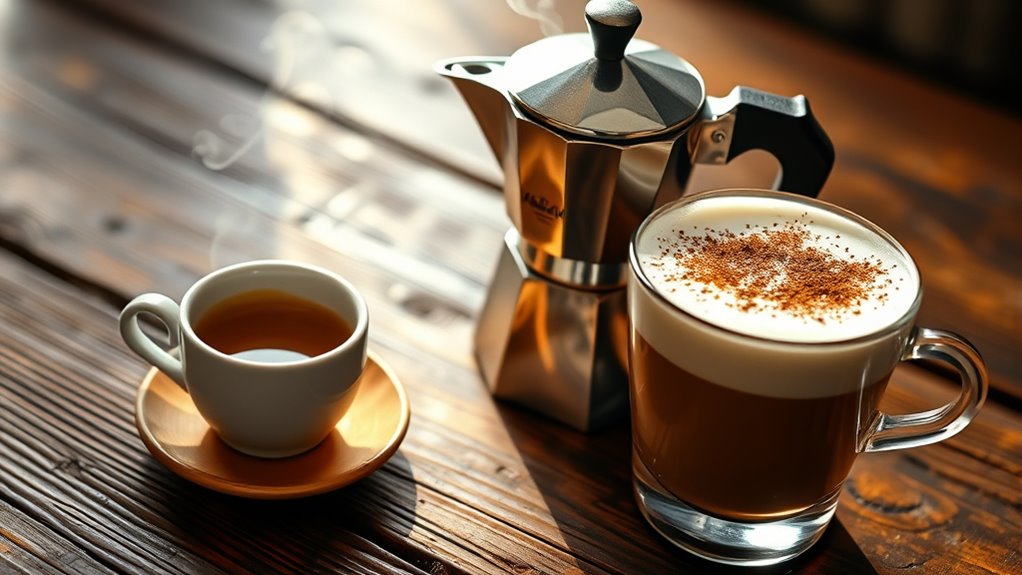
To get rich crema and well-balanced flavor, focus on using fresh, high-quality beans roasted for espresso. Grind your beans just before brewing for maximum freshness. Adjust the grind size to be very fine for espresso or medium-fine for moka, ensuring proper extraction. Use the right coffee-to-water ratio; too much coffee can cause bitterness, too little results in weak flavor. Maintain consistent water temperature around 93-95°C. Timing matters—brew espresso for 25-30 seconds, moka for 4-5 minutes. Clean your equipment immediately after use to preserve the crema and flavor. Here’s a quick guide:
| Tip | Effect | Best Practice |
|---|---|---|
| Use fresh beans | Richer crema, vibrant flavor | Grind just before brewing |
| Correct grind size | Proper extraction | Fine for espresso, medium-fine for moka |
| Maintain temp & timing | Balance flavors, crema | 93-95°C, 25-30 sec for espresso |
Common Mistakes to Avoid in Home Coffee Making
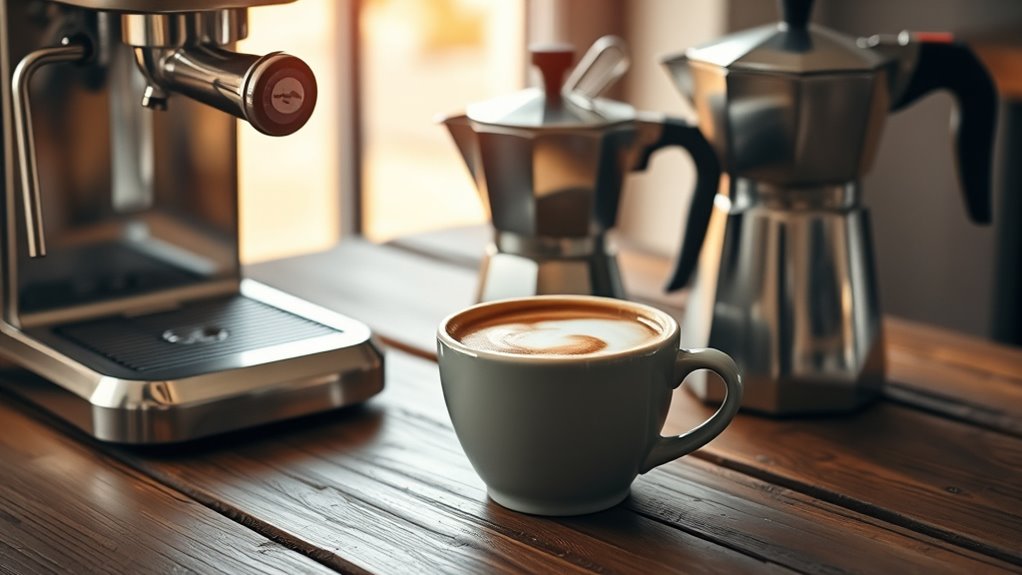
One common mistake in home coffee making is using the wrong grind size, which can lead to weak, bitter, or over-extracted brews. When your grind is too coarse, your coffee will be under-extracted and bland. If it’s too fine, it can cause over-extraction, resulting in bitterness. To avoid this, pay attention to your method and adjust accordingly. Additionally, selecting the right support breakfast options can enhance your overall breakfast experience and complement your coffee. Here are some mistakes to watch out for: 1. Using stale beans—freshly ground beans deliver better flavor and crema. 2. Overfilling or tamping too hard—this affects water flow and extraction. 3. Not cleaning equipment regularly—residue impacts taste and machine performance. Regularly cleaning your equipment helps prevent the buildup of residue that can negatively affect the juice quality and overall flavor of your coffee. These small adjustments make a big difference in your coffee’s quality.
Tips for Cleaning and Maintaining Your Equipment
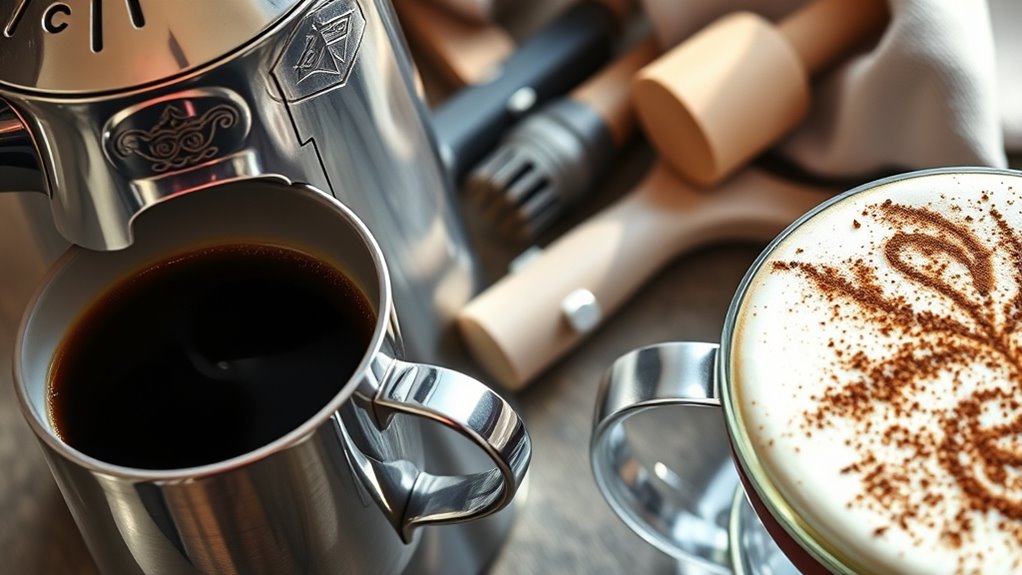
Regularly cleaning your coffee equipment is essential to guarantee each brew tastes fresh and maintains peak performance. After each use, rinse your espresso machine, moka pot, or frother with warm water to remove coffee oils and residue. For espresso machines, backflush with a cleaning solution designed for machines every few weeks to prevent clogs and buildup. Disassemble and scrub parts like filters, baskets, and steam wands with a soft brush, avoiding abrasive cleaners. For moka pots, rinse all parts thoroughly and avoid soap, which can affect flavor. Descale your equipment monthly with a mixture of water and vinegar or descaling solution to prevent mineral deposits. Pay attention to air purifier maintenance and follow manufacturer guidelines for optimal cleaning routines. Incorporating connected equipment into your cleaning routine can help monitor usage and alert you when maintenance is needed. Additionally, proper storage techniques help preserve your equipment’s longevity and performance. Regular maintenance extends beyond the equipment itself; ensure your kitchen environment stays clean to prevent dust and mold from contaminating your brewing area. Dry all components completely before storage to prevent mold and rust, ensuring your equipment stays in top shape.
Frequently Asked Questions
Can I Make Authentic Espresso Without an Espresso Machine?
You can’t make authentic espresso without an espresso machine because true espresso requires 9-bar pressure to force hot water through finely ground beans, creating the signature crema. Home stovetop methods, like the moka pot, produce strong coffee but lack the pressure needed for authentic espresso. If you want real espresso, investing in a machine is necessary, but for a good alternative, try a moka for a rich, concentrated brew.
What’s the Best Coffee Bean Roast for Moka and Espresso?
Think of your coffee beans as the soul of your brew. For moka and espresso, go for a medium-dark roast, symbolizing boldness and warmth. Medium-dark beans balance acidity and richness, perfect for the strong, complex flavors you crave. They bring depth to your shot or moka pot, like a well-lived story unfolding with every sip. Choose fresh, quality beans roasted for ideal flavor, and your coffee will speak volumes.
How Do I Prevent Bitterness When Brewing Moka Coffee?
To prevent bitterness when brewing moka coffee, start with fresh, high-quality beans and use medium-fine grounds. Use hot, but not boiling, water in the bottom chamber to reduce extraction time and bitterness. Don’t overfill the filter basket, and keep the heat on low to avoid overheating. Remove the moka from heat once the top chamber fills, and serve immediately for the best flavor.
Is It Possible to Create True Microfoam for Cappuccinos at Home?
Think of creating microfoam at home like sculpting clouds—delicate, airy, and precise. You can achieve true microfoam using a steam wand on an espresso machine or a handheld frother. Submerge the wand just below the milk’s surface, slowly introduce air, and swirl gently. With patience and practice, you’ll craft velvety microfoam perfect for a beautifully layered cappuccino, elevating your home coffee game to a barista’s level.
How Long Does Freshly Ground Coffee Stay Fresh for Brewing?
Freshly ground coffee stays best within 15 to 30 minutes after grinding, as it begins to lose its aroma and flavor quickly due to exposure to air. To enjoy the maximum taste, grind your beans just before brewing, and store whole beans in an airtight container away from light and heat. This way, you’ll guarantee your coffee remains flavorful and aromatic for your next brew.
Conclusion
Mastering Italian coffee at home means experimenting with methods like espresso, moka, and cappuccino to find what suits you best. For example, Sarah tried both the moka and espresso, discovering that her favorite rich flavor came from her stovetop moka, but she loved the creamy texture of her cappuccinos. By understanding techniques and equipment, you’ll enjoy authentic Italian coffee every day—so keep refining your skills and savor every sip!