To build a Greek meze spread like a local, focus on fresh, regional ingredients and traditional flavors. Start with classic dips like tzatziki, melitzanosalata, and fava, and arrange them with colorful vegetables, cheeses, and warm bread. Use vibrant herbs, high-quality olive oil, and local olives for authenticity. Pair your spread with traditional drinks like ouzo or fresh wines. For tips on perfect presentation and customizing for dietary needs, keep exploring—there’s much more to discover.
Key Takeaways
- Focus on fresh, regional ingredients like olive oil, olives, cheeses, and vegetables to capture authentic Greek flavors.
- Arrange dips, cheeses, and vegetables thoughtfully to emphasize color, texture, and communal sharing.
- Include traditional Greek drinks such as ouzo, tsipouro, or local wines to enhance the authentic experience.
- Prepare dips and accompaniments in advance, organizing them for easy access and a seamless, social presentation.
- Incorporate modern, inclusive options like vegan, gluten-free, and non-alcoholic choices to reflect contemporary Greek meze culture.

Cluster of 9 Round Serving Bowls, Gold Charcuterie Tray & Appetizer Platter Set -Connected Multi Bowl Serving Dishes for Entertaining,Modern Decorative Centerpiece for Kitchen, Party, Dining
【Sculptural Design for Elegant Presentation】 This beautiful cluster of 9 round serving bowls functions as both a decorative…
As an affiliate, we earn on qualifying purchases.
As an affiliate, we earn on qualifying purchases.
Understanding the Heart of Greek Meze Traditions
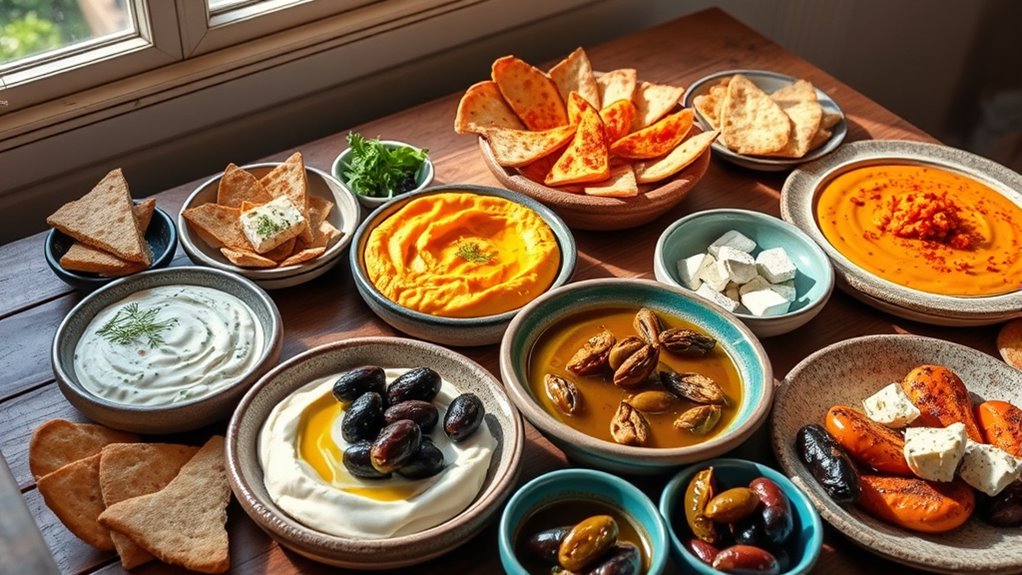
Greek meze traditions are rooted in communal sharing and celebrating local flavors. When you gather around a meze spread, you’re participating in a centuries-old cultural practice that emphasizes hospitality, conversation, and enjoying a variety of tastes together. Each dish is crafted with fresh, regional ingredients, highlighting Greece’s diverse produce and artisanal techniques. You’ll find that the emphasis is on balance—cool, creamy dips pair with crunchy vegetables, salty cheeses complement briny olives, and herbaceous seasonings elevate every bite. The focus isn’t just on individual items but on creating a harmonious experience that encourages passing dishes, trying new flavors, and fostering connections. This tradition transforms a simple meal into an engaging, lively occasion rooted in community and shared enjoyment. Incorporating traditional Free Floating elements like small plates and shared dishes further enhances the authentic experience. Additionally, understanding meze presentation techniques can elevate the overall dining experience and foster a sense of togetherness. The use of authentic serving ware and presentation styles can also contribute to the visual appeal of your meze spread, making it more inviting. Embracing the energetic harmony in presentation and shared atmosphere can deepen the cultural connection and make your meze gathering truly memorable. Moreover, paying attention to cultural authenticity can enrich the experience and help preserve these treasured traditions.

Ellora Farms Olive Oil Extra Virgin, Certified Single Estate PDO, High Polyphenol Extra Virgin Olive Oil, Cold Pressed & Traceable EVOO, Kosher, Crete, Greece 33.8 Fl oz (1 Ltr)
PREMIUM QUALITY & ORIGIN: Sourced from a single estate in Greece, our organic olive oil extra virgin cold…
As an affiliate, we earn on qualifying purchases.
As an affiliate, we earn on qualifying purchases.
Selecting the Essential Components for an Authentic Spread
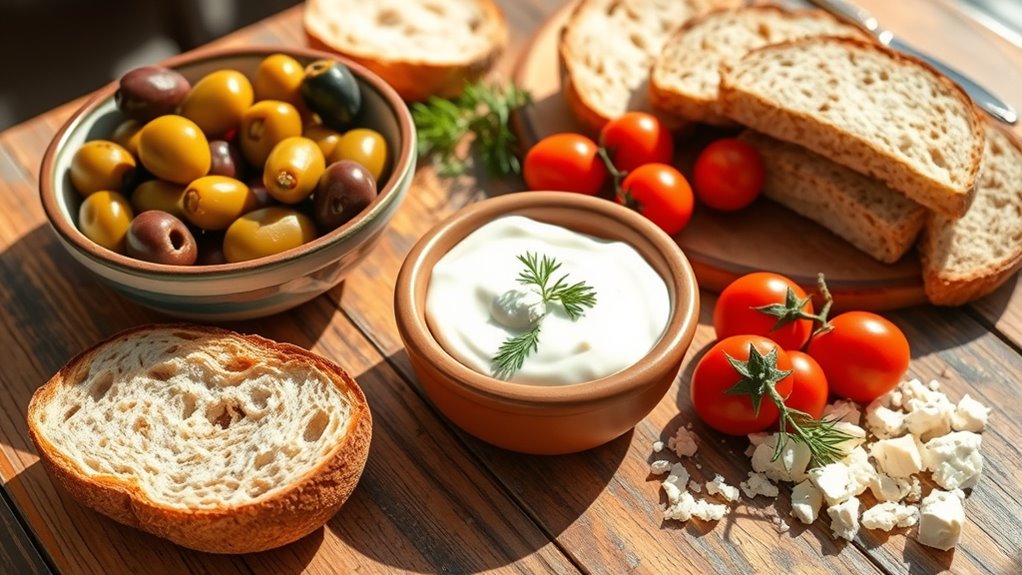
Building a balanced meze spread starts with selecting the right core components that reflect authentic Greek flavors. Focus on ingredients that deliver freshness, briny contrasts, and hearty textures. These essentials form the foundation of your spread and set the tone for an authentic experience. Incorporating freshness into your ingredients ensures vibrant flavors and a true representation of Greek cuisine. Here are the key components to include:
- Extra-virgin olive oil for drizzling and finishing touches
- Assorted olives like Kalamata and green varieties for saltiness and bite
- Cheeses such as feta and hard Greek cheeses for richness and texture
- Fresh vegetables like cucumber, cherry tomatoes, and peppers for crunch and color
- Using high-quality imaging‑scale equipment can help you better appreciate the textures and colors of your ingredients, elevating your presentation and experience. Additionally, choosing durable and reliable insulated jackets for winter ensures you stay comfortable while sourcing fresh ingredients outdoors. As with the success of Greek cuisine, authentic ingredients are crucial to capturing the true flavors and cultural richness of the spread. Recognizing the importance of market trends can also help you select ingredients that are both traditional and contemporary in Greek culinary practices.

Kasseri Greek Cheese 250 g
It belongs to the pasta filata family of cheeses, that includes fresh cheeses like Mozzarella and aged ones…
As an affiliate, we earn on qualifying purchases.
As an affiliate, we earn on qualifying purchases.
Crafting Classic Greek Dips and Spreads From Scratch
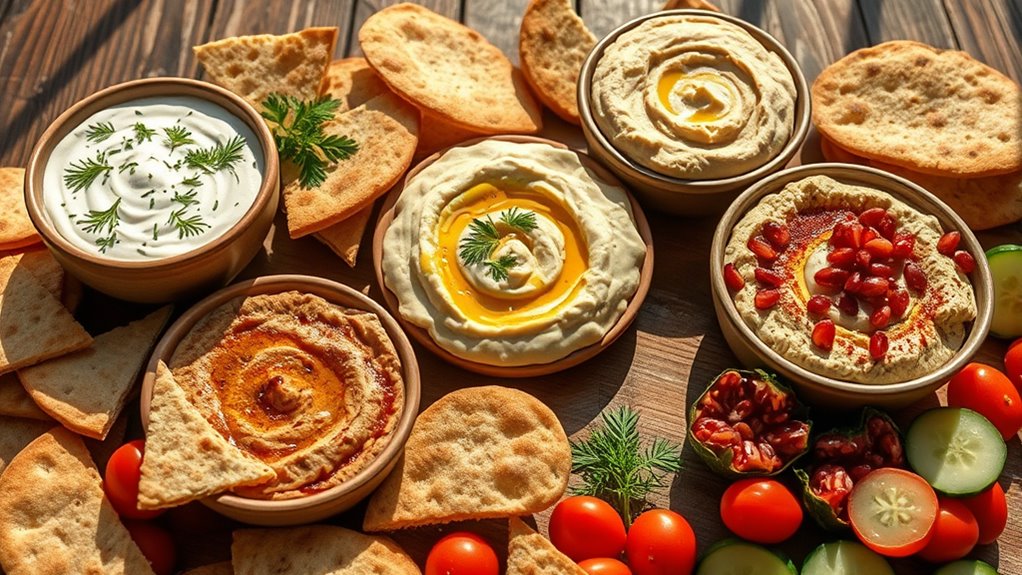
Creating authentic Greek dips and spreads from scratch allows you to control flavors and achieve the vibrant, fresh taste characteristic of traditional meze. Start with simple ingredients like Greek yogurt, roasted eggplant, or yellow split peas, then blend with garlic, lemon, and herbs. Use good olive oil to finish and enhance richness. To help organize, here’s a quick guide:
| Dip/Spread | Main Ingredients | Flavor Notes |
|---|---|---|
| Tzatziki | Yogurt, cucumber, garlic | Cooling, herbaceous |
| Melitzanosalata | Eggplant, lemon, garlic | Smoky, tangy |
| Fava | Split peas, lemon, onion | Creamy, hearty |
Taste as you go, adjusting seasoning, and serve with warm pita or fresh vegetables for an authentic Greek experience.

Artena 6oz Turquoise Solid Ceramic Chips and Dip Serving Platter with Acacia Wooden Tray, 4.5inch Glazing Small Serving Bowls/Dipping Dishes for Condiments,Side Dishes, Dipping, Pre, Dessert, Salsa
【Combining Ceramic & Acacia Wood】Extra sturdy Chips and dip Serving platter is crafted with ultra-fine ceramic and natural…
As an affiliate, we earn on qualifying purchases.
As an affiliate, we earn on qualifying purchases.
Arranging Your Meze Platter for Maximum Visual Appeal

To make your meze platter visually inviting, start by planning a balanced layout that highlights a variety of colors, textures, and flavors. Distribute items evenly across the board, ensuring each element stands out. Arrange small bowls of dips and spreads in the center or at key points, leaving space around for garnishes. Spread fresh vegetables, cheeses, and bread in clusters, mixing shapes and sizes for visual interest. Incorporate contrasting colors—bright peppers, green herbs, white cheeses—to create vibrancy. Use height by stacking some items or placing bowls at different levels. Keep it casual yet thoughtful, inviting guests to explore. Presentation techniques can elevate the overall look and make your spread more appealing. Unplanned weather changes can also lead to amusing surprises, so be prepared for outdoor settings. Additionally, paying attention to food arrangement can significantly enhance the visual appeal and overall experience of your meze platter. Experimenting with plating styles can further elevate your presentation and impress your guests.
Incorporating Fresh Vegetables and Cheese for Color and Texture
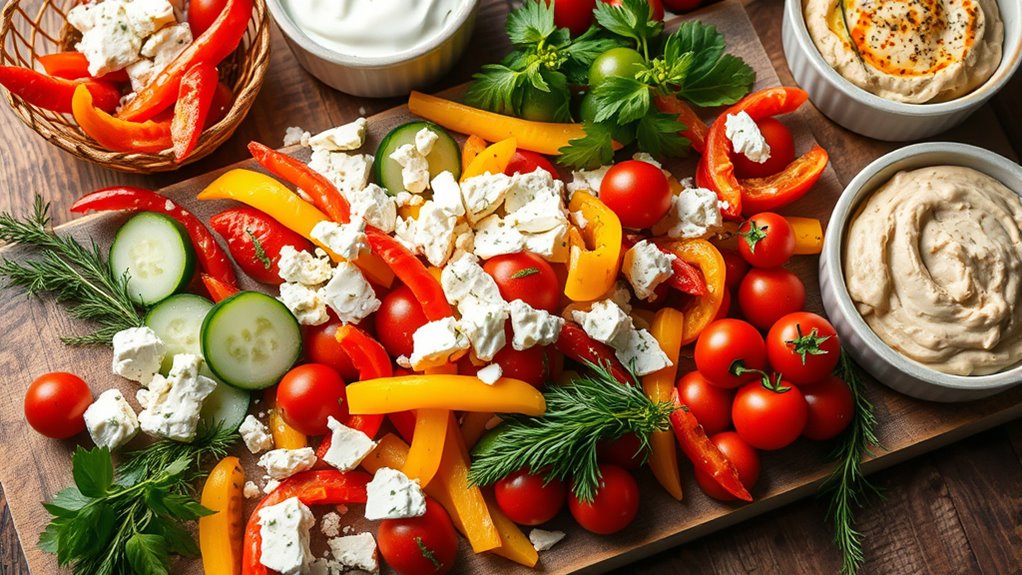
Incorporating fresh vegetables and cheese into your meze platter instantly enhances its visual appeal and adds delightful variety to each bite. Use crisp cucumbers, juicy cherry tomatoes, sliced peppers, and radishes to introduce vibrant colors and crunch. These raw elements balance the richness of cheeses like feta, kasseri, or graviera, adding texture and saltiness. Arrange the vegetables and cheeses thoughtfully, creating a colorful mosaic that invites guests to explore. Incorporate cheese in small blocks or crumbles alongside the vegetables for easy pairing. Fresh herbs like dill, mint, or parsley sprinkled over the vegetables and cheeses boost flavor and freshness. This combination not only elevates the platter’s appearance but also offers a dynamic mix of textures—crunchy, creamy, and tangy—that keeps every bite engaging. Utilizing visual presentation techniques can further enhance the overall appeal of your spread. Additionally, choosing seasonal vegetables can highlight local ingredients, making your meze even more authentic and vibrant. Incorporating colorful arrangements can make your spread even more inviting and visually striking. To further elevate your display, consider balancing colors and textures to create an eye-catching and harmonious presentation.
Pairing Beverages to Complement Your Meze Experience
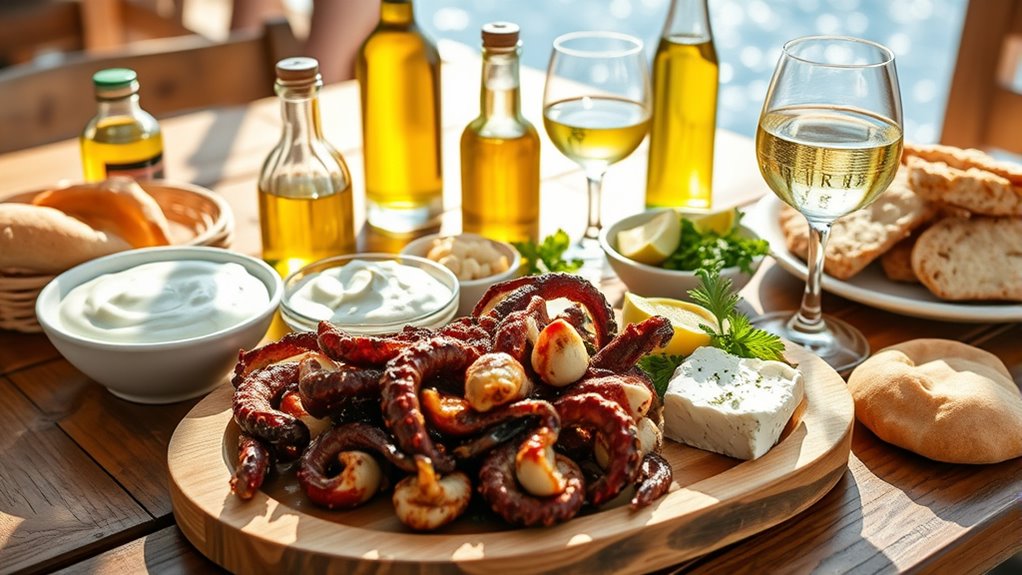
When selecting beverages for your Greek meze, traditional aperitifs like ouzo or tsipouro naturally enhance the salty, briny flavors. Light Greek white wines such as Assyrtiko cut through creamy spreads and oily dishes, balancing richness on the palate. Don’t forget to offer invigorating non-alcoholic options like sparkling water or herbal infusions to keep everyone refreshed. For a well-rounded experience, consider beverage pairing tips that help you choose drinks suited to each dish’s flavor profile.
Traditional Greek Aperitifs
Greek aperitifs are essential for setting the tone of your meze table, as they enhance the flavors and create an authentic dining experience. These drinks stimulate your palate and pair beautifully with the variety of spreads and small bites. To start, consider:
- Ouzo – An anise-flavored spirit that complements briny olives, feta, and seafood spreads.
- Tsipouro – A potent grape-based spirit, often enjoyed alongside salty cheeses and charcuterie.
- Raki – Similar to tsipouro, offering a strong, clear flavor to balance rich dips.
- Aperol or Campari – Light, bitter aperitifs perfect for adding a touch of refreshment before heavier bites.
These beverages bring a traditional Greek touch, elevating your meze experience from casual to authentic.
Ideal Wine Pairings
Pairing the right wines with your Greek meze enhances flavors and creates a harmonious dining experience. Light, crisp white wines like Assyrtiko or Moschofilero cut through rich, creamy spreads such as feta or tzatziki, balancing oiliness and acidity. For heartier cheeses like graviera or kasseri, consider a slightly fuller white or a dry rosé to complement their nuttiness and saltiness. Sparkling wines, including local cava or brut, add an invigorating contrast to smoky eggplant dips and marinated vegetables. If you prefer reds, choose light-bodied options like Xinomavro or Agiorgitiko, which won’t overpower delicate flavors. Remember, the goal is to highlight the meze’s freshness and briny notes, so select wines that offer brightness, acidity, and subtle complexity. Incorporating regulatory exposure into your vacation can also elevate your overall experience, offering a refreshing escape after enjoying your meal. Additionally, understanding electric bike horsepower can inspire you to explore the local scenery more actively during your trip. To truly appreciate the balance of flavors, consider how faith in tradition influences Greek culinary practices and wine-making techniques, enriching your meze experience even further. Paying attention to piercing care and hygiene ensures your enjoyment remains safe and comfortable throughout your culinary journey.
Refreshing Non-Alcoholic Options
Opting for invigorating non-alcoholic beverages enhances your Greek meze experience by balancing rich flavors and cleansing the palate. These drinks revitalize your senses and complement the variety of dips and spreads.
Consider serving:
- Sparkling water with lemon or cucumber for a cooling, bubbly contrast.
- Freshly squeezed citrus juices like orange or grapefruit for a sweet tang.
- Traditional Greek lemonade with honey and mint for a sweet, aromatic touch.
- Herbal infusions such as chamomile or mountain tea served iced for a calming, flavorful sip.
These options add brightness and variety, ensuring your gathering remains lively and revitalizing. They also help balance the richness of cheeses, oils, and dips, making each bite more enjoyable. Incorporating beverage options that are popular in the region can further enhance the authentic Greek meze experience.
Timing and Preparation Tips for a Seamless Hosting Experience
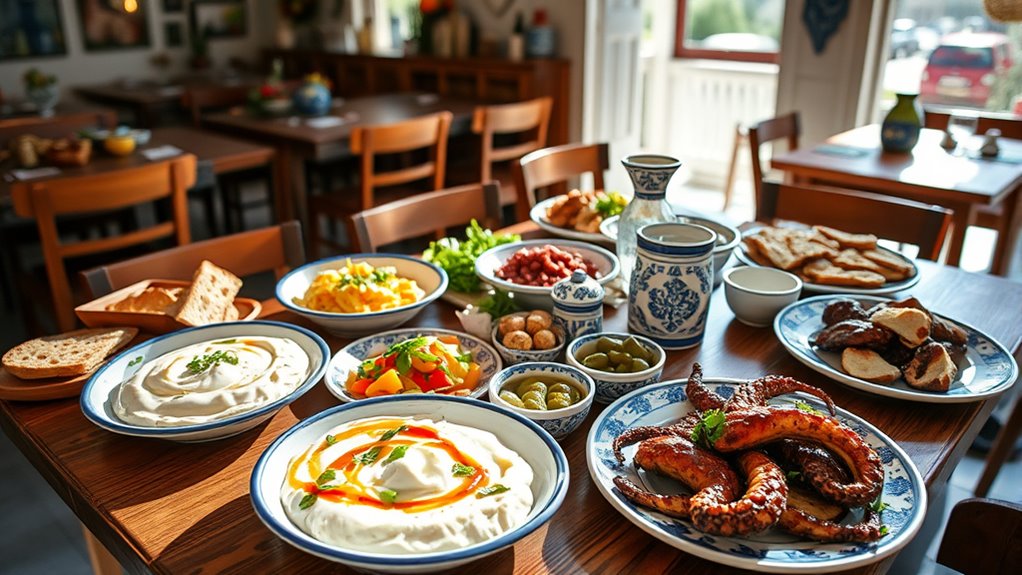
To guarantee your meze spread comes together smoothly, start by preparing dips a day or two in advance so they can develop flavor and stay fresh. Organize your serving stations ahead of time, placing bowls, utensils, and accompaniments in easy reach. Finally, time your pita and bread warming or toasting so they’re perfectly fresh when your guests arrive.
Prepare Dips in Advance
Preparing dips ahead of time streamlines your hosting and guarantees everything tastes fresh and vibrant. You can make most spreads a day or two in advance, saving time on the event day. Store them in airtight containers and keep dairy-based dips refrigerated. This allows flavors to meld and deepens their richness. Additionally, planning your menu and presentation ensures a cohesive and inviting spread for your guests. 1. Prepare creamy dips like tzatziki and fava a day before, storing them chilled. 2. Roast eggplants early for melitzanosalata; it keeps well at room temperature or refrigerated. 3. Mix and season spreads like whipped feta or taramosalata a day ahead to enhance flavor. 4. Label each dip for easy identification and serve directly from the fridge, bringing to room temperature if needed. Incorporating food preservation techniques helps maintain the dips’ freshness and flavor integrity. This approach keeps your spread fresh, vibrant, and ready to impress guests effortlessly.
Organize Serving Stations
Arranging your serving stations thoughtfully sets the tone for a relaxed, enjoyable Greek meze experience. Start by grouping dips and spreads into small bowls, placing them with appropriate utensils for easy access. Distribute colorful vegetables, cheeses, and olives evenly across the table to create visual appeal and variety. Use separate platters for bread, pita, and crackers, positioning warm and room-temperature items nearby. Keep chilled items like yogurt dips in cool bowls or on ice if needed. Place small plates, napkins, and tasting utensils within reach for convenience. Make certain that each station flows naturally from one to the next, encouraging guests to move around and sample different flavors. A well-organized layout minimizes clutter and keeps the focus on sharing and enjoying the vibrant spreads.
Time Pita and Breads
Timing pita and breads carefully guarantees a seamless hosting experience and keeps your spreads fresh and inviting. To do this, follow these tips:
- Warm pita just before serving—wrap in foil and heat briefly in the oven or toaster to enhance softness and aroma.
- Prepare toasted pita triangles or breadsticks ahead of time and reheat briefly if needed, maintaining crunch.
- Slice bread or pita into portions close to serving time to prevent dryness and ensure freshness.
- Arrange breads on a platter just before guests arrive to avoid sogginess or staleness, keeping them crisp and appealing.
Serving and Sharing: Creating a Casual, Communal Atmosphere

Creating a casual, communal atmosphere around Greek meze means emphasizing ease and shared experience. Set up your spread with small bowls of dips and plenty of utensils, encouraging guests to plunge in freely. Arrange colors and textures evenly to invite visual interest and make it easy to pick and choose. Keep the vibe relaxed by offering both warm pita and room-temperature breadsticks or crackers, making sure everyone can enjoy their favorite spreads comfortably. Use small plates, toothpicks, and serving tongs to facilitate easy grazing and prevent cross-contamination. Encourage conversation by placing dishes within reach, creating a space where sharing feels natural and effortless. The goal is to foster a lively, inviting environment where everyone feels part of the feast.
Adjusting Your Spread for Dietary Preferences and Restrictions
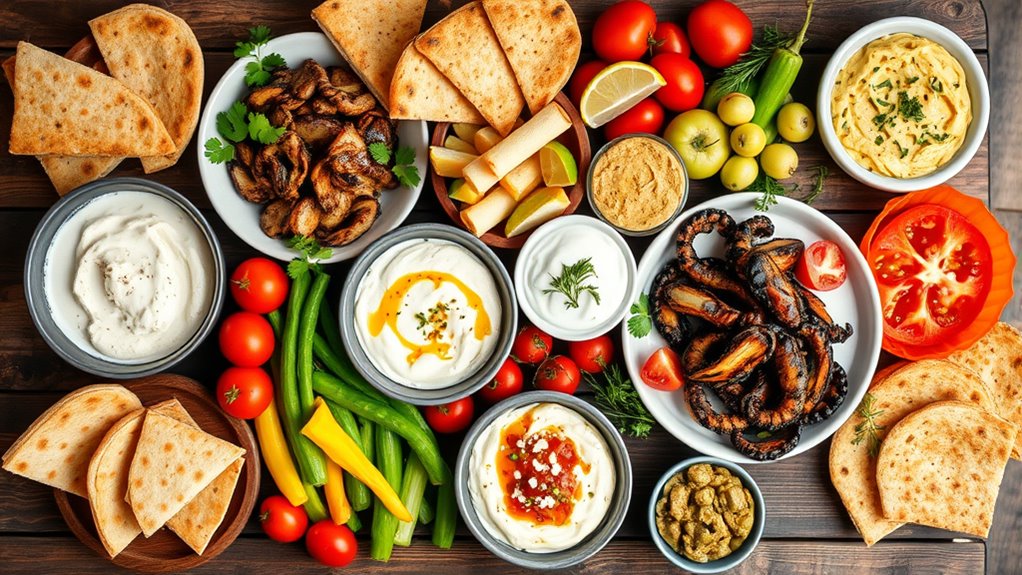
To accommodate various dietary needs, you can easily customize your meze spread with vegetarian, vegan, or gluten-free options. Swap out traditional dairy-based spreads for plant-based substitutes and choose gluten-free breads or veggie sticks instead of pita. By adjusting your ingredients thoughtfully, everyone can enjoy a flavorful and inclusive Greek meze experience.
Vegetarian and Vegan Options
Adjusting your Greek meze spread to accommodate vegetarian and vegan guests involves selecting dips and spreads that are free of animal products while still offering bold flavors and rich textures. Focus on plant-based ingredients and traditional recipes that naturally exclude dairy and meat. To diversify your spread, consider:
- Roasted eggplant dip (melitzanosalata) with garlic, lemon, and olive oil.
- Yellow split-pea fava puree, seasoned with herbs and lemon.
- Hummus with added herbs or roasted peppers for variation.
- Tomato-based spreads like sun-dried tomato tapenade or fresh tomato bruschetta.
Use fresh herbs, olive oil, and lemon to brighten flavors. Include vegan-friendly bread or pita and colorful vegetables to complement these spreads. This ensures a flavorful, inclusive meze that everyone can enjoy.
Gluten-Free Alternatives
When accommodating gluten-free diets, selecting suitable bread and carriers is essential to guarantee everyone can enjoy your Greek meze. Instead of traditional pita or bread, offer gluten-free crackers, rice cakes, or sliced fresh vegetables like cucumber, bell peppers, and radishes as vehicles for dips. These provide crunchy, flavorful options that complement spreads without gluten. You can also serve warm gluten-free bread or breadsticks if available. Focus on creating a variety of dips that are naturally gluten-free, such as tzatziki, melitzanosalata, fava, and whipped spicy feta. Label everything clearly to avoid cross-contamination, and use small bowls and utensils for each dip. This approach assures your spread is inclusive, flavorful, and accessible for everyone, regardless of dietary restrictions.
Dairy-Free Substitutes
If you’re looking to make your Greek meze spreads suitable for those avoiding dairy, there are simple plant-based substitutes that preserve flavor and texture. You can replace traditional dairy ingredients with alternatives that still deliver authentic taste.
- Use coconut or almond yogurt instead of Greek yogurt for tzatziki, adding lemon and herbs for brightness.
- Swap out feta with crumbled tofu or cashew-based cheese for creamy, tangy spreads like tirokafteri.
- Incorporate mashed avocado or blended white beans to mimic the richness of cheese-based dips.
- Consider using nut-based creams or tahini for added creaminess in dips like melitzanosalata or skordalia.
These substitutions let you craft flavorful, inclusive spreads that fit various dietary needs while maintaining Greek meze’s vibrant character.
Elevating Your Meze With Regional Variations and Personal Touches
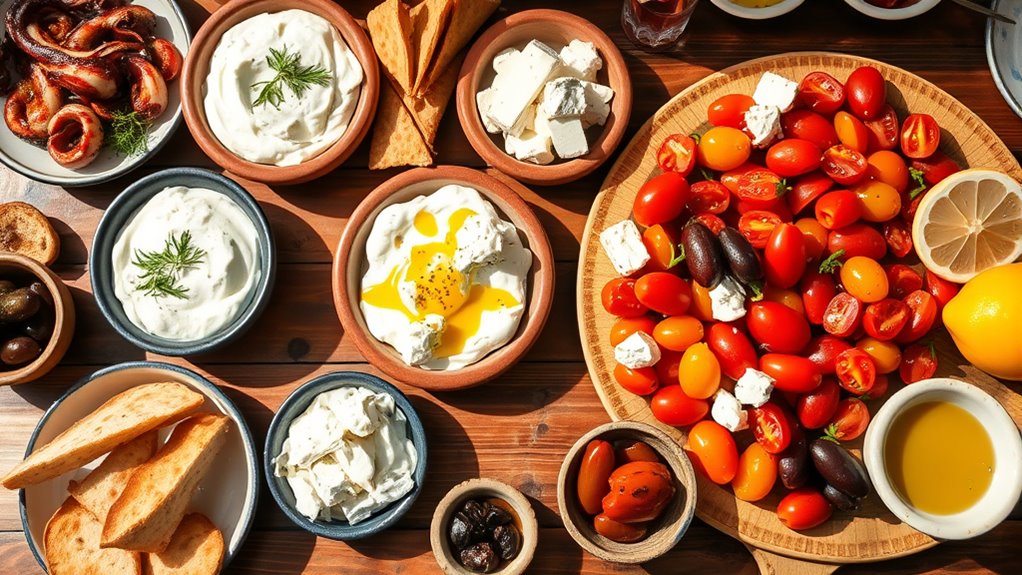
Exploring regional variations and adding personal touches can transform a traditional Greek meze into a unique culinary experience. To do this, incorporate local ingredients and flavors from different parts of Greece. For example, in Crete, add fresh wild herbs like marjoram or local cheeses such as graviera. In the Cyclades, include sun-dried tomatoes or caper berries to enhance briny notes. Personal touches like drizzling honey over whipped feta or adding crushed oregano to eggplant dip create memorable flavors. Use heirloom vegetables, regional olive oils, or age-old family recipes to make your spread stand out. Adjust seasoning and presentation to reflect your taste and local influences. This approach celebrates Greece’s culinary diversity while showcasing your creativity, making your meze a true reflection of both tradition and personality.
Frequently Asked Questions
How Can I Make My Dips More Authentic to Greek Traditions?
To make your dips more authentic, focus on using traditional ingredients like strained Greek yogurt for tzatziki, roasted eggplants for melitzanosalata, and yellow split peas for fava. Use plenty of fresh herbs like dill and mint, and finish with high-quality Greek olive oil and lemon juice. Incorporate classic seasonings like garlic and oregano, and add briny elements such as capers or olives for depth. Serve dips at proper temperatures for maximum flavor.
What Are the Best Accompaniments to Enhance Greek Meze Flavors?
To enhance Greek meze flavors, include traditional accompaniments like crusty bread or toasted pita for dipping, and a selection of olives such as Kalamata and green varieties for briny contrast. Serve fresh vegetables like cucumber, cherry tomatoes, and sliced peppers to add crunch and color. Pair with light white wines like Assyrtiko and traditional spirits like ouzo or tsipouro. Nuts, small pickles, and lemon wedges also complement the spread beautifully.
How Do I Keep Dips Fresh When Preparing Ahead of Time?
To keep dips fresh when preparing ahead, store them in airtight containers and refrigerate promptly. Cover the surface with plastic wrap to prevent oxidation, especially for dips with garlic or lemon. For yogurt-based dips like tzatziki, add a splash of fresh lemon juice or a drizzle of olive oil before serving to maintain brightness. Reheat or bring dips to room temperature just before serving for the best flavor and texture.
What Are Some Common Mistakes to Avoid When Arranging a Meze Platter?
When arranging a meze platter, avoid cluttering the board and mixing incompatible flavors or textures. Keep dips separated in small bowls, and organize elements by color and texture for visual appeal. Don’t forget serving utensils for each dip, and place warm and room-temperature items strategically. Make sure to balance rich spreads with fresh, crunchy vegetables and light garnishes. Ultimately, plan the layout to encourage easy access and sharing for a convivial experience.
How Can I Adapt Greek Meze for Guests With Dietary Restrictions?
Did you know over 20% of people have food allergies? To adapt Greek meze for guests with restrictions, offer dairy-free options like hummus or roasted vegetable spreads instead of tzatziki and feta. Use gluten-free bread or veggie sticks instead of pita. Clearly label dishes, include nut-free and seafood-free choices, and ask guests about specific allergies beforehand. This way, everyone enjoys the vibrant flavors safely and comfortably.
Conclusion
Think of your meze spread as a vibrant tapestry, each piece a colorful thread woven together to tell a story. As you serve, imagine guests gathering around a warm fireplace, sharing stories and laughter. Your carefully curated platter becomes the flickering flame—bringing everyone closer, igniting joy, and creating memories. With each bite, you craft more than a meal; you craft a shared moment of warmth, connection, and Greek hospitality.