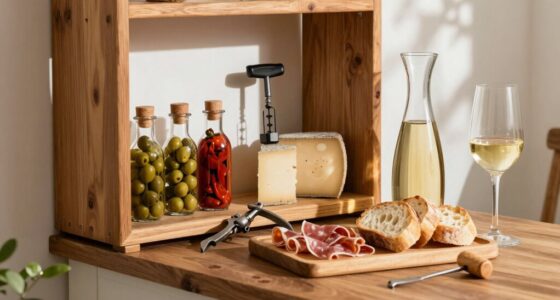
European table settings feel different because each region has its own traditions, ingredients, and cultural influences. France’s formal setups use multiple utensils, while Italy’s are more relaxed yet refined. Spain emphasizes communal dishes and simpler arrangements. Northern Europe favors minimalist, functional designs, whereas Southern Europe showcases ornate china and decorative glassware. These differences tell stories of history, local tastes, and dining customs. Keep exploring to discover how these regional styles reflect their unique cultural identities.

Get travel and outdoor gear delivered free with Prime
- Fast, free delivery on millions of items
- Prime Video, Amazon Music and more included
- Member-only deals all year
Key Takeaways
- Regional styles vary from formal France to relaxed Italy, influencing utensil arrangement and table aesthetics.
- Cultural and historical influences shape regional tableware, reflecting local traditions and ingredients.
- Design elements, such as ornate or minimalist tableware, highlight regional tastes and aesthetic preferences.
- Functional considerations, like regional cuisine and eating customs, determine tableware choices and setup.
- Overall, differences in European table settings convey cultural stories and regional identity through visual details.

Regional table variations are a key part of what makes European table settings so interesting. Each country, and often each region within a country, has its own unique style. In France, you might see a more formal setup with multiple forks and knives, all aligned according to strict rules. Meanwhile, in Italy, the setting might be slightly more relaxed, with fewer utensils but still maintaining an air of sophistication. Spain, on the other hand, often features a simpler arrangement that emphasizes communal eating and shared dishes. Recognizing these regional differences allows you to appreciate the cultural diversity embedded in European dining traditions, and it helps you adapt your own table manners accordingly. Additionally, understanding the regional table variations can deepen your appreciation for the historical influences that shaped each style. The use of specific tableware also varies regionally, with particular types of plates, glasses, and serving pieces reflecting local tastes and ingredients. For instance, in Northern Europe, you might find more minimalist designs, emphasizing functionality and clean lines. In contrast, Southern European tables often feature ornate china and decorative glassware, highlighting the importance of aesthetics and tradition. These variations aren’t just about style—they also have functional roots rooted in regional ingredients and dining customs. By paying attention to these details, you gain insight into the cultural significance behind each element. Ultimately, what makes European table settings feel different isn’t just their visual appeal but the stories they tell about history, culture, and regional identity. When you observe or participate in these settings, you’re engaging with a centuries-old way of celebrating food and company. Respecting the cultural dining etiquette and understanding regional variations enriches your experience, making meals more meaningful and immersive.
As an affiliate, we earn on qualifying purchases.
Frequently Asked Questions
How Do European Table Settings Vary Between Countries?
You’ll notice that European table settings vary between countries due to cultural influences and regional variations. For example, in France, you might see multiple forks and a bread plate, while in Italy, a more relaxed setup is common. In Scandinavia, minimalist styles dominate. These differences reflect local traditions, dining customs, and regional tastes, making each country’s table setting unique and a charming expression of its cultural identity.
What Are the Traditional Utensils Used in European Dining?
In European dining, you typically use ceramic dinnerware complemented by silver flatware for a formal setting. The utensils include a dinner fork, knife, and spoon, often with specific placements for different courses. You might also see smaller forks and spoons for desserts or fish dishes. This combination enhances the elegance and tradition of European meals, making each course feel special and well-structured.
Are There Specific Rules for Napkin Placement in Europe?
Napkin folding follows specific rules in Europe, and it’s more than just a fancy gesture; it’s a reflection of cultural etiquette. You typically place the napkin either on your lap or to the left of your plate, folded neatly or in a decorative shape. In formal settings, it’s common to see intricate napkin folding, showing respect and refinement. Remember, proper napkin placement creates a polished, sophisticated dining experience that feels as grand as a royal banquet.
How Do European Table Settings Differ for Formal Versus Informal Meals?
In European table settings, formal meals feature multiple utensils, a charger plate, and precise napkin placement, reflecting traditional etiquette influenced by cultural standards. For informal meals, the setup simplifies with fewer utensils and casual placement, often adapting to modern lifestyles. Cultural influences shape these differences, while modern adaptations make settings more accessible and relaxed, blending tradition with practicality. You’ll notice these variations depending on the meal’s formality and cultural context.
What Is the History Behind European Table Setting Customs?
You might think European table customs just appeared overnight, but they’re rooted in a rich history and cultural influences. The historical evolution of formal dining practices traces back to medieval aristocracy, where etiquette became a status symbol. Over centuries, these customs refined, blending regional traditions and societal values. Ironically, what started as a display of power now defines elegance, showing how cultural influences shape our dining habits and make European settings uniquely sophisticated.
Italian relaxed table setting dinnerware
As an affiliate, we earn on qualifying purchases.
As an affiliate, we earn on qualifying purchases.
Conclusion
Now, as you sit at the table, notice how European settings whisper tradition and elegance, each piece telling a story. The delicate china contrasts with the sturdy silverware, like a gentle dance between history and modernity. It’s a scene where formality meets comfort, creating an atmosphere that’s both refined and inviting. Embrace the subtle differences, and you’ll find that every meal becomes a journey through time, flavor, and culture, all around a beautifully set table.
As an affiliate, we earn on qualifying purchases.
Northern European minimalist tableware
As an affiliate, we earn on qualifying purchases.
As an affiliate, we earn on qualifying purchases.
Halloween Picks
halloween
As an affiliate, we earn on qualifying purchases.