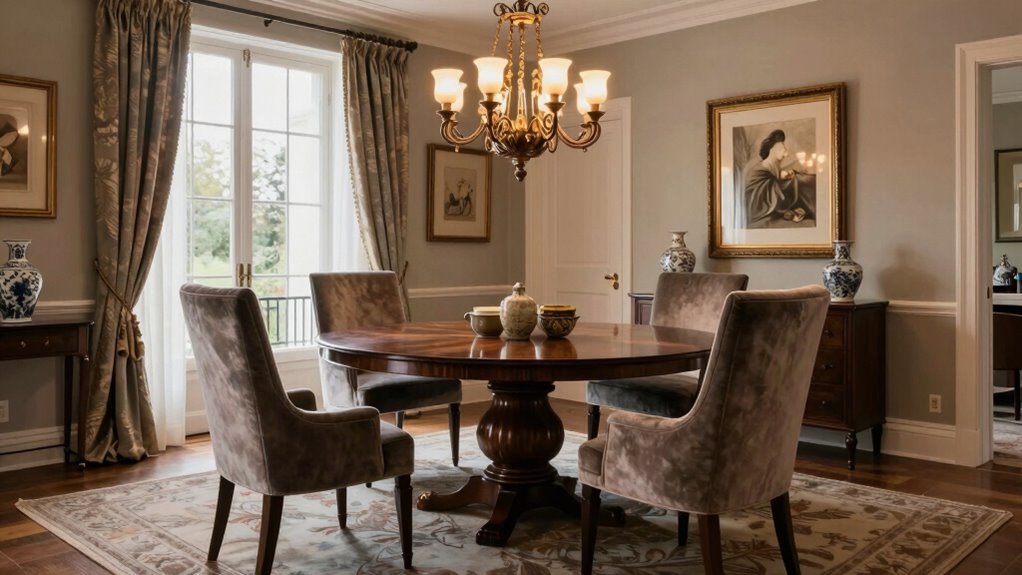

To build a European dining room mood, blend vintage-inspired furniture with modern touches. Choose curved tables with carved legs and upholstered chairs with flowing contours to evoke history and sophistication. Use rich fabrics like velvet or damask in deep, muted tones to add warmth, while incorporating metallic accents for elegance. Balance heritage patterns with sleek lines and soft lighting to create an inviting, timeless space. Keep exploring for more tips to perfect your European-inspired design.
Key Takeaways
- Choose vintage-inspired furniture with curved lines, ornate details, and modern touches for a timeless European aesthetic.
- Incorporate rich textiles like velvet and damask in deep hues to add warmth and luxurious texture.
- Use a muted, sophisticated color palette with metallic accents to evoke elegance and modern refinement.
- Balance heritage patterns and natural materials to create a layered, authentic European ambiance.
- Highlight textures and architectural features with strategic lighting to enhance mood and visual interest.

Building a European dining room mood involves more than just choosing the right furniture; it’s about capturing the essence of European elegance and charm. To do that, you need to carefully select furniture shapes and fabrics that blend vintage charm with modern elegance. The shapes of your furniture should evoke a sense of history and sophistication, with curved lines and ornate details that whisper stories of old-world craftsmanship. Think of rounded tables with carved legs or upholstered chairs with gentle, flowing contours. These shapes instantly add a touch of vintage charm, transporting you to a European café or palace setting. But it’s equally important to balance these classic elements with contemporary touches, like sleek, minimalist legs or subtle decorative accents, to incorporate modern elegance. This combination creates a space that feels timeless yet fresh, inviting guests to linger and enjoy. Incorporating biodiversity into your design can also inspire unique textures and natural materials that enhance the authenticity of your space. When choosing textiles, selecting fabrics with heritage patterns can further deepen the European ambiance, adding layers of history and culture to your decor. Additionally, understanding number formatting can help in selecting and presenting decorative elements and accents harmoniously, ensuring your design remains cohesive and visually appealing. To further enrich the ambiance, paying attention to the lighting design can dramatically influence the overall mood by highlighting textures and architectural details. Fabrics play an essential role in setting the mood, especially when it comes to textiles used on chairs, curtains, and table linens. Rich fabrics like velvet or damask in deep, muted tones add warmth and luxury, reinforcing that vintage charm that’s fundamental to European design. Meanwhile, incorporating lighter, textured fabrics such as linen or chambray can introduce a modern, breezy vibe that keeps the room from feeling overly traditional. You might choose a beautifully embroidered tablecloth or velvet-upholstered chairs for a touch of opulence, then offset that with simple, elegant drapes in neutral shades. Mixing textures and patterns allows you to craft a layered look that feels curated and authentic. Color choices further enhance the mood. Deep, muted hues like burgundy, navy, or olive green evoke a vintage European ambiance, while touches of gold or metallic accents add a sense of modern elegance. When selecting fabrics, consider how their colors complement the furniture shapes. Soft, muted tones on curved, vintage-inspired furniture can create a cozy, inviting atmosphere, while pops of metallic or brighter accents on accessories or cushions introduce a contemporary flair. Paying attention to design harmony ensures that all these elements work together seamlessly, creating a cohesive and inviting space. The key lies in balancing these elements so that vintage charm doesn’t overpower modern sophistication, and vice versa.
European style dining table with carved legs
As an affiliate, we earn on qualifying purchases.
As an affiliate, we earn on qualifying purchases.
Frequently Asked Questions
What Are the Key Color Schemes for European Dining Rooms?
You should opt for classic color schemes like deep reds, rich golds, and elegant creams, which evoke a regal European feel. Incorporate medieval motifs and ornate woodwork to enhance authenticity and charm. These colors complement intricate furniture shapes and luxurious fabrics, creating a warm, inviting atmosphere. Stick to muted tones with accents of jewel tones to balance opulence and tradition, making your dining room both timeless and sophisticated.
How Can Lighting Enhance the European Ambiance?
Lighting in your European dining room acts like a gentle sunbeam, casting warmth and elegance. You should strategically place a stunning chandelier above the table to serve as a focal point, mimicking the grandeur of European palaces. Complement this with accent lighting around artwork or architectural features, creating layers of soft glow. This combination transforms your space into a cozy, sophisticated haven where every meal feels like a special occasion.
Which Accessories Best Complement European-Style Furniture?
You should choose vintage accents and ornate accessories to perfectly complement European-style furniture. Think vintage chandeliers, antique candelabras, or intricate mirrors that add charm and history. Decorative vases, gilded picture frames, and detailed candle holders also enhance the elegant, timeless feel. These accessories bring character and depth, tying the room’s aesthetic together while highlighting the craftsmanship and ornate details typical of European design.
What Are Common Layout Options for European Dining Spaces?
You can choose an open floor layout to create a spacious, airy feel, emphasizing elegance and flow. Alternatively, a compact arrangement works well for more intimate gatherings, bringing everyone closer and fostering conversation. European dining spaces often feature symmetrical placements or round tables, maximizing the open floor while maintaining style. Consider your space size and lifestyle to decide which layout best suits your European-inspired dining room.
How Do I Choose Fabrics for Durability and Style?
You should choose fabrics that balance durability and style, focusing on fabric patterns and material textures that suit your European dining room. Opt for sturdy materials like linen, velvet, or leather, which resist wear. Select fabric patterns that enhance your aesthetic—think classic florals or subtle stripes. Remember, textures like smooth velvet or textured woven fabrics add depth. Combining durable fabrics with elegant patterns and textures helps create a timeless, sophisticated dining ambiance.
velvet upholstered dining chairs
As an affiliate, we earn on qualifying purchases.
As an affiliate, we earn on qualifying purchases.
Conclusion
By mastering these furniture shapes and fabric choices, you’ll transform your dining room into a European masterpiece that could make even the most seasoned travelers swoon. Imagine hosting dinners in a space so stunning, it feels like you’ve stepped into a grand European palace—without leaving your home! With just a few clever design tricks, you’ll create an ambiance so enchanting, your guests will never want to leave. Prepare for compliments, gasps, and maybe even a few envious glances!
As an affiliate, we earn on qualifying purchases.
metallic accents for dining room
As an affiliate, we earn on qualifying purchases.
As an affiliate, we earn on qualifying purchases.