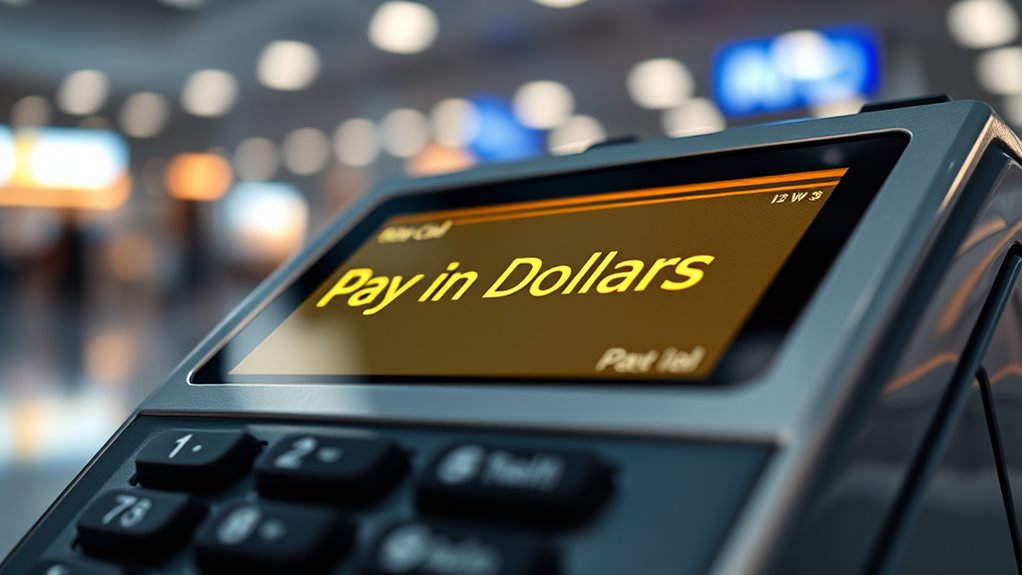
When you see the “Pay in Dollars” option at a foreign merchant, you’re often falling into the DCC trap, where your bank or card issuer applies a markup and less favorable exchange rate. This makes the price seem simple but actually costs you more through hidden fees. Merchants benefit from commissions, and the markup can be 2% or higher. To avoid these extra charges, it’s best to stick with local currency. Stay tuned to learn how to spot and escape this common trick.
Key Takeaways
- DCC displays prices in your home currency but often includes hidden markups and unfavorable exchange rates.
- Prompts like “Pay in Dollars” are designed to encourage acceptance, which can lead to higher costs.
- DCC rates typically include a 2% or higher markup over the real market exchange rate.
- Merchants and DCC providers profit from these markups, creating incentives to promote DCC over local currency.
- To avoid the trap, decline DCC offers, pay in local currency, and compare rates with your bank or market rates.
best travel credit cards with no foreign transaction fees
As an affiliate, we earn on qualifying purchases.
As an affiliate, we earn on qualifying purchases.
How DCC Changes the Way You See Prices Abroad

When you use Dynamic Currency Conversion (DCC) abroad, the way prices appear to you changes instantly at the point of sale. Instead of seeing prices in the local currency, your terminal displays the amount in your home currency, like dollars or euros. This instant conversion seems convenient, making it easier to understand how much you’ll pay without mental math. But be aware, the displayed amount includes a markup fee and a less favorable exchange rate than your bank’s rate. The price you see is no longer the true local price; it’s adjusted by the DCC provider to include their profit margin. This change in how prices appear can make you think you’re getting a fair deal, but often, it results in paying more than necessary. Recognizing the affiliate relationships involved can help consumers make more informed decisions about using DCC services. Additionally, understanding how exchange rates are applied can reveal hidden costs embedded in these conversions. Being aware of the reconditioning considerations for batteries can also influence how you approach financial decisions related to device maintenance and sustainability.
currency conversion fee calculator
As an affiliate, we earn on qualifying purchases.
As an affiliate, we earn on qualifying purchases.
The Hidden Costs Behind DCC Markups
Have you ever wondered why DCC markups often cost more than they seem? The answer lies in the hidden fees added to the exchange rate. DCC providers include a markup—often between 2% and higher—that boosts the cost of converting currency. This fee isn’t always obvious because it’s embedded in the exchange rate you’re shown at the point of sale. Unlike your bank’s more favorable rates, DCC rates are set with a profit margin for the provider and merchant, inflating the final amount you pay. Additionally, some merchants add their own service fees or commissions, further increasing costs. These markups and fees add up quickly, meaning what seems like a convenient option can actually drain your travel budget more than you expect. Understanding security measures like water pools and hydrotherapy can help you recognize how hidden charges, much like unseen water currents, can subtly increase costs. Being aware of market transparency in currency exchange can help you identify and avoid these additional expenses. Recognizing the importance of transparent pricing can also empower you to make smarter financial decisions when paying abroad. Incorporating an awareness of cultural practices related to currency exchange can deepen your understanding of local market behaviors and help you navigate these hidden costs more effectively.
local currency travel money card
As an affiliate, we earn on qualifying purchases.
As an affiliate, we earn on qualifying purchases.
Why Choosing Local Currency Usually Saves You Money
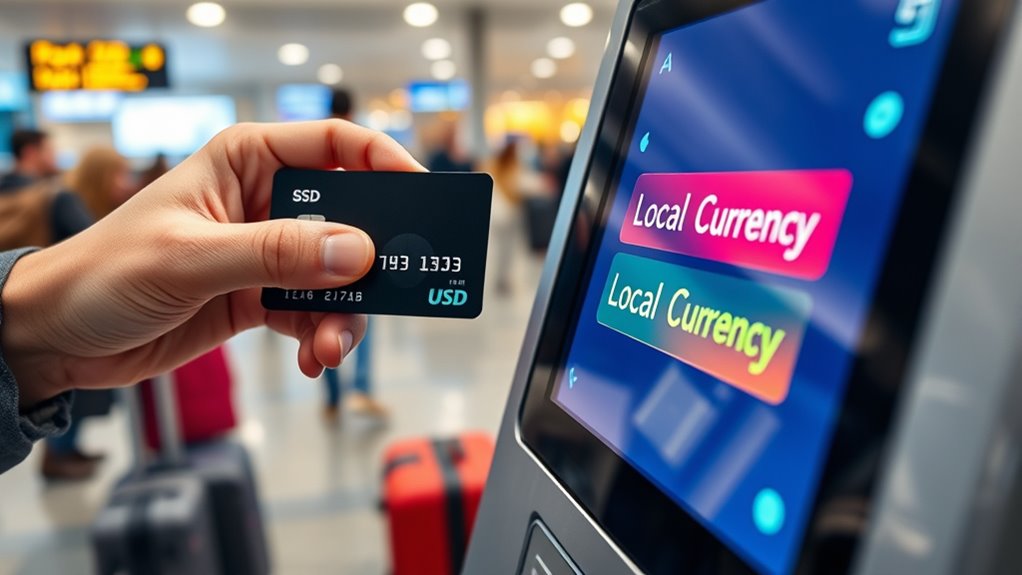
Choosing to pay in local currency typically gives you better exchange rates, helping you save money. By avoiding the markup fees that come with DCC, you can lower your transaction costs considerably. This simple choice often results in more favorable rates and fewer added charges on your trip.
Better Exchange Rates
Did you know that selecting local currency for your international transactions often results in better exchange rates? When you choose to pay in the local currency, your bank applies its own exchange rate, which is usually closer to the interbank rate and involves lower fees. In contrast, DCC providers add a markup, making the conversion less favorable. This markup can considerably inflate the cost, sometimes by 2% or more. By paying in the local currency, you avoid the extra DCC markup and rely on your bank’s more transparent and competitive rates. This often results in savings of 1-2% or higher per transaction. Over multiple purchases during your trip, these savings can add up substantially, making it a smarter choice financially. Additionally, understanding currency conversion processes can help you make even more informed decisions during your travels.
Avoid Markup Fees
Why pay extra fees when you can save money by selecting the local currency? Choosing local currency avoids markup fees embedded in DCC offers. When you accept DCC, you’re often paying inflated rates and additional profit margins. To maximize savings, consider these tips:
- Decline DCC offers at ATMs and checkouts—stick with local currency.
- Compare the DCC exchange rate with real-time market rates using your phone.
- Ask the cashier to process the payment in the local currency explicitly.
- Review your receipt to ensure the transaction was in local currency and note any fees.
- Understanding the importance of affiliate disclosure in your choices can help you identify the best currency options. Being aware of content quality and topical authority can guide you in making informed decisions about your financial transactions.
Lower Transaction Costs
Opting to pay in the local currency typically results in lower transaction costs because your bank’s exchange rate is usually more favorable than the rates offered through DCC. When you choose local currency, your bank applies its standard conversion rate, which is closer to the interbank rate and includes minimal markups. In contrast, DCC providers add a markup fee that inflates the cost, making the transaction pricier. Even if you’re paying in your home currency, the DCC rate often includes hidden fees and profit margins that aren’t transparent. By paying locally, you’ll avoid these additional charges and benefit from your bank’s better rates. Over multiple transactions, this difference can add up to significant savings, making it the smarter choice for cost-conscious travelers.
travel money wallet for international trips
As an affiliate, we earn on qualifying purchases.
As an affiliate, we earn on qualifying purchases.
Recognizing DCC Offers at Payment Terminals and Online Checkouts
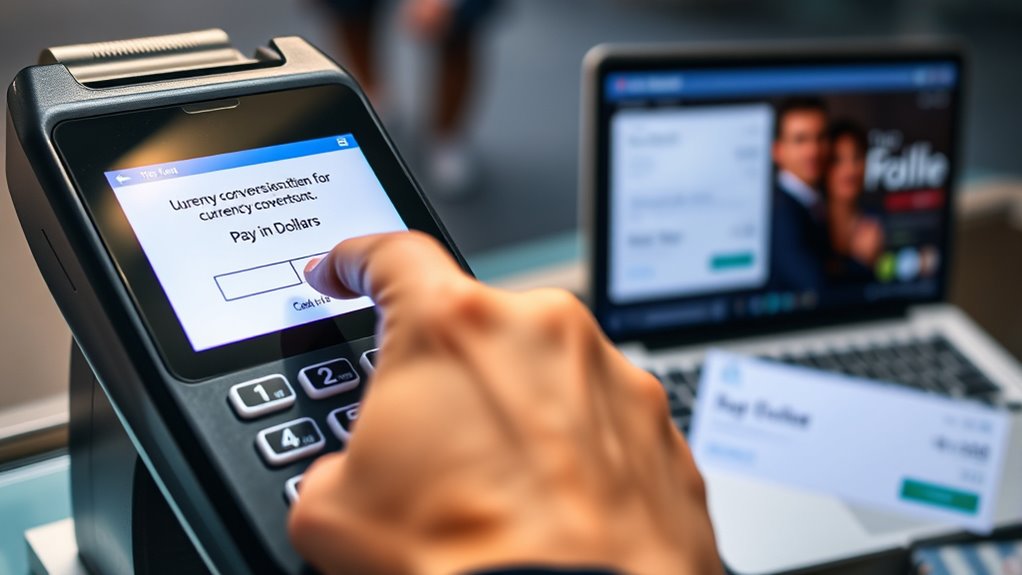
When you’re at a payment terminal or online checkout, look carefully for prompts offering to charge you in your home currency. These offers often appear as a pop-up or checkbox, clearly stating the currency options. Make sure to read the details so you can identify whether DCC is being presented and decide if it’s worth accepting. Be aware that affiliate disclosure may be involved in some cases, and understanding how commissions work can help you make informed decisions. Recognizing at‑home technology features in the interface can also help you stay alert to potential upsells or deceptive prompts.
Spotting DCC Prompts
Do you know how to recognize when a store or ATM is offering you the option of paying in your home currency? Look for clear prompts or screens that display currency choices. Here are four signs to watch for:
- A pop-up window or message asking, “Pay in USD/EUR/your home currency?”
- The terminal displays two options: “Local currency” and “Home currency.”
- The payment screen shows the total amount in your home currency before confirming.
- You see a prompt with a checkbox or button labeled “Use your home currency” or similar wording.
Being aware of these indicators helps you identify when DCC is being offered. Always read the prompt carefully before proceeding to avoid unintentionally accepting the home currency option with its higher costs.
Deciphering Currency Choices
Recognizing when a store or ATM offers you the choice to pay in your home currency is key to making informed decisions during your transactions. At payment terminals or online checkouts, look carefully for prompts asking whether you’d like to pay in local currency or your home currency. These options are typically presented clearly, often with the phrase “Pay in Dollars” or “Choose Your Currency.” Pay attention to the wording, as accepting DCC means your transaction will be converted immediately, often with added markups. Decline the offer if possible, opting instead to pay in the local currency. This way, your bank uses its more favorable exchange rate, saving you money. Always read the screen carefully before confirming your choice to avoid unintentional DCC acceptance. Being aware of currency conversion techniques can help you make smarter payment choices and avoid unnecessary fees.
Comparing DCC Rates to Market Exchange Rates
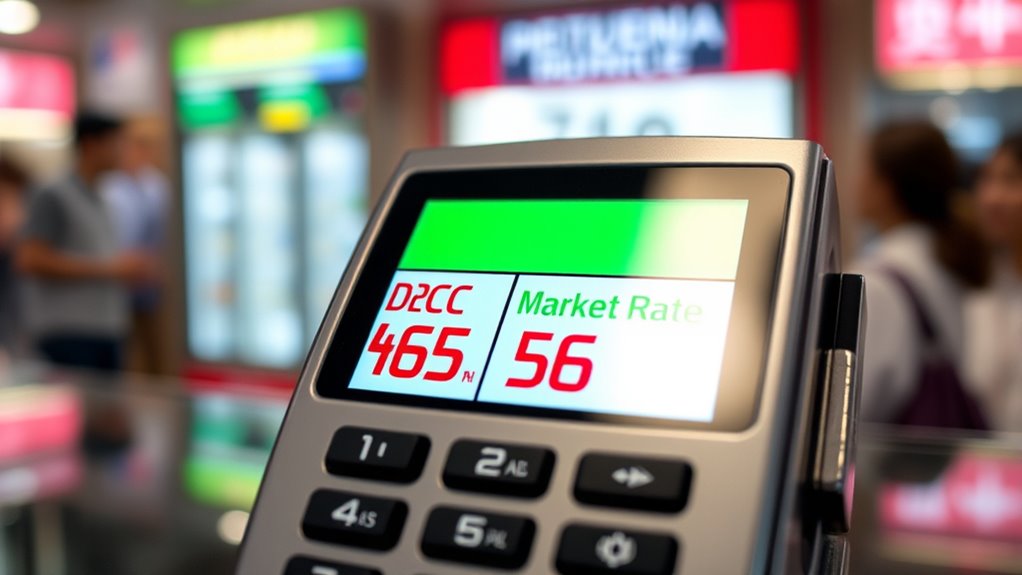
Have you ever compared the exchange rates offered through Dynamic Currency Conversion (DCC) with the actual market rates? Chances are, you’ll notice a significant difference. Here’s what you might see:
Comparing DCC rates to market rates reveals often costly markups and hidden fees.
- DCC Rate: Often includes a markup, making it worse than the real market rate.
- Market Rate: The interbank or mid-market rate, usually more favorable.
- DCC Spread: The difference between DCC and the true market rate, often 2% or higher.
- Additional Fees: Card issuer charges, which can add another 1-3%, further increasing costs.
The Risks and Incentives for Merchants and DCC Providers
Merchants and DCC providers face significant risks and incentives that influence their participation in dynamic currency conversion. Merchants often receive commissions or fees for offering DCC, motivating them to promote the service regardless of its cost to the customer. This creates an incentive to push DCC even when it results in higher charges for travelers. Conversely, DCC providers profit from markups and exchange rate spreads, encouraging them to maximize revenue per transaction. However, both parties risk alienating customers if travelers realize they’re paying more than necessary. To mitigate this, some merchants may hide or obscure DCC options, increasing the likelihood that travelers accept unfavorable rates. Additionally, transparency in earning potential can influence how openly merchants promote DCC, impacting customer trust. In some cases, merchants may even use aggressive sales tactics to persuade travelers to opt for DCC, which can further erode trust. Moreover, the cost of electric dirt bikes and related products highlight the importance of clear pricing and honest communication in transactions, as hidden fees could similarly damage customer confidence. Understanding the financial incentives behind DCC can help travelers make more informed choices. Recognizing the potential for conflict of interest between merchants and consumers is crucial for maintaining transparency. Ultimately, both groups balance financial gains against potential customer dissatisfaction and reputational risks.
Tips for Travelers: Avoiding the DCC ‘Pay in Dollars’ Trap

To avoid paying extra when traveling abroad, always decline the DCC option and opt to pay in the local currency instead. This simple step can save you money and prevent unnecessary fees. Here are four tips to help you avoid the DCC ‘pay in dollars’ trap:
Save money abroad by always declining DCC and paying in local currency to avoid extra fees.
- Look for the “Decline” option on payment terminals and reject the DCC offer.
- Choose “Pay in local currency” when prompted, ensuring your bank processes the transaction at its better exchange rate.
- Review your receipts carefully to confirm the transaction was processed in the local currency.
- Familiarize yourself with your bank’s foreign exchange rates so you can compare and recognize inflated DCC rates.
Following these steps keeps your money in your pocket and avoids costly markups.
Frequently Asked Questions
Can I Decline DCC Without Affecting My Transaction Approval?
Yes, you can decline DCC without affecting your transaction approval. When prompted at the payment terminal or online checkout, simply select to pay in the local currency instead of your home currency. This choice won’t influence your transaction’s approval, but it will ensure you’re charged at your bank’s more favorable exchange rate. Always read the options carefully and decline DCC if you want to save money and get better conversion rates.
Do All Merchants Automatically Push DCC Options to Travelers?
You might imagine a merchant offering you two paths: one paved with familiar currency, the other with the unknown. Not all merchants push DCC options automatically; many display them clearly, giving you a choice. You need to actively decline DCC if you prefer your bank’s exchange rate. Stay alert, read the prompts carefully, and don’t assume the DCC offer is inevitable—your decision impacts your costs.
Are There Specific Credit Cards That Waive Foreign Transaction Fees With DCC?
Some credit cards waive foreign transaction fees even when you use DCC, but it varies by issuer. You need to check your card’s terms; premium travel cards often offer this benefit. If your card does waive these fees, you can pay in your home currency without extra charges, saving money. Always verify your card’s policy before traveling, so you don’t get caught with unexpected foreign transaction fees or unfavorable DCC rates.
How Do I Verify if a DCC Rate Is Fair Compared to Market Rates?
Imagine you’re shopping abroad and see the DCC rate on your receipt. To check if it’s fair, compare the listed rate with real-time market rates using a financial website or currency converter app. If the DCC rate is markedly higher—say, 4% over the market rate—you’re paying a premium. Always verify the exchange rate before accepting DCC, so you know you’re getting a fair deal and avoid unnecessary costs.
Does Accepting DCC Impact My Card’s Fraud Protection or Dispute Process?
Accepting DCC doesn’t directly impact your card’s fraud protection or dispute process. However, because DCC transactions are processed in real-time, you should still be protected against unauthorized charges or errors, just as with regular transactions. Keep receipts and transaction details, and report any suspicious activity promptly. Knowing the exact amount paid in your home currency helps you verify charges and dispute issues if needed, maintaining your protections.
Conclusion
Next time you see “pay in dollars,” remember it’s a siren song tempting you into hidden fees. Like a wolf in sheep’s clothing, DCC seems convenient but often costs more. Stay vigilant, choose local currency, and keep your money where it belongs—your pocket. Don’t let DCC’s shiny promise blind you; instead, steer clear and sail smoothly through your travels, turning what seems like a trap into a triumph of smart spending.