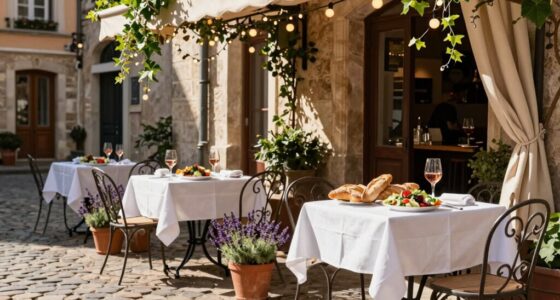
To create authentic French bistro vibes at home, focus on refined table etiquette that elevates the experience. Arrive and seat yourself gracefully, wait for the host’s signal to start eating, and keep your posture upright. Use cutlery confidently, signal course changes with proper utensil placement, and handle wine glasses with care during toasts. Engage in polite conversation and pace yourself to match the flow of the meal. Continue exploring these elegant tips to truly transform your dinner gatherings.

Get travel and outdoor gear delivered free — and shop member deals
- Fast, free delivery on millions of items
- Access to Prime Big Deal Days deals on October 6–7
- Prime Video, Amazon Music and more included
Key Takeaways
- Follow proper arrival, seating, and meal-ending signals to maintain a refined atmosphere.
- Use correct posture, hand placement, and utensil techniques to demonstrate confidence and etiquette.
- Share bread and cheese modestly, and participate in toasts with eye contact and gentle clinking.
- Engage in polite conversation, pacing your eating and drinking to match the host’s cues.
- Maintain a respectful, elegant demeanor, incorporating timeless table setting principles for a cohesive vibe.
As an affiliate, we earn on qualifying purchases.
Setting the Scene: Arriving and Seating Properly
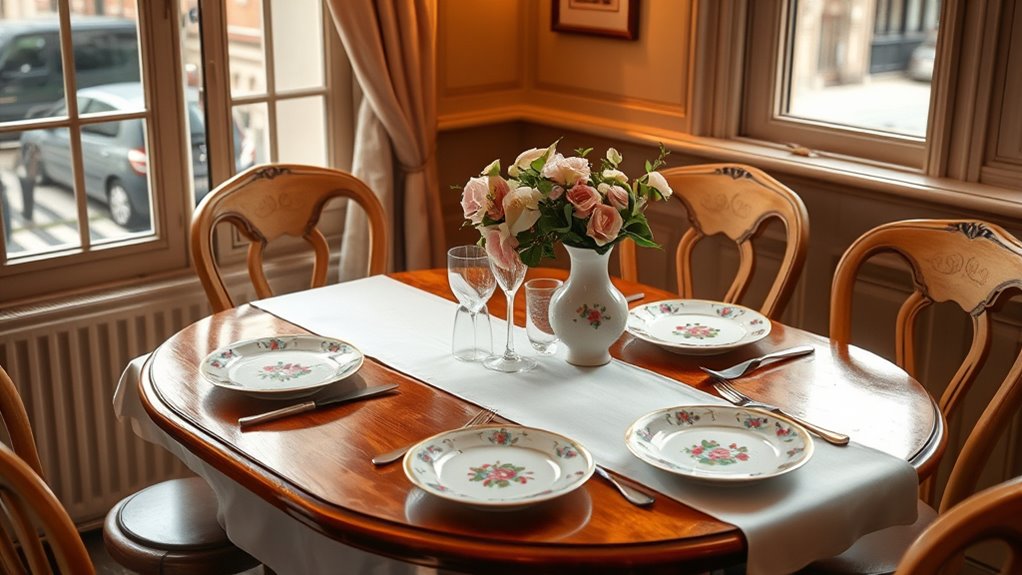
When arriving at a French bistro-style gathering, it’s important to wait for the host’s signal before taking your seat. If assigned seating or nametags are used, find your spot politely and promptly. In casual settings, observe whether self-seating is acceptable or if the host directs you. Guests of honor sit to the right of the host, so remain attentive to cues. Do not start eating or drinking until the host gives the signal or says “Bon appétit.” Staying alert to the table manners helps demonstrate respect and attentiveness. Stay at the table until the host finishes or explicitly releases guests, and ask permission if you need to leave early. By respecting these cues, you demonstrate good manners and help maintain the relaxed, refined atmosphere typical of authentic French dining. Incorporating proper etiquette ensures a smooth and enjoyable experience for everyone involved.
As an affiliate, we earn on qualifying purchases.
Mastering Posture and Hand Placement for Elegance
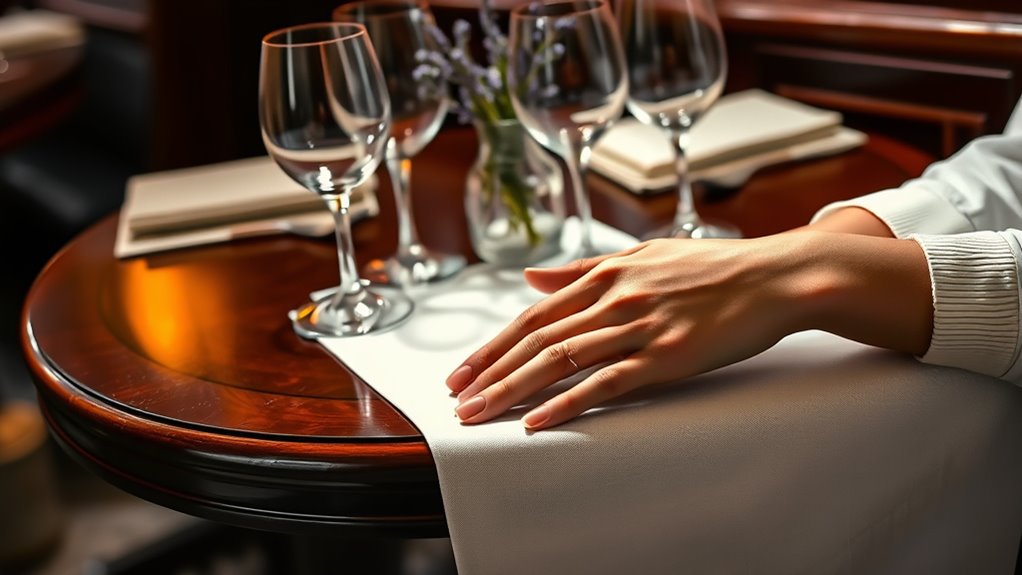
Maintaining proper posture and hand placement elevates your dining presence and aligns with French etiquette. Sit upright with your shoulders relaxed, avoiding slouching or leaning on the table. Rest your hands comfortably on either side of the plate, keeping your palms visible—this shows attentiveness and respect. Keep elbows off the table in formal settings, but a brief, relaxed position is acceptable in casual gatherings. Hold your cutlery with a gentle grip, using your index finger along the handle for control. When not using utensils, place them neatly on your plate, handles at roughly 4 o’clock. This poised stance demonstrates confidence and refinement, subtly signaling your appreciation for the dining experience.
As an affiliate, we earn on qualifying purchases.
Navigating Cutlery and Plate Use With Confidence
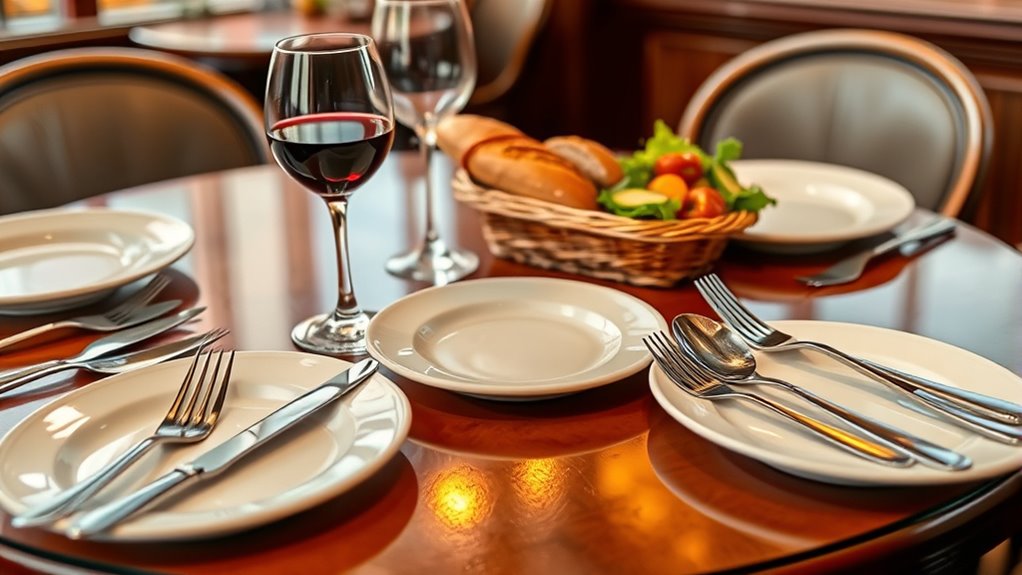
Using your cutlery correctly helps you navigate the meal with confidence. Keep the knife in your right hand and the fork in your left, following the course-specific order as you eat. When you finish, place your utensils together on the plate to signal you’re done.
Proper Cutlery Handling Techniques
Handling cutlery confidently is essential for mastering French dining etiquette. Grip your knife in your right hand and your fork in your left, keeping your index finger extended along the handle for control. Avoid gripping tightly or switching hands between bites. Use your knife to gently push food onto your fork, never stab or saw at it. When you finish a course, place your knife and fork parallel on your plate, handles at roughly 4 o’clock and tines or blade facing up, signaling completion. Follow course-specific cutlery patterns from the outside in as the meal progresses. Practice smooth, controlled movements, and always remain mindful of your posture and hand visibility. Confident cutlery handling reflects your respect for the meal and the company.
Course Progression Order
As you progress through a French meal, it’s essential to follow the proper order of courses and the corresponding use of cutlery to demonstrate confidence and etiquette. Begin with the outermost utensils, typically the soup spoon or starter fork, and work inward with each course. Use the appropriate cutlery—fork, knife, or spoon—for each dish, and don’t switch hands mid-bite. When you finish a course, place your cutlery neatly on your plate, handles at about 4 o’clock and the tines or blades up. Watch for cues from the host or server to move on to the next course. Remember, maintaining the correct sequence and proper utensil placement signals your familiarity with French dining customs and shows respect for the meal’s flow.
Signaling Finish Properly
To signal that you’ve finished a course confidently, position your cutlery correctly on your plate. Rest the knife and fork parallel, with handles at roughly 4 o’clock and tines/blades pointing up. This clear placement indicates completion without confusion.
To add clarity, keep these points in mind:
- Align cutlery properly: Place utensils together, handles aligned at the bottom, blades or tines up.
- Use specific positions for completion: Resting cutlery in the center of the plate signals ongoing, placing them at 4 o’clock signals finished.
- Avoid unnecessary motion: Don’t stack or cross utensils; keep them neatly arranged to communicate confidence and etiquette.
Mastering this simple gesture ensures your dining signals are understood, exuding confidence and respect at any table.
French-inspired cheese and bread serving platter
As an affiliate, we earn on qualifying purchases.
As an affiliate, we earn on qualifying purchases.
Bread, Cheese, and Sharing Etiquette at the Table
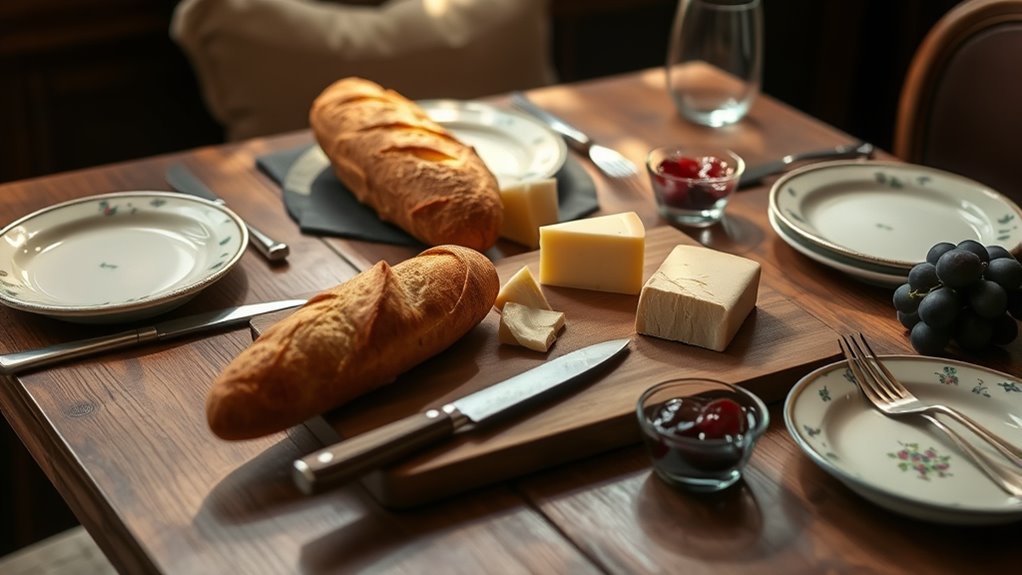
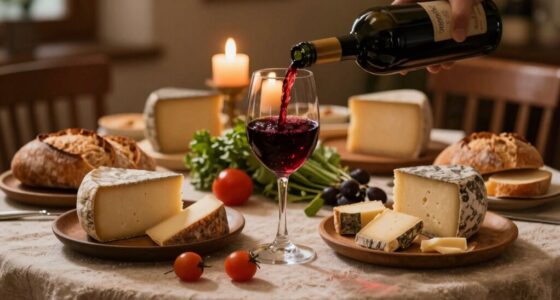
At a French-inspired table, bread and cheese are shared with etiquette that emphasizes modesty and respect. You tear bread by hand, placing it next to your plate or on the designated bread plate—never using it as a makeshift sandwich with spreads. When passing the bread basket, hold it out for others to take their piece rather than handing slices directly to guests. For cheese, sample modest portions of two or three varieties from a cheese board; avoid taking the last piece. Don’t spread cheese or sauces across an entire slice of bread—simply place a small portion on top and bite directly. Wait to be offered seconds, and always respect the host’s or server’s portions, ensuring everyone shares evenly and politely.
Toasts, Wine Handling, and Glass Clinking Rituals
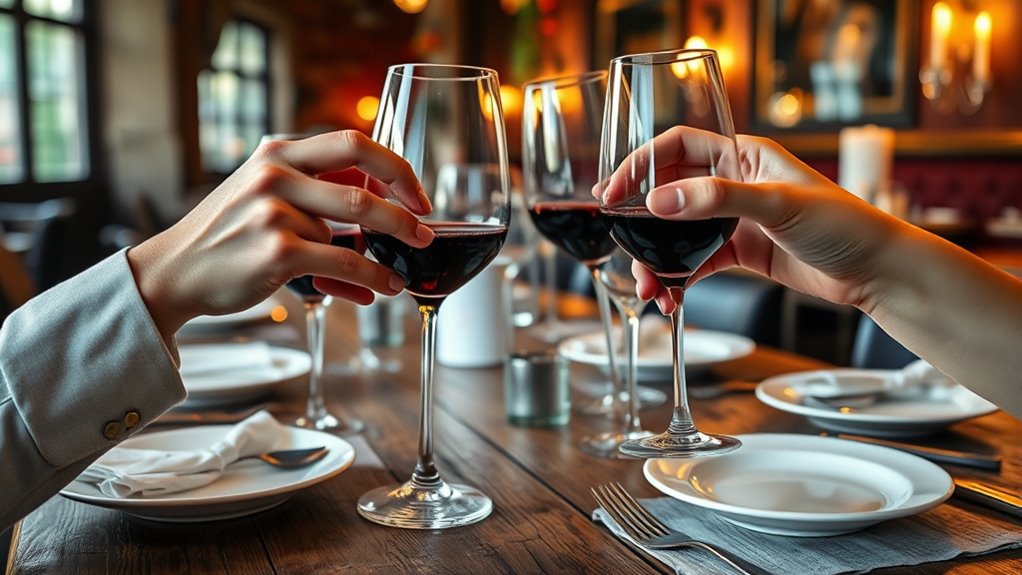
When making a toast, wait until everyone has their glass raised and make eye contact with each guest before clinking. Hold your wine glass by the bowl in casual settings or by the stem if you prefer a more formal touch, and always pour with care. Remember, proper etiquette involves respectful pacing and avoiding crossing arms during the clink to keep the moment graceful.
Proper Toasting Etiquette
Proper toasting etiquette in a French dining setting involves more than just raising your glass; it’s about observing respectful rituals that enhance the convivial atmosphere. First, wait until everyone is served and the host signals the moment to toast. Make eye contact with each guest as you clink glasses to show sincerity. When toasting, hold your glass steadily by the bowl for casual settings or by the stem if you prefer a more formal approach. Avoid crossing arms or clinking too forcefully, as energetic toasts are outdated. Finally, after the toast, take a sip calmly, respecting the flow of the meal. Maintaining cultural traditions during toasts helps preserve the authenticity and charm of the experience. Additionally, being aware of affiliate relationships can ensure transparency when recommending fine wines or related products to elevate your table.
Wine Glass Handling Tips
Handling your wine glass correctly adds a refined touch to the dining experience. When you’re ready to toast, wait until everyone has their glasses raised before clinking. Make eye contact with each person to show connection and respect. Hold the glass by the bowl for casual sipping—this warms the wine and feels more relaxed. For a more formal approach, hold the stem gently between your fingers, avoiding squeezing the glass. When clinking, aim for light, gentle contact—avoid overly vigorous banging, which can spill or damage the glass. Keep your hand steady and maintain good posture. After clinking, take a sip smoothly, savoring the wine without rushing. Proper handling demonstrates elegance and enhances the social charm of your French-inspired gathering. Additionally, being mindful of your glassware ensures your presentation remains polished and sophisticated. Incorporating water safety practices, such as staying hydrated, can also help you enjoy your evening responsibly and comfortably.
Engaging in Polished Conversation and Managing Noise

Engaging in polished conversation at a French-inspired meal requires a mindful approach to tone and topics. You want your dialogue to be respectful, light, and engaging without dominating the atmosphere. To achieve this:
Maintain respectful, light conversation, listen actively, and choose shared interests to enhance a French-inspired meal ambiance.
- Keep your voice at a moderate level—loud chatter disrupts the ambiance and can disturb others.
- Steer clear of controversial or overly personal subjects, focusing instead on shared interests or culture.
- Listen actively, nodding and responding thoughtfully, which shows genuine interest and keeps the flow natural.
Timing and Pacing: When to Eat, Drink, and Pause
Timing and pacing are key to enjoying a French-inspired meal with grace. You should wait for the host’s signal before starting to eat or drink, usually indicated by a “Bon appétit” or a toast. Don’t rush into your first bite or sip; patience sets the tone for a refined experience. Throughout the meal, follow the natural rhythm—pause between courses, savor each bite, and avoid finishing too quickly. When everyone is served, take your time to enjoy your food and conversation. Remember, meals are a social event, so pacing yourself shows respect for both the host and fellow guests. Keep your movements deliberate and relaxed, allowing the meal’s flow to unfold smoothly and elegantly.
Respecting Course Transitions and Table Signals

To do this effectively, keep these points in mind:
- Wait for explicit or subtle signals before changing your plate or utensils.
- Use the placement of cutlery to signal course completion—handles at 4 o’clock and tines up.
- Observe the host’s or server’s cues before asking for or serving the next course.
- Incorporate timeless design principles into your table setting to create a cohesive and elegant dining experience.
Being attentive guarantees your dining experience remains refined and respectful of tradition.
Ending the Meal Gracefully and Leaving the Table
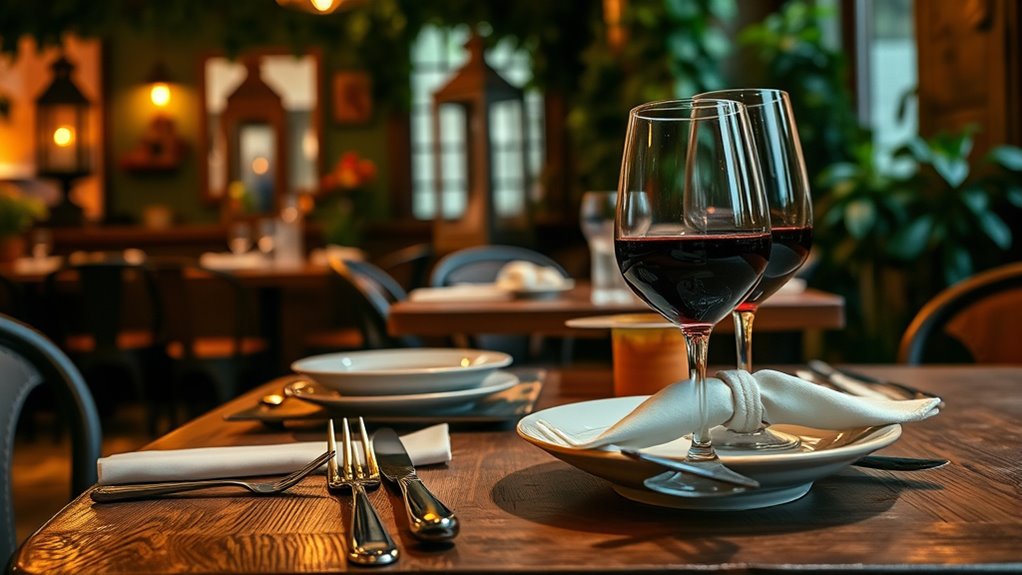
When you’re ready to conclude your meal, it’s important to do so with subtlety and respect for tradition. Signal that you’re finished by placing your cutlery together on your plate, handles at roughly 4 o’clock, with blades or tines up. Keep your napkin folded neatly beside your plate or in your lap, showing that you’re done. Gently slide your chair back without making noise, and rise quietly when the host or server indicates it’s time to leave. Maintain good posture and avoid rushing others. If you need to leave earlier, politely excuse yourself, thanking your hosts. Remember, leaving the table gracefully reflects your appreciation for the effort and ambiance, leaving a positive impression and respecting the refined atmosphere of a French-inspired dinner. Being aware of table manners and proper etiquette can also help you navigate social dining with confidence.
Frequently Asked Questions
How Should I Handle Polite Table Requests or Questions During the Meal?
When you receive polite requests or questions during the meal, respond courteously and attentively. Maintain eye contact, listen carefully, and answer calmly. If someone asks for something, like more wine or bread, acknowledge their request with a smile and a nod, then pass or serve promptly. Keep your tone friendly and polite, respecting the flow of the meal without rushing or interrupting others, showing genuine attentiveness.
What Is the Proper Way to Signal I’Ve Finished Eating?
As they say, “Actions speak louder than words.” To signal you’re finished, place your cutlery together on your plate with handles at roughly 4 o’clock and the blades or tines facing up. Keep your napkin in your lap or neatly folded on the table. Sit upright and maintain good posture. This subtle gesture politely indicates you’re done, respecting the formal rhythm of the meal without disrupting the flow.
How Do I Gracefully Excuse Myself From the Table?
To gracefully excuse yourself, wait until the host or the course concludes, then politely gain their attention. Lightly nod or make eye contact, and say, “Please excuse me” or “May I leave?” in a warm tone. Keep your posture upright, fold napkin neatly on the table, and thank the host if appropriate. Leave quietly, sliding your chair back smoothly, showing respect for the ongoing meal and company.
What Are the Etiquette Rules for Serving or Refilling Wine?
When serving or refilling wine, wait for the host or server to indicate it’s appropriate. If you’re pouring, hold the bottle by the base and pour gently, avoiding overfilling glasses. Make eye contact with each guest when topping off, and don’t pour for yourself. If you’re refilling someone else’s glass, do so discreetly and politely, respecting the pace and flow set by the host.
How Can I Keep Conversation Refined Without Dominating the Table?
To keep conversation refined without dominating, you gently steer discussions toward shared interests, subtly listening and offering thoughtful comments. Avoid monopolizing topics—think of it as a dance where everyone takes turns leading. Maintain a warm, attentive tone, balancing speaking and listening. If someone else is sharing, show genuine interest. This way, your presence enriches the table, fostering an elegant atmosphere where everyone feels valued and involved.
Conclusion
Mastering these French bistro table etiquette tips transforms your dining experience, making it more refined and enjoyable. Did you know that according to a recent survey, 78% of people feel more confident at the table when they follow proper manners? So next time you dine, embrace these traditions, and watch your confidence—and your meal—become truly unforgettable. With a little practice, you’ll bring authentic bistro charm right to your own home.
Halloween Picks
halloween
As an affiliate, we earn on qualifying purchases.