

In Europe, hotel star ratings are official quality classifications based on standardized, objective standards verified through inspections, unlike the more subjective U.S. systems. They reflect infrastructure, facilities, and service levels, ranging from 1 to 5 stars, with clear expectations for each level. These ratings are consistent across many countries but can vary regionally. To understand how these ratings can help you choose the right hotel and what they really mean, keep exploring.

Get travel and outdoor gear delivered free — and shop member deals
- Fast, free delivery on millions of items
- Access to Prime Big Deal Days deals on October 6–7
- Prime Video, Amazon Music and more included
Key Takeaways
- European star ratings are based on objective standards verified by on-site inspections, focusing on infrastructure and service features.
- Ratings range from 1 to 5 stars, with optional “Superior” labels, reflecting specific facility and service criteria.
- Standards and classifications vary across European countries, making direct comparisons complex.
- Official ratings prioritize measurable infrastructure and service standards, unlike U.S. systems that may emphasize decor and room size.
- Private ratings (e.g., Michelin, Forbes) focus on guest experience and ambiance, often diverging from official star classifications.
European hotel star rating guide
As an affiliate, we earn on qualifying purchases.
As an affiliate, we earn on qualifying purchases.
The European Hotel Star Framework Explained

The European Hotel Star Framework, managed mainly by the Hotelstars Union, uses a standardized set of criteria across 21 countries. You’ll find that about 240 objective standards assess areas like reception, rooms, food and beverage, leisure, and online presence. Hotels are rated from 1 to 5 stars, with an optional “Superior” label for properties exceeding the basic requirements. On-site inspections by accredited bodies verify compliance, preventing false claims. Unlike some systems, these ratings focus on infrastructure and service features, not just luxury decor or room size. Regular re-inspections guarantee hotels maintain standards, and each star level reflects specific, measurable criteria that hotels must meet to earn and keep their rating. An important aspect of these standards is the emphasis on color accuracy and consistent quality, which helps ensure guests receive a reliable experience. Additionally, the standards promote transparency in the rating process to foster trust among travelers, and they often incorporate technological advancements to keep the assessment process up-to-date. Furthermore, the framework emphasizes clear, objective criteria, making the ratings more trustworthy and comparable across different countries. The standards also align with European regulations to ensure a uniform quality benchmark for travelers across the continent.
hotel star rating standards Europe
As an affiliate, we earn on qualifying purchases.
As an affiliate, we earn on qualifying purchases.
What Each Star Level Signifies in Europe

As you explore European hotels, you’ll notice that each star level reflects specific expectations for infrastructure, service, and luxury. A 1-star offers basic facilities, while higher stars indicate more extensive amenities and higher staff standards. Understanding these distinctions helps you set clear expectations for comfort, quality, and experience at every level. Some ratings also consider Free Floating features that enhance guest relaxation and enjoyment.
Infrastructure and Facilities Expectations
In Europe, each hotel star level clearly indicates a baseline of infrastructure and facilities that you can expect. A 1-star hotel provides essential private bathrooms and daily cleaning. As you move up, a 2-star adds small amenities like toiletries and limited bilingual staff. 3-star hotels include 24-hour reception, on-site dining, and larger rooms. 4-star properties offer more extensive F&B options, fitness facilities, and meeting spaces, with higher staffing levels. To clarify, here’s a comparison: field‑of‑view and imaging‑scale examples. Additionally, each star rating reflects certain standardized quality benchmarks, helping travelers understand what level of service and amenities is typical at each tier.
Service and Staff Standards
European hotel star ratings clearly define the expected service and staff standards, ensuring consistency across the region. At 1 star, you’ll find basic service with minimal staff interaction, mainly focused on housekeeping and reception. Moving to 2 stars, staff may offer limited bilingual support and small amenities, improving guest assistance. With 3 stars, expect 24-hour reception, better-trained staff, and some on-site dining, providing more reliable service. Four-star hotels elevate staff professionalism, offering higher staffing levels, personalized attention, and extensive guest support. At 5 stars, you’ll encounter multilingual staff trained in luxury service, personalized concierge, and staff capable of exceeding expectations. The focus shifts from infrastructure to attentive, well-trained personnel delivering consistent, high-quality service that aligns with each star level’s standards. Staff training ensures hotel personnel meet the specific service expectations associated with each rating, maintaining regional consistency. Additionally, training programs are often tailored to regional hospitality standards, emphasizing the importance of cultural sensitivity and personalized guest experiences. Recognizing the significance of regional standards, hotels adapt their staff training to meet diverse expectations across different European countries. Furthermore, ongoing staff development is vital to uphold the evolving service quality standards in the hospitality industry.
Indicative Luxury Levels
What does a hotel’s star rating really say about its level of luxury? In Europe, each star level reflects a specific set of standards and facilities, not just decor or ambiance. A 1-star hotel offers basic accommodation with private bathrooms and daily cleaning. Moving up to 2 stars, you’ll find small amenities like toiletries and bilingual staff. With 3 stars, expect mid-range services, including 24-hour reception, breakfast, and larger rooms. Four-star hotels provide high comfort, extensive dining options, leisure facilities, and higher staffing levels. These classifications are often based on objective criteria rather than subjective impressions, and they are standardized across European countries to ensure more consistent quality levels within each star category. Five-star properties signpost true luxury—personalized services, spa and fine dining, and premium room features. These levels help you understand what to expect in terms of comfort, facilities, and service, based on objective criteria rather than subjective impressions. Understanding hotel classifications in Europe can also enhance your overall travel planning and expectations.
hotel inspection and certification tools
As an affiliate, we earn on qualifying purchases.
As an affiliate, we earn on qualifying purchases.
How Hotel Stars Are Awarded and Measured

Hotel stars are awarded through a systematic assessment process that combines objective criteria, on-site inspections, and scoring thresholds. You’ll find that each property is evaluated based on specific standards set by regulatory bodies or industry schemes, such as the Hotelstars Union. These assessments cover aspects like reception, rooms, F&B, and amenities, with strict scoring systems. To earn a particular star rating, your hotel must meet mandatory requirements and score enough points from optional criteria. Regular re-inspections guarantee ongoing compliance. When you look at star ratings, remember they reflect infrastructure and service standards rather than guest impressions.
- Strict on-site inspections verify compliance
- Mandatory criteria set a baseline for each star level
- Points are awarded for optional amenities and services
- Reassessments guarantee standards stay high
hotel quality inspection equipment
As an affiliate, we earn on qualifying purchases.
As an affiliate, we earn on qualifying purchases.
Comparing European and U.S. Hotel Ratings

While both European and U.S. hotel ratings aim to help you assess quality, they do so through different approaches. Europe relies on regulation and objective criteria, with inspections verifying infrastructure and services. In contrast, U.S. ratings often emphasize guest experience, service quality, and editorial judgment, sometimes using mystery guests. European ratings specify facilities and standards, while U.S. guides may weigh ambiance and personalized service more heavily. For example, Ananda Aromatherapy emphasizes the importance of essential oils in promoting health and well-being, reflecting a focus on tangible standards. Additionally, the cookie categories used in website policies help ensure transparency and control over your privacy preferences. Understanding the energetic alignment between a guest and their environment can further enhance the overall experience and satisfaction during your stay, just as traditional methods in rendering lard highlight the value of proven techniques in self-sufficiency. Recognizing the balance between technology use and creative expression can also enrich your travel experience by fostering a deeper connection with your surroundings and personal well-being.
Variations and Exceptions Across Countries and Regions

Across Europe, hotel star ratings can vary considerably due to differing national and regional standards, which sometimes complicate comparisons. You might find that a three-star hotel in one country offers different amenities than in another. Some countries, like France and Portugal, maintain their own classification systems outside the Hotelstars Union, creating multiple parallel schemes. Regional differences are also common; Spain has around 17 schemes, and Italy about 21, leading to inconsistencies within the same country. Certain hotels, such as “garni” or those without restaurants, can still earn high star ratings under specific national rules. Additionally, private guides like Michelin or Forbes provide independent rankings that may conflict with official star designations, adding another layer of complexity for travelers and operators alike.
The Role of On-Site Inspections and Accreditation

On-site inspections are a critical part of maintaining the integrity and consistency of hotel star ratings in Europe. They guarantee that hotels meet the specific criteria set by national authorities or the Hotelstars Union. During these inspections, accredited inspectors verify compliance with objective standards across categories such as reception, rooms, F&B, and leisure facilities. They examine physical infrastructure, evaluate service levels, and review documentation to confirm the hotel’s self-assessment accuracy. Regular re-inspections are mandatory to uphold ratings and prevent false claims. Accredited bodies or the Union carry out these audits transparently, promoting fairness and reliability. This process helps protect travelers by ensuring hotel classifications reflect actual standards, fostering trust in the rating system and supporting consistent quality across Europe. Additionally, the use of vetted security measures ensures that the inspection process remains secure and trustworthy.
Private Guides and Independent Ratings in Europe

You’ll notice that many travelers rely on private guides and independent ratings to choose accommodations, but these systems often differ from official star classifications. Non-official ratings, like those from Michelin or Forbes, include editorial judgments that can influence perceptions of quality beyond standard criteria. As a result, conflicting classification standards can make it tricky to compare properties across different rating sources.
Non-Official Rating Systems
While official European hotel star ratings are regulated and based on objective criteria, many travelers and industry professionals also rely on private guides and independent rating systems to assess hotel quality. These sources often emphasize different aspects, such as guest experience, ambiance, or unique amenities, which might not be reflected in official star schemes. Private guides like Michelin or Forbes Travel Guide, along with online review platforms, provide alternative perspectives that can influence your decision. They may focus on service excellence, personalized experiences, or culinary standards. Keep in mind, these ratings are not regulated and can vary widely, so it’s essential to contemplate multiple sources for a well-rounded view. Factors contributing to ratings can include subjective elements like guest satisfaction and ambiance, making it important to consider diverse sources when choosing accommodations.
Editorial Judgment Influences
Private guides and independent ratings in Europe greatly influence how travelers perceive hotel quality, often emphasizing subjective elements like ambiance, service excellence, and unique experiences over strict infrastructure criteria. Unlike official star ratings, these guides rely on expert judgment, guest feedback, and mystery inspections to assess hotels. They may highlight personalized service, design, or atmosphere, which aren’t captured by objective standards. For example, Michelin’s hotel ratings focus on overall guest experience and luxury, while Forbes Travel Guide emphasizes service quality and staff attentiveness. These independent evaluations can sway traveler choices by spotlighting hotels that excel in hospitality and ambiance, even if they don’t meet the formal criteria for higher star classifications. As a result, private guides shape perceptions in ways official ratings often don’t, adding a layer of subjective assessment to hotel quality. Additionally, independent ratings often incorporate a more comprehensive view of the guest experience beyond basic amenities, including factors like guest satisfaction and overall ambiance. Such ratings frequently consider subjective assessments, which can differ significantly from standardized official standards. This approach recognizes that perceived quality can be as important as measurable infrastructure features in shaping guest impressions.
Conflicting Classification Standards
Conflicting classification standards in Europe arise because independent guides and rating organizations often operate outside official hotel star frameworks, leading to discrepancies in how hotels are evaluated and presented. These guides may focus on different aspects, such as service quality, guest experience, or luxury ambiance, which aren’t always aligned with official criteria. As a result, a hotel can receive a high rating from a private guide but hold a lower star classification officially. This creates confusion for travelers trying to compare options.
- Private rankings like Michelin or Forbes can emphasize service and experience over infrastructure.
- Independent guides often use mystery guests or editorial judgment, affecting scores.
- Regional classification systems vary widely, adding inconsistency across countries.
- Hotels may appear more or less luxurious depending on which standard you consult.
Practical Insights for Travelers and Hoteliers

Understanding what a hotel’s star rating truly signifies can help you make better travel choices and set realistic expectations. In Europe, star ratings are based on objective criteria and verified through inspections, focusing on facilities and services rather than just décor or room size. When booking, check the issuing organization’s criteria to understand what’s guaranteed—such as reception hours, on-site dining, or leisure facilities. Use recent guest reviews alongside star ratings because inspections are periodic, and standards may fluctuate. For hoteliers, maintaining consistent quality means regularly meeting mandatory criteria and documenting improvements. Remember, private awards or unofficial guides may differ from official star ratings. Combining these insights enables smarter decisions, ensuring your accommodations align with your expectations and travel needs.
How Star Ratings Influence Booking and Marketing
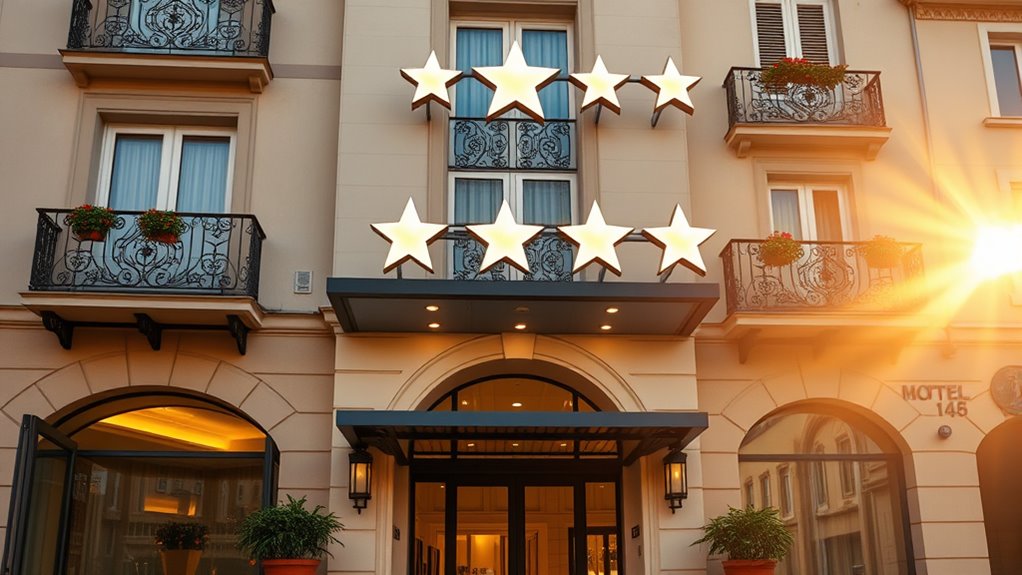
Star ratings play a crucial role in shaping your booking decisions and how hotels market themselves. They serve as a quick reference, helping you set expectations about quality, facilities, and service levels. Hotels often highlight their star rating to attract guests, especially when aiming for higher categories that imply luxury and extensive amenities.
Keep an eye on these factors:
- Clear communication of what facilities and services are guaranteed at each star level
- Use of star ratings in marketing to differentiate properties from competitors
- Reliance on official ratings for transparency and trustworthiness
- Combining star ratings with recent reviews for a thorough view
Future Trends in European Hotel Classification

As the hospitality industry evolves, so does the way hotels are classified and rated across Europe. Future trends focus on integrating digital innovation, sustainability, and guest experience into classification systems. Expect more dynamic, real-time assessments leveraging smart technology, online reviews, and guest feedback. Standardization efforts will likely expand, reducing regional disparities and enhancing comparability. Additionally, classifications may incorporate environmental certifications and wellness features, reflecting evolving traveler priorities. Here’s a snapshot of anticipated trends:
| Trend | Description | Impact |
|---|---|---|
| Digital Integration | Real-time data collection and online review analysis | Faster, more accurate ratings |
| Sustainability Focus | Eco-friendly standards and certifications | Enhanced eco-conscious classification |
| Guest Experience Metrics | Emphasis on service quality and personalized offerings | More holistic, experience-based ratings |
Frequently Asked Questions
How Often Are Hotel Star Ratings Reassessed in Europe?
You should expect hotel star ratings in Europe to be reevaluated periodically, usually every one to three years. Regular re-inspections ensure hotels maintain standards and meet the criteria needed for their star level. The exact timing varies depending on the country’s regulations or the specific classification scheme. As a traveler, keep in mind that star ratings can change over time, so checking the latest inspection date helps you make informed decisions.
Can a Hotel Display Both Official Star Ratings and Private Awards Simultaneously?
Yes, a hotel can display both official star ratings and private awards simultaneously. Think of it like a badge of honor—official stars are like a government-issued license, certifying basic standards, while private awards are like a medal from a contest, highlighting special recognition. Hotels often showcase both to attract different types of guests, but they must clearly distinguish between official ratings and private honors to stay transparent and compliant.
Do Regional Classification Differences Affect International Travelers’ Expectations?
Regional classification differences can markedly influence your expectations when traveling in Europe. You might see varying star standards even within the same country, leading to surprises about what’s offered. These discrepancies affect the consistency of amenities and services across regions, so you should check each property’s specific classification system and criteria. Combining official star ratings with recent reviews helps you better understand what to expect, regardless of regional variations.
Are There Specific Penalties for Falsely Claiming a Higher Star Rating?
You might find that claiming a higher star rating without meeting the criteria can lead to serious consequences. Authorities take this matter seriously, and penalties often include fines, legal actions, or restrictions on your license to operate. These measures aim to protect consumers and uphold industry standards, so it’s best to honestly represent your property’s rating. Staying compliant guarantees trust and long-term success, avoiding complications that could tarnish your reputation.
How Do Online Reviews Influence Official Star Classifications in Europe?
Online reviews don’t directly influence your official star classification in Europe since ratings are based on objective inspections and criteria. However, they can impact your reputation and guest perception, prompting operators to improve facilities and services to meet or exceed standards. Consistently positive reviews can indirectly support higher star ratings by highlighting strengths during inspections, but the official classification remains determined by accredited assessments rather than guest feedback.
Conclusion
Understanding European hotel star ratings helps you navigate your options with confidence, ensuring you get the experience you desire. While the system might seem complex at first, knowing what each star signifies can lead you to better stays and smarter bookings. After all, it’s the little details—like a cozy lounge or a helpful concierge—that truly make your trip memorable. So next time you plan your visit, remember: your perfect stay might just be a star or two away.
Fall Picks
fall essentials
As an affiliate, we earn on qualifying purchases.