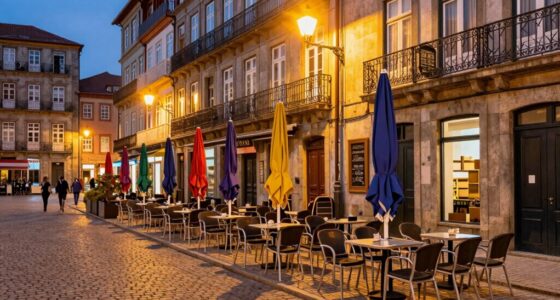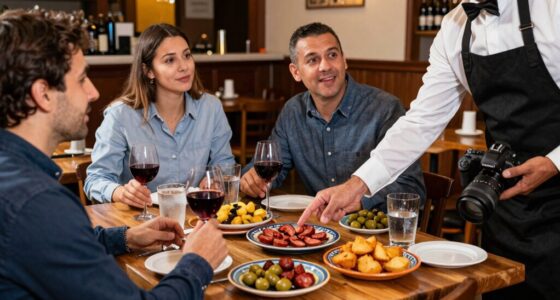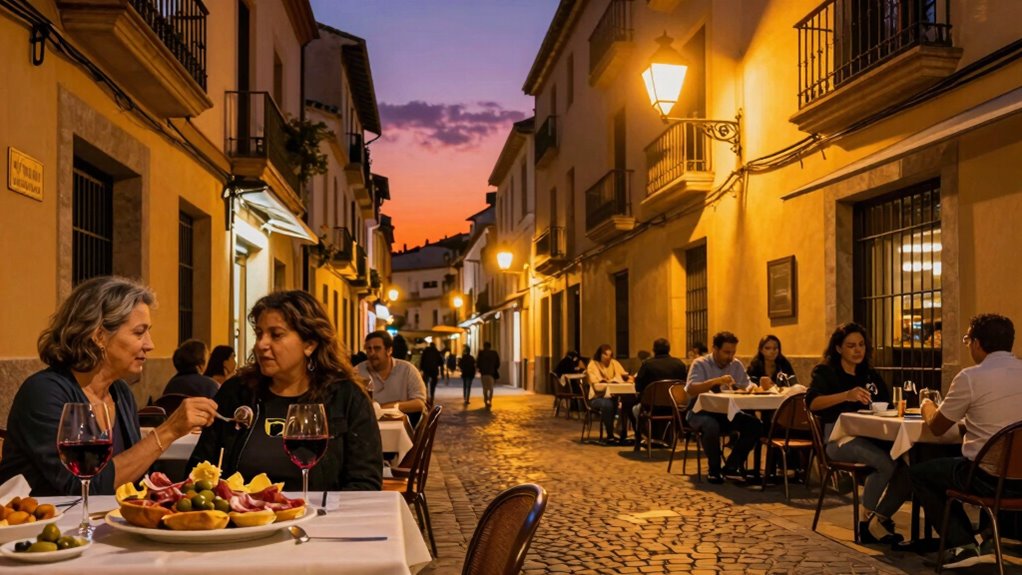

In Spain, dinner starts late due to a mix of history, culture, and climate. Historically, long midday meals led to post-meal rest, pushing evening eating later. Cultural customs, like socializing over tapas and family gatherings late at night, reinforce this schedule. Warm summers and outdoor dining also influence later meal times. If you keep exploring, you’ll discover how these traditions and modern habits keep Spaniards dining so late.
Key Takeaways
- Historically, the large midday *la comida* shifted active hours to the evening, making dinner later.
- Post-meal digestion and circadian rhythms naturally delay hunger, pushing dinner to late hours.
- Cultural norms prioritize socializing and leisurely multi-course meals, typically around 9–11 pm.
- Hot climates and outdoor dining traditions encourage eating after sunset, extending dinner times.
- Long-standing customs, urban nightlife, and restaurant hours reinforce late dinner practices today.
The Historical Roots of the Spanish Dining Schedule
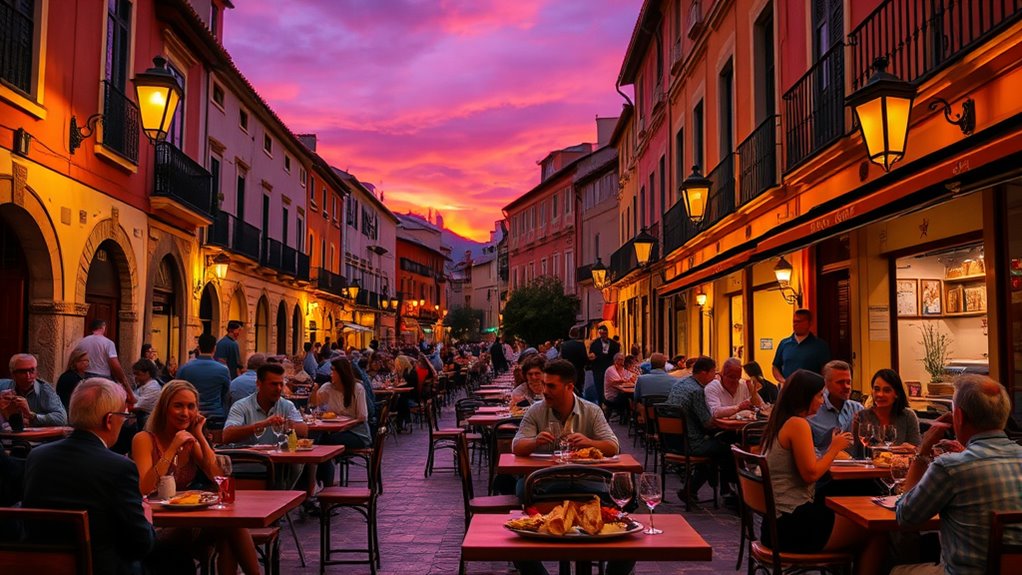
The Spanish dining schedule has deep historical roots that shape its current patterns. Centuries ago, a large midday meal, *la comida*, became the main caloric intake, usually around 2–4 pm. This meal was heavy, leading to a midday rest or siesta, which shifted active hours into the evening. During Franco’s era, long communal lunches and staggered work hours reinforced a culture of late dinners and socializing. Urbanization and changing lifestyles preserved these habits, as restaurant hours and social routines stayed late into the night. The tradition of late dining became ingrained in daily life, with institutions and cultural norms supporting evening social activities. This history explains why dinner in Spain often starts around 9 pm or later, maintaining a rhythm rooted in centuries-old practices. Cultural dining customs continue to influence modern Spanish eating habits, keeping the late dinner tradition alive. Additionally, the social and cultural importance of evening gatherings in Spain reinforces this schedule, making late-night dining a cherished aspect of Spanish life.
The Role of Traditional Meal Structures and Physiology
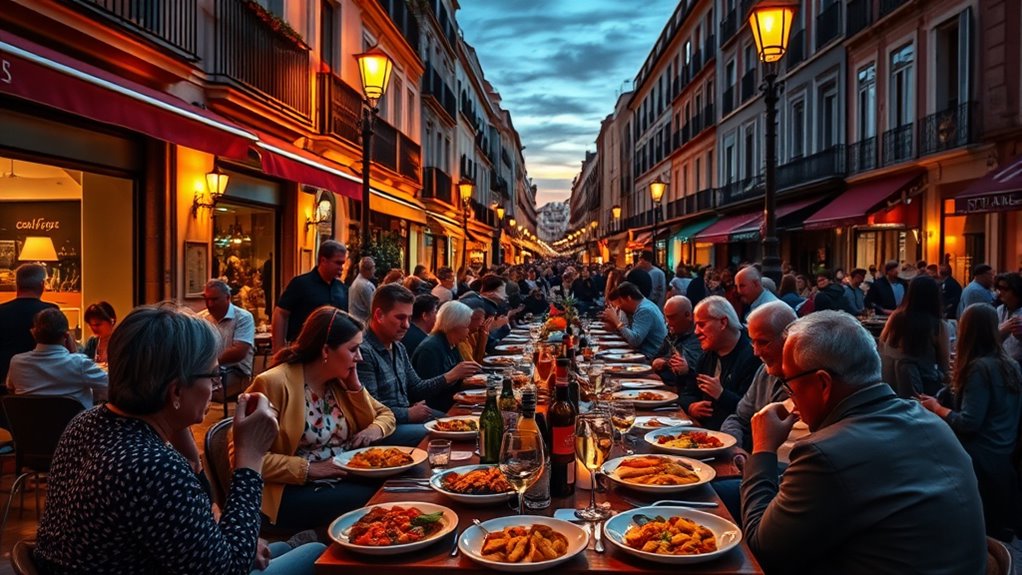
- Heavy midday la comida triggers postprandial drowsiness.
- Smaller meals throughout the day extend eating habits.
- Digestion delays hunger, pushing dinner later.
- Regular routines align with circadian rhythms.
- Cultural norms influence meal timing and reinforce later dinner hours.
Climate and Geographic Influences on Evening Eating

Climate and geography play a significant role in shaping Spain’s late-evening eating habits by making outdoor dining more comfortable and appealing after sunset. In hot summers, you naturally prefer to eat outside when the temperature cools, pushing meals into the evening hours. Longer daylight hours in northern regions extend the active part of your day, supporting later social schedules and meal times. Coastal and tourist areas often emphasize al fresco dining, reinforcing late restaurant hours and outdoor socializing. Urban microclimates, with heat retained in city centers, further encourage nighttime gatherings. During winter, dinners tend to be earlier due to dropping temperatures and shorter days. These climatic and geographic factors create a practical environment where late dinners are not just cultural but also a matter of comfort and convenience.
Cultural Norms and Social Practices Shaping Dinner Time
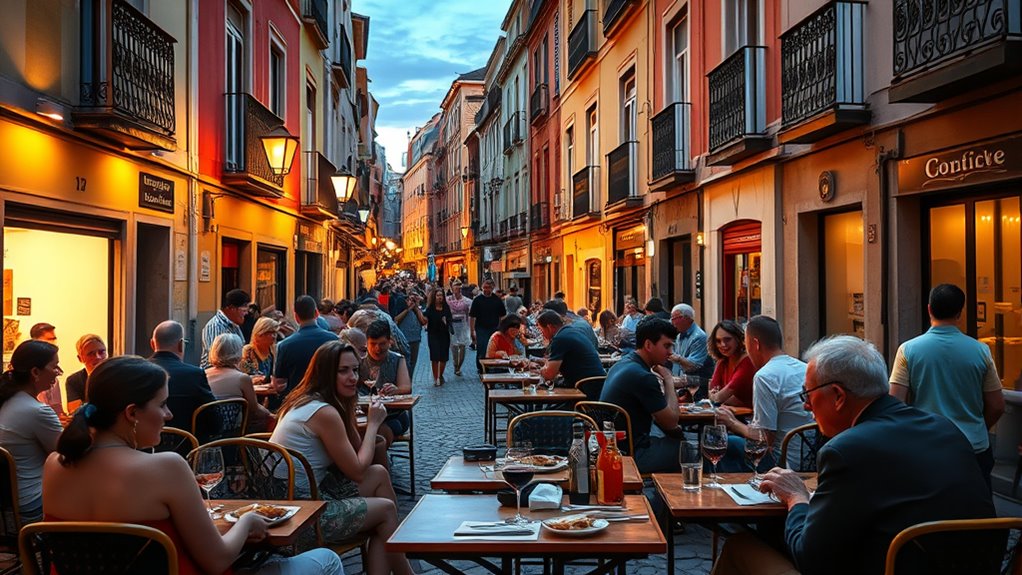
Cultural norms and social practices deeply influence Spain’s late dinner times, shaping daily routines around shared meals and leisure. You’ll find that meals are social events designed for conversation and connection, not just nourishment. Tapas culture and pre-dinner drinks (*hora de vermut*) create a relaxed atmosphere that delays the main meal. Family and friends gather later in the evening, often around 9–11 pm, after work, school, and activities. Restaurants and bars cater to this rhythm, keeping hours late to accommodate socializing. The lively nightlife, plazas, and festivals reinforce the idea that dinner is part of a broader social scene. These traditions prioritize leisure and community, making late dining a natural extension of Spain’s vibrant social fabric. Additionally, the conscious emphasis on mealtime socialization influences the timing of dinner, ensuring it remains an important social event. This cultural approach to meals highlights the importance of shared experiences in daily life, which naturally extends the dinner time into the late evening. Furthermore, local customs often include enjoying multiple courses over several hours, encouraging a slow, convivial dining experience that complements the late schedule. A relaxed attitude towards time further supports the late dinner tradition, emphasizing enjoyment over punctuality. The tradition of siesta also plays a role in shifting daily activities later into the afternoon and evening.
Modern Economic, Institutional, and Lifestyle Factors
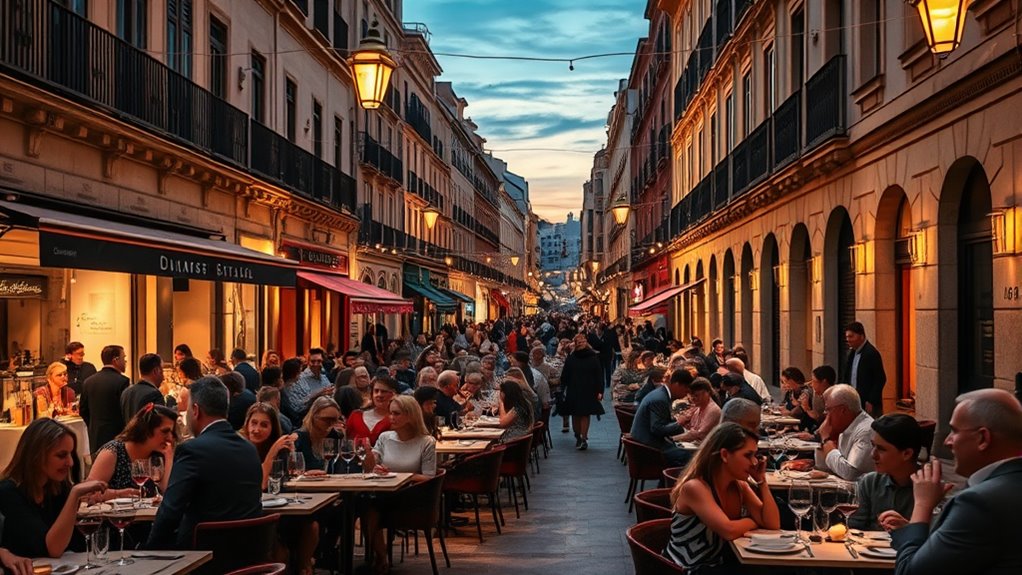
Modern economic and institutional factors substantially shape Spain’s late dining habits and daily routines. Many restaurants open after 8 pm, aligning with locals’ preference for late meals, while work schedules often include long midday breaks, allowing people to enjoy extended dinners afterward. Tourism plays a significant role, as visitors embrace Spain’s vibrant evening social scene, reinforcing late-night dining as a business model. Flexible work hours in some sectors enable employees to delay dinner, matching their leisure and family schedules. School and extracurricular activities push family mealtimes later, while urban infrastructure, like microclimates and city lighting, encourage outdoor dining into the evening. Additionally, innovative cloud solutions support businesses in extending their operating hours and enhancing customer experiences during these late hours. These technological advancements also facilitate modern scheduling practices, enabling both workers and service providers to adapt to Spain’s distinctive dining culture. The influence of cultural traditions continues to sustain this late-night eating pattern, blending tradition with modern societal demands. Furthermore, the integration of digital platforms allows restaurants and service providers to better coordinate their hours and marketing strategies to cater to this unique dining rhythm. Moreover, smart home technology can assist households in managing energy use and household routines around late dinners, creating a more comfortable and efficient living environment.
Frequently Asked Questions
How Does Late Dinner Impact Spaniards’ Overall Health and Well-Being?
Late dinners in Spain can influence your health and well-being in complex ways. If you eat late regularly, it might disrupt your circadian rhythm, potentially leading to issues like poor glycemic control or weight gain. However, Spain’s tradition of lighter evening meals and social eating can mitigate some risks. Ultimately, maintaining regular meal patterns and balancing late dining with healthy choices helps support your overall health.
Are There Regional Differences in Dinner Times Across Spain?
Like a tapestry woven with regional threads, Spain’s dinner times vary across its landscape. In the north, you might dine around 9 pm, while in the south, it’s closer to 10 pm. Coastal areas often push dinner even later, especially during summer, thanks to the warm climate and vibrant social scene. Urban centers tend to maintain late hours, reflecting local traditions and lifestyle rhythms that differ from rural routines.
How Have Recent Globalization and Digital Entertainment Affected Dinner Schedules?
Globalization and digital entertainment haven’t changed Spain’s late dinner habits much. You still tend to dine around 9–11 pm because social norms, restaurant hours, and cultural traditions remain strong. Online entertainment often extends your evening socializing, reinforcing late dining. While some younger people might eat earlier or grab quick bites, the overall pattern persists, as these habits are deeply rooted in Spain’s social and cultural fabric.
Do Younger Generations in Spain Still Follow Traditional Late Dinner Customs?
Yes, younger Spaniards still follow the late dinner customs, often eating around 9 to 11 pm. They embrace social dining, family gatherings, and tapas outings that stretch into the night. While some trends lean toward earlier meals due to work or lifestyle changes, many still enjoy the traditional rhythm, valuing the social and cultural aspects of late dining. You’ll find that late dinners remain a vibrant part of youth culture in Spain.
What Are the Potential Benefits of Spain’s Late Dining Culture?
You might find that Spain’s late dining culture offers a gentle rhythm to your day, allowing ample time for meaningful conversations and relaxed social bonds. The leisurely meals foster a sense of community, offering a break from hurried routines. Dining late also aligns with warmer evenings and vibrant nightlife, creating a lively atmosphere where you can savor both food and companionship, enriching your overall experience and making each evening memorable.
Conclusion
So, next time you’re baffled by Spaniards dining at midnight, remember it’s all part of a rich history, climate quirks, and social flair. While your early dinner might earn you envy, they’re just savoring centuries of tradition and a lifestyle that refuses to rush. Who needs an early bedtime when you can embrace the charm of a late-night fiesta? After all, in Spain, the best things truly do happen after sundown—and that’s perfectly fine.