
European tap water is generally safe to drink due to strict regulations and regular monitoring. However, you should be cautious if water looks, smells, or tastes unusual, especially after heavy rains or environmental events. Always check local water utility reports before drinking tap water in new areas. If you have concerns or belong to vulnerable groups, consider boiling or filtering water. To learn how to stay safe, keep exploring the detailed guidelines.

Get travel and outdoor gear delivered free — and shop member deals
- Fast, free delivery on millions of items
- Access to Prime Big Deal Days deals on October 6–7
- Prime Video, Amazon Music and more included
Key Takeaways
- Most European urban tap water meets strict EU standards, but rural or small communities may have less frequent testing.
- Always check local water utility reports and recent test results before consuming tap water in new areas.
- Signs like unusual taste, odor, discoloration, or particles indicate potential water quality issues requiring caution.
- Use boiling, certified filters, or bottled water during contamination alerts, especially for vulnerable populations.
- Environmental factors like heavy rain, floods, or droughts can impact water safety, necessitating increased vigilance and testing.
portable water filter for travel
As an affiliate, we earn on qualifying purchases.
As an affiliate, we earn on qualifying purchases.
Understanding Tap Water Safety Standards Across Europe
Understanding tap water safety standards across Europe begins with recognizing that most urban areas comply with the EU Drinking Water Directive, which sets strict limits for microbiological and chemical parameters. This regulation guarantees tap water is safe for everyday use by controlling contaminants like E. coli, nitrates, pesticides, and industrial chemicals. Regular monitoring by local authorities helps maintain compliance, with reports available to the public. However, compliance can vary, especially in rural or small-community supplies that rely on groundwater or small treatment plants with less frequent testing. Countries with advanced infrastructure, such as Denmark and Germany, generally provide more consistent water safety. Still, environmental events like floods or pollution incidents can temporarily impact water quality, so staying informed is key to ensuring safety. Water quality monitoring plays a crucial role in maintaining standards and promptly addressing any issues that arise.
As an affiliate, we earn on qualifying purchases.
Recognizing Signs That Water Quality Might Be Compromised
If your tap water suddenly develops an unusual taste, odor, or discoloration, it’s a clear sign that the water quality might be compromised. A metallic or chemical taste can indicate corrosion or chemical contamination, while a musty or sewage-like smell suggests microbial growth or pollution. Discoloration, such as brown or yellow water, often points to rust or sediment disturbances in the pipes. Visible particles or cloudiness may signal contamination or inadequate filtration. These signs aren’t normal and should prompt you to avoid drinking the water until you confirm safety. Flushing the tap by running cold water for a few minutes can sometimes help, but if issues persist, consult your local water utility or consider using bottled or boiled water for safety. Additionally, understanding the contrast ratio of your water system can help in assessing the clarity and quality of the water’s appearance. Regular water testing can also help identify potential contaminants early and ensure safe consumption. Being aware of European water quality standards can further help you assess whether your tap water meets safety regulations. Paying attention to any changes in water pressure may also reveal underlying issues with the plumbing or water supply quality.
As an affiliate, we earn on qualifying purchases.
When to Contact Local Water Authorities or Utilities

You should contact your local water authorities or utility immediately if you notice any unusual taste, odor, discoloration, or visible particles in your tap water. Promptly reaching out helps guarantee your safety and keeps authorities informed. Here are key moments to do so:
- After heavy rainfall, floods, or upstream contamination events that might compromise water quality.
- When staying in buildings with long stagnant plumbing, which can cause metal leaching or microbial growth.
- If vulnerable individuals, like infants or immunocompromised people, need reassurance about specific contaminants.
- Before using private wells or unregulated springs, to get recent test results or arrange testing.
Timely contact helps prevent health risks and ensures safe drinking water during potential contamination episodes.
As an affiliate, we earn on qualifying purchases.
Monitoring and Identifying Common Contaminants in Tap Water

You should be aware of the common contaminants that monitoring programs track, like bacteria, nitrates, pesticides, and emerging chemicals such as PFAS. Recognizing signs of water quality issues, such as unusual taste, odor, or discoloration, can help you identify potential problems early. Staying informed about local water reports guarantees you know when safety concerns arise and how to respond effectively. Regular testing and understanding water sanitation practices can further help maintain water safety at home.
Typical Contaminants Monitored
Monitoring of tap water in Europe primarily focuses on detecting microbiological contaminants like E. coli and coliform bacteria, which pose immediate health risks. These are tested regularly to guarantee safety. Besides microbiological hazards, authorities also monitor chemical contaminants, including: 1. Nitrates and pesticides, which can affect vulnerable groups. 2. PFAS and pharmaceuticals, due to their persistence and ecological impact. 3. Heavy metals like lead and cadmium, particularly in older plumbing. 4. Nutrients like nitrogen and phosphorus, which can cause eutrophication. Additionally, the use of advanced detection methods enhances the ability to identify emerging contaminants before they become widespread. This extensive approach helps identify potential dangers before they reach consumers. If a contaminant exceeds safe limits, authorities issue alerts or boil-water notices. Regular testing and monitoring are vital for maintaining safe, high-quality tap water across Europe.
Recognizing Water Quality Signs
Recognizing water quality issues begins with paying close attention to visible and sensory changes in tap water. If you notice discoloration, cloudiness, or particles floating, it’s a sign to be cautious. Unusual odors—musty, chemical, or sewer-like—are indicators of potential contamination. A strange taste, such as metallic, bitter, or sour, suggests chemical or bacterial problems. Consistent foam, film, or slime on the water surface can signal microbial growth or chemical residues. If your water appears murky or leaves stains on fixtures, it might contain metals or organic pollutants. Always trust your senses; if anything seems off, contact local authorities or avoid drinking tap water until the issue is clarified. These signs help you identify when water safety might be compromised.
Regional and Country Variations in Water Quality and Infrastructure
How do regional and national differences shape the safety and reliability of tap water across Europe? Your experience depends on local infrastructure, resource availability, and policies. Here’s what you should know:
- Northern countries like Sweden and Germany usually have abundant freshwater and advanced treatment, ensuring safer, more reliable tap water.
- Southern and eastern regions often face water stress, relying on transfers, reservoirs, or desalination, which can affect water quality.
- Rural and island communities may have less developed infrastructure, increasing risks from older pipes or limited treatment.
- Variability in monitoring frequency and transparency across countries means some areas provide more detailed water quality reports than others. Stay informed by checking local sources before trusting tap water.
Practical Tips for Travelers and Residents to Ensure Safe Drinking Water
Always pay attention to any changes in your tap water’s taste, smell, or appearance, and consult local advisories if something seems off. Use safe treatment methods like boiling or certified filters when needed, especially in areas with uncertain water quality. Staying informed by checking updates from local authorities can help you ensure your water remains safe to drink. Being aware of Free Floating issues can help you better understand water safety concerns. Additionally, understanding waterborne pathogens and their presence can further improve your ability to assess water safety.
Recognize Water Changes
Water quality can change unexpectedly, especially after heavy rain, floods, or long periods of stagnation. To protect yourself, learn to recognize water changes. Here are some practical tips:
- Watch for taste, odor, or color shifts – a sudden change might indicate contamination or pipe issues.
- Check for visible particles or sediment in the tap after such events.
- Notice if water becomes cloudy, murky, or has foam – these signals may point to upstream pollution.
- Be alert to unusual smells, like sulphur or chemical odors, which can signal contamination.
- Be aware that pipe corrosion can also cause changes in water quality, especially in older plumbing systems. Additionally, shifts in water chemistry may result from upstream pollution, so staying informed about local environmental events is helpful.
If you notice any of these signs, avoid drinking tap water until you confirm safety. Contact your local water utility or follow advisories. Recognizing these changes helps you stay safe and informed.
Use Safe Treatment Methods
When you notice signs of water quality issues, taking simple treatment steps can help guarantee safety. Boiling water for at least one minute effectively kills most bacteria, viruses, and parasites, making it safe to drink. Using certified water filters rated for specific contaminants, like lead or pesticides, provides added protection, especially in older buildings. If you’re concerned about chemical pollutants, activated carbon filters are effective. Always run the tap for several minutes after long periods of stagnation to flush out metals or microbial buildup. When in doubt, opt for bottled water. Remember, these methods are practical ways to ensure your water is safe, especially when local testing or advisories suggest caution. Additionally, understanding the latest water testing methods can help you better assess water safety in your area.
Monitor Local Advisories
Staying informed about local water quality conditions is essential for ensuring safe drinking water, especially when traveling or living in unfamiliar areas. To do this effectively, keep these tips in mind:
- Check the latest reports from the local water utility or municipal website before drinking tap water.
- Pay attention to any boil notices, advisories, or alerts issued after heavy rains or pollution incidents.
- Ask local residents or staff about recent water issues if you notice unusual taste, smell, or discoloration.
- When staying in older buildings or rural areas, request recent test results for private or small-scale supplies.
The Impact of Infrastructure Age and Climate Events on Water Safety
As infrastructure ages, its ability to reliably deliver safe tap water diminishes, especially when faced with extreme climate events. Older pipes and treatment facilities are more prone to leaks, contamination, and system failures. Heavy rains and floods can overwhelm aging systems, causing untreated or partially treated water to enter supply lines. Droughts and high temperatures reduce water availability, forcing reliance on reservoirs or groundwater that may be more vulnerable to pollution or salinization. These events increase the risk of transient contamination episodes, such as bacterial outbreaks or chemical leaks, even in regions with generally good water quality. Regular maintenance and modernization of infrastructure are essential for ensuring consistent, safe tap water in the face of these increasing threats. Implementing water quality monitoring systems can help detect issues early and prevent potential health hazards. Additionally, investing in resilient infrastructure can help communities better withstand climate-related stressors and maintain water safety standards. To further safeguard public health, adopting adaptive management strategies that respond swiftly to environmental changes is crucial. Ensuring proper water treatment procedures are maintained and upgraded is also crucial to adapt to changing environmental conditions and prevent contamination.
Regulations and Policies Shaping Water Quality Monitoring
You’re likely aware that EU regulations set strict water quality standards, but enforcement and monitoring practices vary across member states. Some countries rigorously implement these policies, while others face challenges in maintaining consistent oversight. Understanding this regulatory landscape helps you gauge the safety and reliability of tap water in different regions. Additionally, regional climate and infrastructure can influence water quality outcomes, making it important to stay informed about local conditions. The presence of security systems in water infrastructure can further enhance safety and prevent contamination. Moreover, ongoing monitoring efforts are essential to promptly identify and address potential issues, ensuring public health and trust.
Water Quality Standards Enforcement
European water quality standards are enforced through a combination of EU regulations, national policies, and monitoring obligations designed to guarantee safe drinking water across member states. You can expect these enforcement measures to include:
- Regular inspections and reporting requirements for water suppliers, ensuring compliance with legal limits.
- Mandatory testing of water sources for microbiological, chemical, and emerging contaminants.
- Penalties and corrective actions for utilities that fail to meet standards, motivating ongoing improvements.
- Public access to water quality reports, fostering transparency and consumer awareness.
- Continuous monitoring programs ensure that emerging issues are detected promptly, maintaining high water safety levels. Additionally, the implementation of enforcement tools such as sanctions and corrective measures further supports compliance efforts. The effectiveness of these enforcement mechanisms relies heavily on the compliance of water providers and regulatory agencies alike.
These enforcement tools help detect violations early, prompting swift responses like boil notices or infrastructure upgrades. While enforcement levels vary, the framework aims to protect your health and ensure safe tap water across Europe.
Monitoring Program Variability
Monitoring programs for tap water quality vary substantially across Europe due to differing regulations, policies, and infrastructure investments. Some countries conduct frequent, thorough testing, especially in urban areas with advanced infrastructure, ensuring high transparency and safety. Others, particularly rural or developing regions, have less frequent monitoring, which can lead to gaps in data and delayed detection of issues. National regulations set standards for contaminants and dictate testing protocols, but enforcement and reporting practices differ. Cross-border shared water sources add complexity, as upstream activities influence downstream quality. Additionally, emerging contaminants like pharmaceuticals and industrial chemicals are increasingly included in surveillance, though coverage varies. These differences impact consumer confidence, requiring you to stay informed about local monitoring practices and advisories before trusting tap water in unfamiliar or vulnerable settings.
Special Precautions for Vulnerable Populations and Private Wells
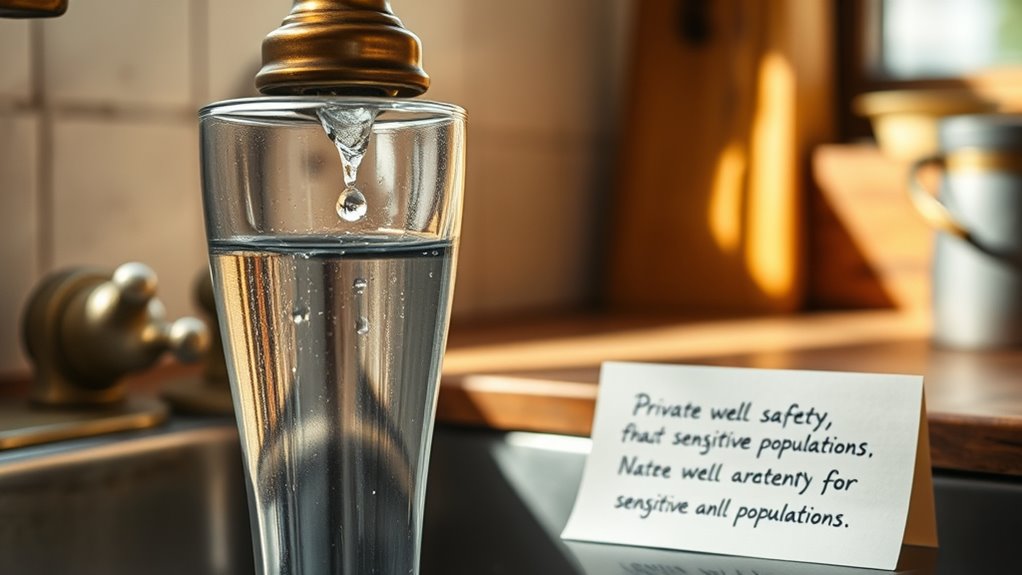
Vulnerable populations, such as infants, pregnant individuals, and immunocompromised persons, require extra precautions when it comes to tap water safety. You should always verify water quality before consumption. Here are key steps to protect yourself:
Vulnerable groups should always verify tap water quality before consumption to ensure safety.
- Consult local water utility reports or ask authorities about recent test results, especially if you notice discoloration, odor, or particles.
- Boil water for at least one minute if a boil-water advisory is issued or if you suspect contamination.
- Use certified point-of-use filters rated for specific contaminants like lead, nitrates, or bacteria.
- Test private wells regularly, especially after heavy rains or land-use changes, to ensure water remains safe for consumption.
- Understanding water testing protocols can help you stay informed about water safety alerts and updates from authorities. Regular testing and awareness of contamination sources are essential components of water safety management.
Taking these precautions helps reduce health risks for vulnerable groups and guarantees safer water use.
Future Challenges and Ongoing Improvements in European Water Safety
Despite significant progress in ensuring safe tap water across many regions, ongoing challenges threaten to undermine these gains. Climate change causes more frequent droughts and floods, increasing contamination risks and stressing aging infrastructure. Emerging pollutants like pharmaceuticals and industrial chemicals pose new monitoring and regulation hurdles, as they often escape traditional treatment. Rural and underserved areas still face inconsistent testing and limited infrastructure, risking water quality lapses. However, ongoing improvements include stricter EU regulations, expanded monitoring programs, and innovative treatment technologies that target persistent contaminants. Cross-border cooperation on shared water resources enhances regional safety, while digital reporting tools improve transparency. Continued investment, stricter enforcement, and adaptive management are essential to meet future water safety challenges and guarantee reliable access for all Europeans.
Frequently Asked Questions
How Often Is Tap Water Tested in Rural Versus Urban Areas?
You should expect tap water to be tested more frequently in urban areas, often following strict EU regulations and regular monitoring programs. In rural areas, testing tends to be less frequent due to smaller treatment plants and groundwater reliance. Because of these differences, it’s wise to review local water quality reports before travel or use additional precautions like boiling or filtering, especially in rural communities or private wells.
Are There Specific Risks Associated With Bottled Water Compared to Tap Water?
Think of bottled water as a carefully sealed treasure chest—meant to protect its contents. While generally safe, it can pose risks if bottles are stored improperly or are past their expiration date, potentially leading to bacterial growth or chemical leaching. Sometimes, bottled water bypasses local regulations. Always check labels, avoid bottles with damage, and consider the source, especially if the water tastes or smells unusual.
What Are the Most Common Contaminants Found in Private Well Water?
You’ll often find bacteria like coliforms and E. coli in private well water, which can cause illness. Nitrates from fertilizers or septic systems are common chemical contaminants that pose risks, especially to infants. Metals like lead, arsenic, or iron may leach from old pipes or natural deposits. Pesticides and industrial chemicals can also contaminate wells, particularly near agricultural or polluted sites, making regular testing essential for safe drinking water.
How Climate Change Affects Future Tap Water Safety in Europe?
Climate change disrupts your tap water safety in Europe by increasing droughts and floods, which can overwhelm treatment systems and introduce pollutants. As weather patterns shift, source waters become more vulnerable to contamination from agricultural runoff, industrial chemicals, and microbial hazards. You might notice more advisories or experience unexpected water quality issues, especially in rural or stressed regions. Staying informed and taking precautions, like boiling or filtering, helps protect you amidst these unpredictable changes.
Can Water Treatment Methods Remove Emerging Pollutants Like Pharmaceuticals?
Water treatment methods can remove some emerging pollutants like pharmaceuticals, but effectiveness varies. Conventional treatments like activated carbon filtration and advanced processes such as ozonation or membrane filtration substantially reduce these contaminants. However, not all systems are equipped for these methods, especially in rural or small community supplies. To guarantee safety, it’s wise to check local water quality reports and consider point-of-use filters rated for pharmaceuticals if you’re concerned.
Conclusion
Staying informed about your tap water’s safety is essential, just like knowing the lay of the land before setting sail. Trust your senses—if water looks or smells off, don’t hesitate to ask questions or contact authorities. Remember, infrastructure and climate can change water quality unexpectedly. While progress has been made since the days of the aqueduct, vigilance remains your best tool—keep your wits about you, and your tap water will serve you well.
Fall Picks
fall essentials
As an affiliate, we earn on qualifying purchases.