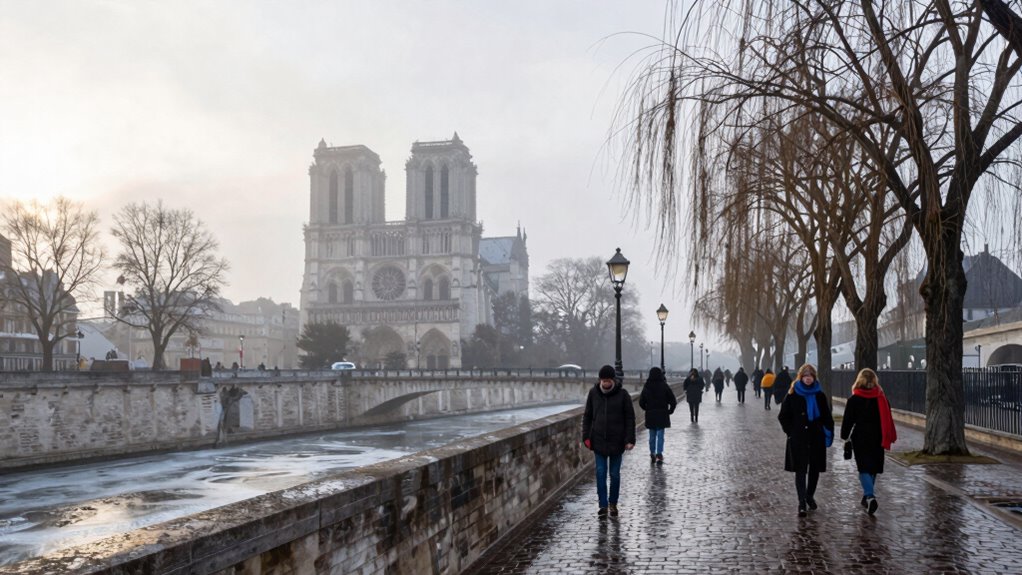

In February, to enjoy Paris amid short, cold days, dress in layers with waterproof outerwear, insulated shoes, and warm accessories like scarves and gloves. Plan outdoor activities early when it’s sunny and save indoor visits—museums, cafés, and galleries—for later in the day. Expect rain and snow, so carry waterproof gear and a compact umbrella. Embrace quieter streets and cozy cafés, making the most of winter’s peaceful charm—learn more to thrive during your chilly Paris adventure.

Get travel and outdoor gear delivered free — and shop member deals
- Fast, free delivery on millions of items
- Access to Prime Big Deal Days deals on October 6–7
- Prime Video, Amazon Music and more included
Key Takeaways
- Pack layered, waterproof clothing, including thermal base layers, waterproof jackets, hat, gloves, and waterproof shoes.
- Plan outdoor activities early in the day during peak sunlight hours; reserve indoor attractions for midday or evening.
- Carry an umbrella, waterproof gear, and sturdy shoes to stay dry and safe during frequent rain or snow.
- Visit indoor sites like museums, galleries, and cafés to enjoy Paris comfortably and escape the cold.
- Use public transport with a Navigo card for efficient travel, and embrace quieter streets and atmospheric winter scenery.
women's waterproof winter jacket
As an affiliate, we earn on qualifying purchases.
As an affiliate, we earn on qualifying purchases.
Preparing for the Chilly Climate
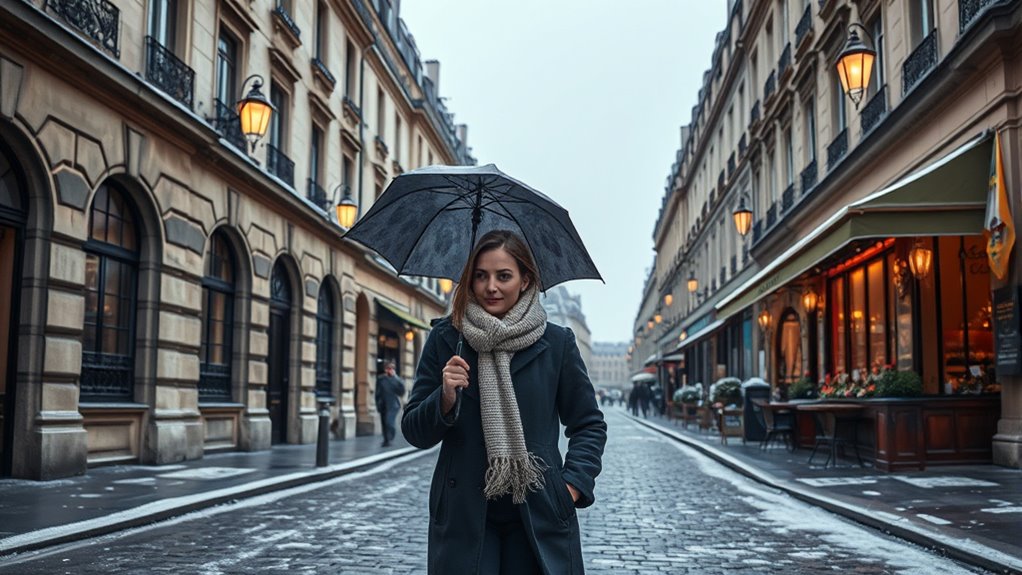
To comfortably navigate Paris in February, it is vital to prepare for the chilly weather. Temperatures typically range from 3°C to 9°C, with daytime highs around 8°C and evenings dropping to about 3°C. The high humidity and moderate winds can make it feel even colder, so layering is essential. Be ready for sporadic rain and occasional snow, which can dampen your plans if you’re unprepared. Protect yourself from the dampness by choosing waterproof outerwear and sturdy, insulated shoes. Keep in mind that the limited sunshine—about five hours daily—means you’ll want to plan indoor activities during the colder, cloudier parts of the day. Proper preparation ensures you stay warm, dry, and comfortable while exploring Paris in winter. Additionally, understanding the senior caregiving considerations for travel can help ensure a safe and enjoyable trip for all travelers. Investing in appropriate clothing layers can significantly improve your comfort during outdoor excursions in the cold weather. Being aware of Free Floating concepts like flexible planning can help you adapt your itinerary if weather conditions change unexpectedly. Incorporating music therapy or calming soundscapes in your indoor time can enhance relaxation after a day outside. Considering outdoor gear designed for winter conditions can also make your excursions more enjoyable and safer.
As an affiliate, we earn on qualifying purchases.
Essential Clothing and Layering Tips
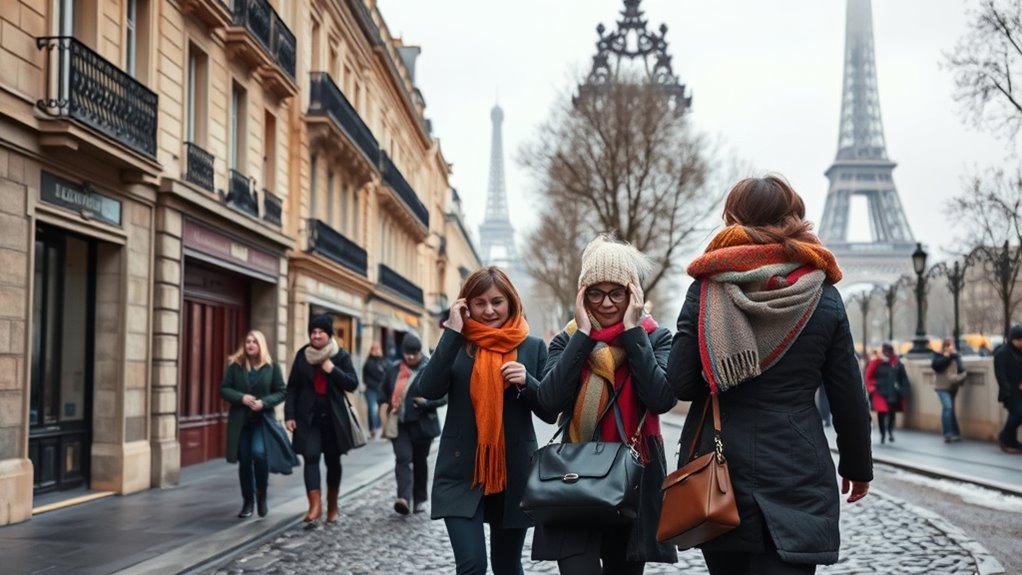
When packing for Paris in February, start with warm base layers like thermal shirts to keep you comfortable in the chilly weather. Make sure to bring waterproof outerwear, such as a durable jacket, to stay dry during frequent rain and snow. Layering smartly will help you adjust easily to the fluctuating temperatures and damp conditions. Incorporating simple organizing strategies into your packing can help keep your belongings manageable and accessible during your trip.
Warm Base Layers
Since February in Paris can be quite chilly, layering your clothing is essential to stay warm and comfortable. Start with a snug, thermal or merino wool base layer that traps heat and wicks away moisture. These materials keep you dry and warm even if you sweat during sightseeing or walking. Avoid cotton, which retains moisture and makes you feel colder. Opt for fitted long-sleeve shirts and leggings or thermal underwear as your first layer. Choose breathable, insulating fabrics that provide warmth without bulk. This foundation helps maintain your body heat and prevents chills. Wearing a good base layer guarantees that your subsequent clothing layers, like sweaters and outerwear, work effectively against the cold. It’s the key to staying cozy during those chilly Paris days. Proper layering not only enhances warmth but also allows for easy adjustment if the weather changes throughout the day. Additionally, selecting thermal fabrics designed for cold weather can significantly improve your overall comfort. Using layering techniques effectively ensures that you stay warm without overheating during your outdoor explorations. Incorporating moisture-wicking materials in your base layer can further enhance comfort by managing sweat and preventing dampness. Moreover, understanding how clothing insulation works can help you choose the right pieces for different weather conditions.
Waterproof Outerwear
Given the frequent rain and high humidity levels in Paris during February, wearing waterproof outerwear is essential to stay dry and comfortable. A reliable waterproof jacket or coat keeps you protected from rain and wind, preventing chills. Look for options with sealed seams and breathable fabrics to avoid overheating. A hood is a must-have for quick rain showers or foggy mornings. Pair your outerwear with waterproof shoes or boots to keep your feet dry and prevent slipping on wet surfaces. Consider layering with moisture-wicking base layers to stay warm without overheating. Additionally, choosing jackets with European-made fabrics can ensure durability and sustainability for environmentally conscious travelers. Incorporating connected technology into your outerwear, such as built-in sensors or smart fabrics, can also enhance your experience by monitoring weather conditions or personal comfort levels. For added protection, select outerwear with specialized waterproof technologies, which can enhance water resistance and breathability for prolonged wear. To further improve comfort, look for options that include ventilation features to help regulate temperature and moisture build-up during extended wear. Integrating smart textiles that adapt to weather changes can provide an extra layer of convenience and protection during unpredictable February weather.
As an affiliate, we earn on qualifying purchases.
Navigating Shorter Daylight Hours
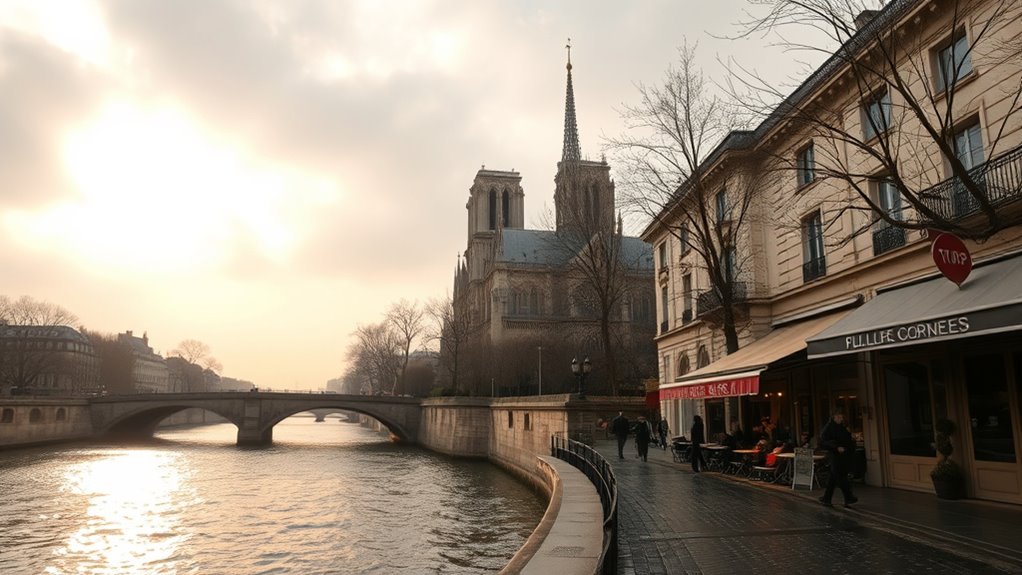
With daylight hours markedly shorter in February, you’ll find yourself adjusting your schedule to make the most of the limited sunlight. Plan outdoor activities early in the day, when sunlight peaks around 8:00 AM to 10:00 AM, and avoid late afternoons, which end around 6:07 PM. Use the table below to optimize your time and expectations:
| Time of Day | Sunlight Duration | Recommended Activities |
|---|---|---|
| Morning | 8:00 AM – 10:00 AM | Sightseeing, walking tours |
| Midday | 10:00 AM – 2:00 PM | Museum visits, indoor cafes |
| Afternoon | 2:00 PM – 4:30 PM | Shopping, sightseeing |
| Evening | 4:30 PM – 6:07 PM | Light strolls, early dinner |
Adjust your plans accordingly — prioritize outdoor exploration during the brightest hours and reserve indoor experiences for the darker, colder evenings. Being aware of daylight hours can help you plan optimal lighting conditions for your activities. Additionally, consulting a reliable world clock can help you better coordinate your schedule with local sunrise and sunset times. Recognizing seasonal variations is important for maintaining an active routine and making the most of your time in Paris during February. Incorporating visual cues can also assist in adapting to the shorter days and maintaining an active routine. Moreover, understanding weather conditions can help you dress appropriately and plan for potential changes in outdoor visibility.
As an affiliate, we earn on qualifying purchases.
Managing Rain and Snow Expectations
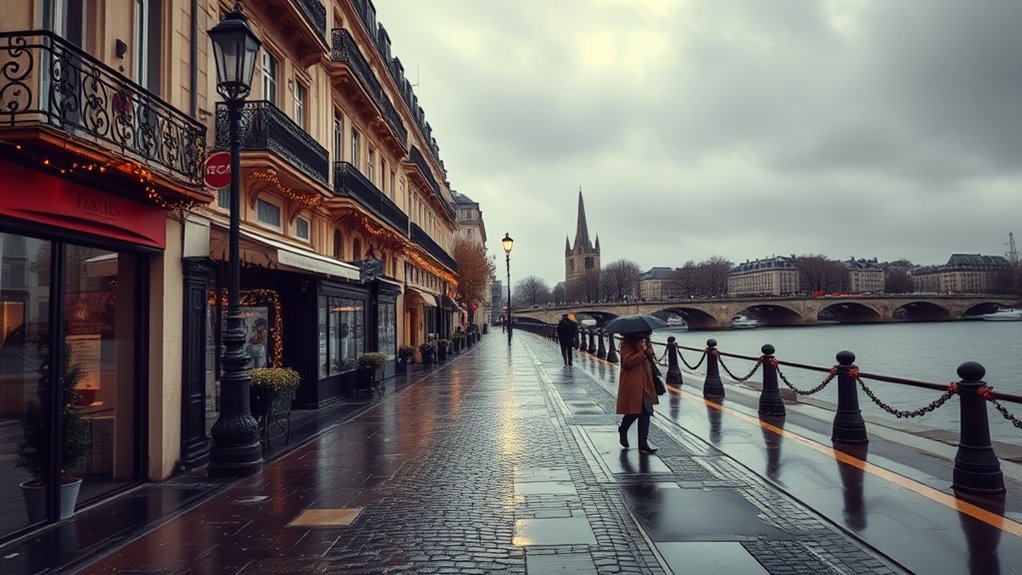
You should expect rain or snow about a third of the days in February, so packing waterproof clothing is essential. Light to moderate precipitation can occur suddenly, so always be prepared for wet conditions. Wearing layered, warm, and water-resistant clothes will help you stay comfortable despite the unpredictable weather. Additionally, using an air purifier can improve indoor air quality during the chilly, damp days. Being aware of weather patterns can help you better plan outdoor activities and ensure you’re adequately prepared for sudden changes. Incorporating foraging techniques to identify safe edible plants can also be beneficial when exploring outdoors in variable weather conditions.
Rain and Snow Frequency
Rain and snow occur fairly frequently in Paris during February, so it’s important to plan for wet weather. On about 13 days of the month, you can expect some form of precipitation, with an average of 6.5mm per event. Snowfall happens roughly three days a year, usually light to moderate. Be prepared for a 34% chance of rain or snow on any given day, often accompanied by high humidity and brisk winds that make the cold feel sharper. While sunny spells are rare, they do occur, offering brief relief from gloomy days. To enjoy your trip, keep these tips in mind:
- Carry a compact umbrella or raincoat
- Wear waterproof footwear
- Check daily weather forecasts for updates
Proper Clothing Choices
Since rain and snow are common in Paris during February, choosing the right clothing is key to staying comfortable. Layering is your best strategy—wear a moisture-wicking base layer to keep sweat away, followed by insulated, warm mid-layers like fleece or wool. Top it with a waterproof, windproof jacket to protect against rain, snow, and chilly winds. Don’t forget waterproof shoes or boots with good grip to handle slippery sidewalks. Carry a compact umbrella and a hat to shield your head from rain and wind. Warm gloves and a scarf will help retain body heat during outdoor activities. Remember, high humidity and cold winds make it feel even colder, so dress in multiple layers and be prepared for sudden weather changes.
Making the Most of Indoor Attractions
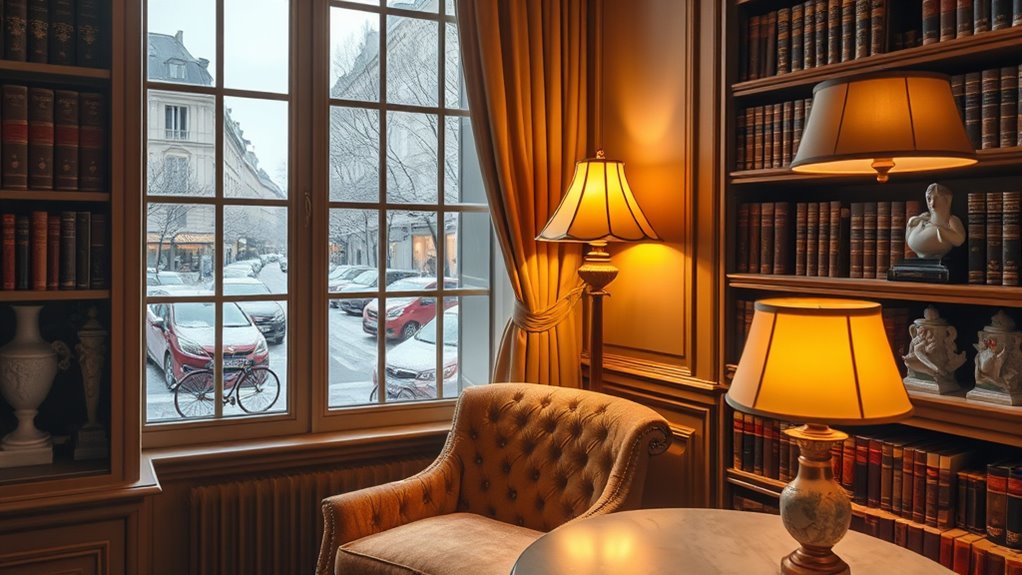
When the chilly February weather keeps you indoors, exploring Paris’s rich array of indoor attractions guarantees your trip remains exciting and memorable. Take advantage of the city’s renowned museums, historic landmarks, and cultural sites to stay warm while soaking in its history and art. Whether you visit the Louvre for masterpieces, the Musée d’Orsay for impressionist works, or the Centre Pompidou for modern art, you’ll find plenty to captivate you. Additionally, enjoy Parisian cafés and indoor markets for authentic local flavors. These spots offer cozy settings to relax, reflect, and recharge. Staying indoors doesn’t mean missing out on the city’s essence; it’s an opportunity to explore its cultural richness comfortably and comfortably.
- Visit top museums and galleries to see world-famous artworks
- Enjoy a warm café break with local specialties
- Explore historic landmarks and indoor markets
Practical Transportation Advice

Traveling Paris in February requires some planning, as the chilly weather and occasional rain can affect your travel plans. Dress in layers, including a warm coat, scarf, and waterproof gear, to stay comfortable during outdoor excursions. Use the metro for quick, reliable transportation; it’s faster than buses and less affected by rain or cold. Purchase a Navigo card for unlimited rides, saving you money and hassle. Walking is charming but can be uncomfortable in rain or wind, so carry an umbrella and sturdy shoes. Taxis and ride-sharing services are available but more costly, especially during peak hours. Keep your travel schedule flexible to accommodate unexpected weather changes, and always check real-time transit updates to avoid delays.
Embracing the Unique Winter Atmosphere

Despite the chilly temperatures and frequent rain, February offers a uniquely atmospheric experience in Paris. You can embrace the quiet charm of empty streets, where iconic landmarks like the Eiffel Tower and Notre-Dame seem more intimate. Foggy mornings add a mysterious glow, perfect for capturing atmospheric photos. The cold weather encourages cozy moments in cafés, savoring hot drinks and warm croissants. The subdued sunlight and occasional snowfall create a peaceful, reflective mood that’s different from busier seasons. By embracing these conditions, you’ll discover a quieter, more authentic side of Paris that’s perfect for introspective walks and enjoying the city’s striking winter scenery.
- Take advantage of foggy mornings for atmospheric photography
- Cozy up in cafés with warm drinks and local pastries
- Explore less crowded landmarks during quieter hours
Frequently Asked Questions
What Are the Best Outdoor Activities Despite the Cold Weather?
You can enjoy outdoor activities despite the cold by exploring Paris’s iconic sights like the Eiffel Tower and Notre-Dame, which look stunning against winter skies. Take brisk walks along the Seine or through cozy parks like Luxembourg Gardens. Wear layered clothing, including warm jackets and waterproof gear, to stay comfortable. Just plan around the weather forecast, and don’t forget an umbrella or hat for foggy or rainy days.
How Can I Avoid Getting Lost in Foggy Conditions?
Imagine yourself a brave explorer in a dense fog jungle, and your compass is a smartphone or a map. To avoid getting lost, stay on well-marked paths, carry a compass or GPS device, and keep an eye on landmarks. Wear bright clothing, and don’t wander aimlessly. Trust your navigation tools, and if you’re unsure, find a cozy café or shop to regroup and ask for directions.
Are There Specific Festivals or Events in February?
In February, you can enjoy events like Paris Fashion Week, which showcases the latest in haute couture and attracts designers and celebrities worldwide. You’ll also find Mardi Gras celebrations, with colorful parades and lively gatherings. Additionally, art exhibitions and theater performances flourish during this time. Be sure to check local listings, as some events may be indoors, helping you stay warm and dry while experiencing Parisian culture.
How Early Do Attractions Close During Winter Months?
You’ll find that attractions in Paris during winter close earlier than in summer, often around 5 or 6 PM. So, while you might dream of long evening strolls, be prepared for shorter hours. Don’t forget, the cold weather and early sunsets mean you’ll want to plan your visits thoughtfully. Arriving earlier in the day ensures you squeeze in the sights before they shut, making the most of your chilly Paris adventure.
What Are the Cheapest Ways to Stay Warm Outdoors?
You can stay warm outdoors in Paris by layering your clothing, choosing thermal underwear, and wearing a warm coat. Don’t forget a hat, scarf, and gloves to protect your head, neck, and hands from the cold winds. Use insulated footwear and thick socks to keep your feet warm. Seek sheltered spots to break the wind, and move around to generate body heat, making outdoor activities more comfortable despite the chilly weather.
Conclusion
Embrace February in Paris with an open mind and flexible plans, knowing that every cloud has a silver lining. Layer up, stay warm, and make the most of indoor and outdoor experiences. Remember, the early bird catches the worm—so start your days early to enjoy quieter sights and cozy cafés. With a little patience and preparation, you’ll turn chilly days into unforgettable memories. After all, Paris is still magic, even in winter’s embrace.
Halloween Picks
halloween
As an affiliate, we earn on qualifying purchases.