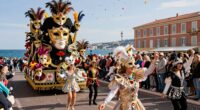
Venice Carnival is a centuries-old festival filled with vibrant masks, costumes, and grand performances that attract about 3 million visitors each year. It typically takes place in mid to late February, ending on Shrove Tuesday. To make the most of it, plan ahead by booking accommodations early, choosing authentic costumes, and knowing the key events like the Festa delle Marie and Volo dell’Angelo. Keep exploring for tips on experiencing this historic celebration fully.
Key Takeaways
- Venice Carnival is a historic festival celebrating Venice’s independence, featuring masks, costumes, parades, and cultural performances, held annually in February.
- It typically lasts two to three weeks, culminating on Shrove Tuesday (Martedì Grasso), with dates varying yearly based on Easter.
- Key events include the Festa delle Marie parade and Volo dell’Angelo, with elaborate costumes and artistic displays in Piazza San Marco.
- To plan, book accommodations early, purchase tickets in advance for popular events, and prepare comfortable costumes suitable for walking and dancing.
- The festival combines historic traditions with modern elements, attracting about 3 million visitors annually, and often includes live streaming and interactive displays.

YU FENG 2 Pack Venetian Masquerade Mask, Adult Carnival Party Accessory
- Set Includes Two Masks: Venetian masquerade mask set for adults
- Hand-Painted Details: Elegant Venetian patterns and accents
- Comfortable Fit: Soft ribbons for secure wear
As an affiliate, we earn on qualifying purchases.
As an affiliate, we earn on qualifying purchases.
The Historical Origins of Venice Carnival
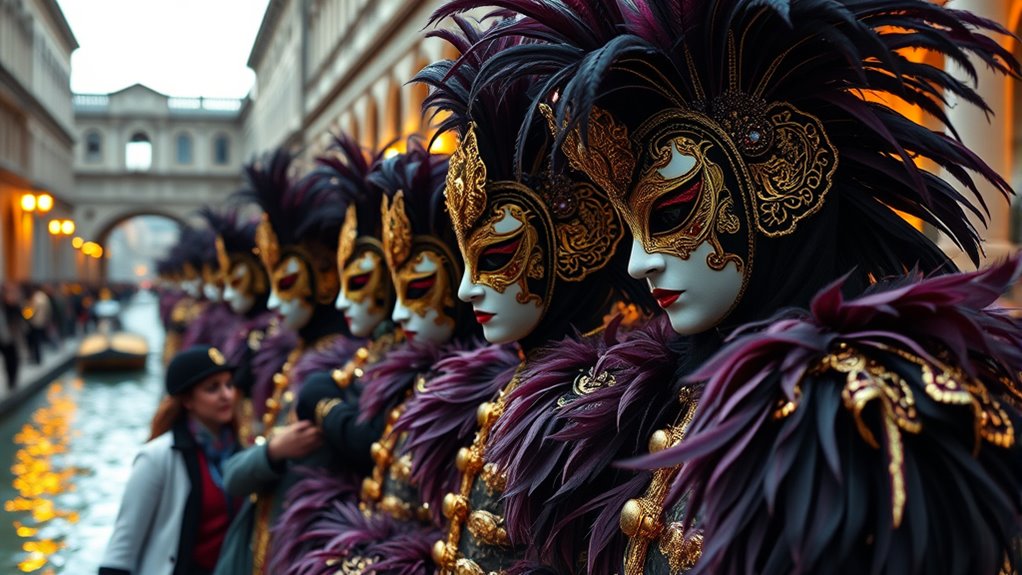
The origins of Venice Carnival trace back to a victorious event in 1162, when Venetians celebrated their triumph over Patriarch Ulrich II of Aquileia by slaughtering a bull and twelve pigs in Piazza San Marco. This act marked their independence and military success, becoming a symbol of communal pride. The festival was first documented in 1094 by Doge Vitale Falier as a form of public entertainment, and by 1296, it was officially recognized as a public holiday on the day before Lent. Over centuries, the festivities grew in scale, peaking during the 16th to 18th centuries, attracting Europeans from all over. Banned in 1797 after Napoleon’s conquest, the carnival was revived in 1979, restoring its historic significance and traditions. Throughout history, Venice Carnival has continually evolved while maintaining its rich cultural heritage. Additionally, the carnival celebrations now include elaborate masks, costumes, and performances that reflect its deep-rooted traditions and artistic expressions. The cultural significance of the event highlights its role in preserving Venice’s unique identity through centuries of change.

Venice Carnival
- Condition: Used Book in Good Condition
As an affiliate, we earn on qualifying purchases.
As an affiliate, we earn on qualifying purchases.
Key Events and Traditions During the Festival
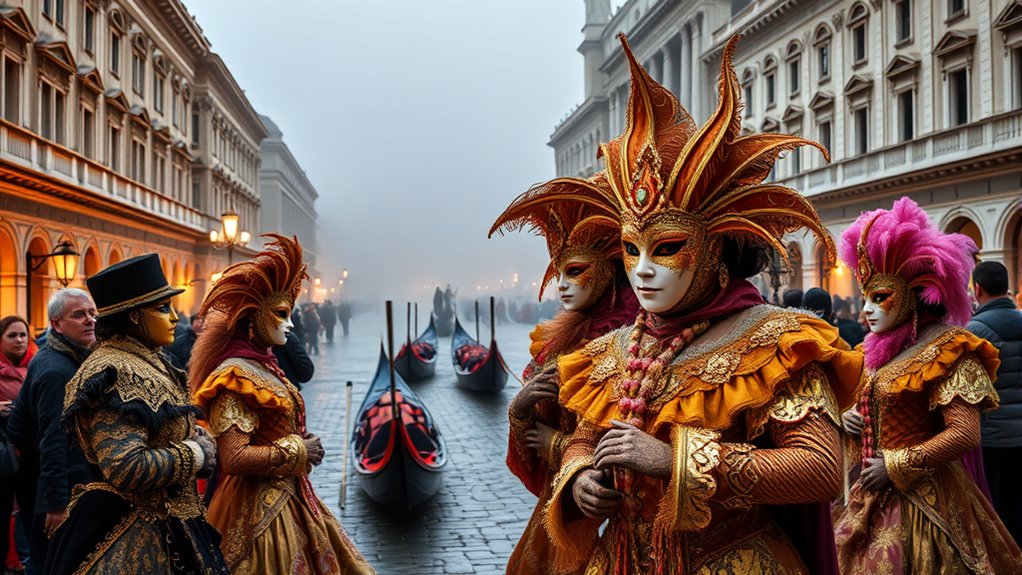
During the Venice Carnival, you’ll experience iconic events like the Festa delle Marie, where twelve women parade through the city in stunning gowns. You can also watch the Volo dell’Angelo, a breathtaking performance where an angel descends into the crowd from a height. These traditions capture the spirit of the festival, blending history, spectacle, and celebration. The festival’s rich history and evolving cultural significance continue to draw visitors from around the world, with many events showcasing Free Floating decorations and costumes that embody the festival’s vibrant atmosphere. Additionally, the event’s study techniques help attendees appreciate the intricate craftsmanship behind the costumes and decorations, enhancing their overall experience.
Festa Delle Marie Procession
Each year, the Festa delle Marie captivates visitors with its vibrant procession through Venice’s historic streets, celebrating the arrival of twelve young women dressed in elegant gowns. You’ll see these Marie, chosen from local families, parading in beautifully embroidered dresses, often accompanied by musicians and dancers. The procession begins in a grand ceremony, usually in Piazza San Marco, where the Marie are presented before starting their journey through the city’s alleys and squares. As you watch, you’ll notice the lively atmosphere, with crowds cheering and photographers capturing the moment. This tradition symbolizes Venice’s rich history of celebrating beauty, grace, and community. The procession’s vibrant costumes and joyful ambiance make it a highlight of the Carnival, connecting past and present festivities. Cultural traditions play a vital role in preserving the unique heritage of Venice and enhancing the festive experience. Additionally, these celebrations showcase local craftsmanship, which is essential in maintaining the city’s artistic and cultural identity. The festive atmosphere is further enriched by the music, dance, and elaborate costumes that are carefully preserved through generations. Moreover, the event often incorporates traditional music and dance, which deepen the cultural significance of the celebration. These elements together create an authentic Venetian experience that attracts visitors from around the world.
Volo Dell’Angelo Performances
One of the most exhilarating highlights of Venice Carnival is the Volo dell’Angelo, or Angel Flight, a daring aerial performance that captures the imagination of spectators. During this event, an acrobat dressed as an angel descends from the top of St. Mark’s Campanile, symbolizing the festival’s spiritual and festive spirit. To fully enjoy this spectacle, you should:
- Arrive early to find a good viewing spot in Piazza San Marco.
- Watch as the angel gracefully glides down on a cable, often accompanied by music.
- Capture photos of the dramatic descent for lasting memories.
- Feel the thrill as the crowd cheers, celebrating Venice’s unique blend of tradition and spectacle.
This performance embodies the daring and elegance that define Venice Carnival, making it a must-see experience.

Frommer's Rome, Florence, and Venice 2026 (Complete Guide)
As an affiliate, we earn on qualifying purchases.
As an affiliate, we earn on qualifying purchases.
When Does Venice Carnival Take Place?

Venice Carnival typically takes place in the weeks leading up to Lent, culminating on Shrove Tuesday, also known as Martedì Grasso. The festival usually begins in mid to late February and lasts about two to three weeks. The exact dates vary each year because they depend on Easter, which shifts annually. The carnival’s peak days are the final weekend and the Tuesday before Ash Wednesday, when the grand celebrations, parades, and masked balls reach their climax. Historically, the festivities spanned months, but today, they’re concentrated in this pre-Lenten period. You’ll want to check the specific dates for each year well in advance, as the timing influences all your plans for the vibrant events, parades, and costumes. Embracing calm and clarity during this busy season can help you enjoy the festivities with a sense of purpose and presence. Since the dates are determined by Easter’s moving calendar, planning ahead ensures you won’t miss the most exciting events. Being aware of festival scheduling helps visitors coordinate accommodations and transportation effectively.

EURO JOY Orthopedic Walking Shoes for Women,2025 New Orthowalkway Womens Shoes,Woven Orthopedic Breathable Walking Sneaker Non-Slip Arch Support Slip on Shoes Brown 41
- Breathable Woven Material: Soft, breathable, and flexible for comfort
- Arch Support for Foot Health: Provides stability and relieves discomfort
- Slip-On Design: Easy to wear and remove
As an affiliate, we earn on qualifying purchases.
As an affiliate, we earn on qualifying purchases.
How to Experience the Carnival’s Most Famous Celebrations
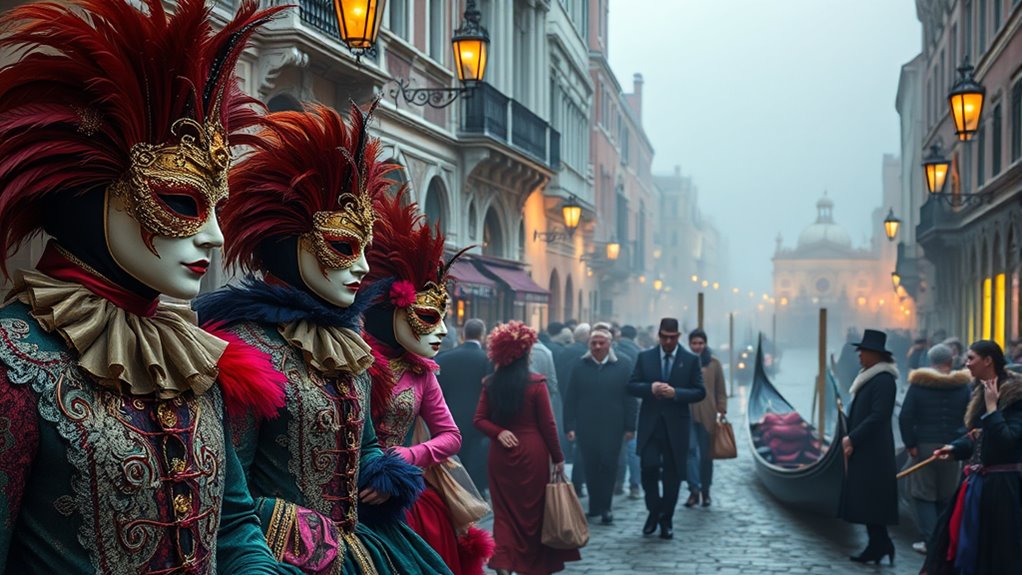
To truly experience the magic of Venice Carnival’s most famous celebrations, you should plan to participate in the iconic events that define the festival. Here are four must-see experiences:
- Attend the Festa delle Marie: Watch the procession of beautifully dressed maidens in Piazza San Marco, celebrating Venice’s historic elegance.
- Witness the Volo dell’Angelo: See an angel descend from a tall structure during the main square, symbolizing the festival’s religious roots.
- Join street celebrations: Enjoy lively parades, music, dancing, and street performances throughout Venice’s squares and alleys. These events often feature performance cookies that enhance the experience by providing real-time updates and multimedia content.
- Participate in masked balls: Dress in elaborate costumes and masks for exclusive events that showcase Venice’s legendary opulence.
Engage fully to immerse yourself in the festival’s vibrant history and traditions, including the cultural significance behind each celebration.
Tips for Participating in Masks and Costumes

Participating in masks and costumes during Venice Carnival requires some planning to make certain you stand out and blend seamlessly into the festivities. First, choose a mask that reflects the traditional styles, like the intricate Bauta or elegant Moretta, or create a custom design for a unique look. When selecting your costume, aim for historical accuracy or fantasy-inspired attire to match the carnival’s grandeur. Pay attention to details such as fabrics, textures, and accessories, which elevate your outfit. Comfort is key, so guarantee your costume allows free movement, especially if you’ll be walking or dancing. Lastly, practice walking confidently in your mask and costume to fully enjoy the experience and avoid feeling self-conscious in the crowd. Additionally, selecting the right accessories can help enhance your overall look and make your costume more authentic.
Planning Your Visit: Best Practices and Recommendations
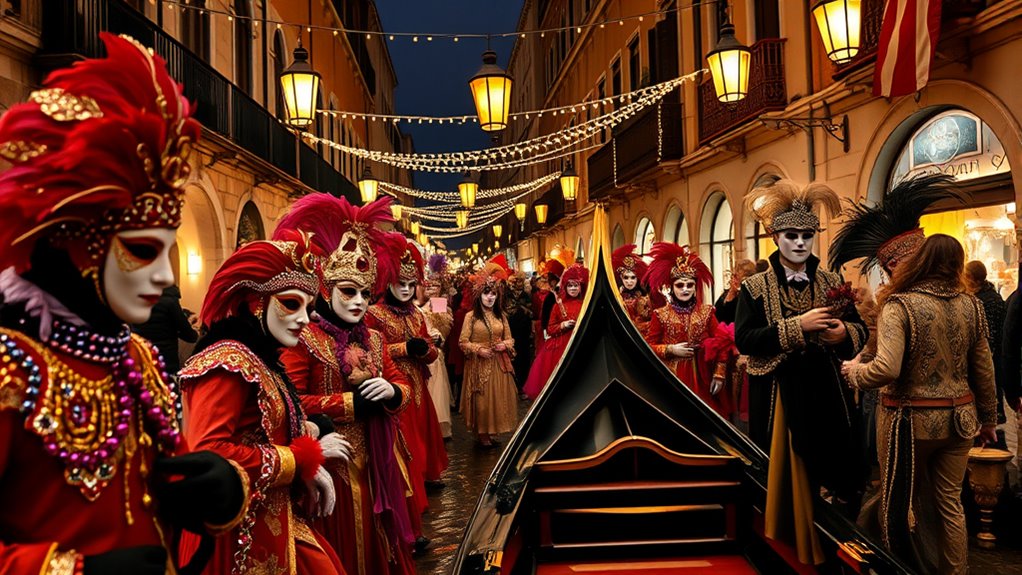
Planning your visit to Venice Carnival guarantees you make the most of this spectacular event. To guarantee a smooth experience, consider these tips:
- Book accommodations early — hotels fill up fast, and prices rise closer to the event.
- Purchase tickets in advance — for popular events like masked balls or parades, securing tickets early saves disappointment.
- Plan your transportation — familiarize yourself with vaporetto routes and consider walking to explore hidden corners.
- Dress appropriately — wear comfortable shoes and choose costumes that balance style with practicality for wandering and dancing.
- Stay informed about personal safety — understanding safety tips and local guidelines can help you enjoy the festivities without concerns.
- Keep a flexible schedule to enjoy spontaneous street performances and surprises. Stay hydrated, and don’t forget your mask and costume! Proper planning lets you fully immerse yourself in Venice’s vibrant carnival atmosphere.
- Understanding the history and cultural significance of the Venice Carnival can enrich your experience and appreciation of the festivities. Learning about cultural traditions can deepen your connection to the event and enhance your enjoyment. Additionally, exploring the history of the event can provide valuable context and make your visit more meaningful.
The Revival and Modern Celebrations of Venice Carnival
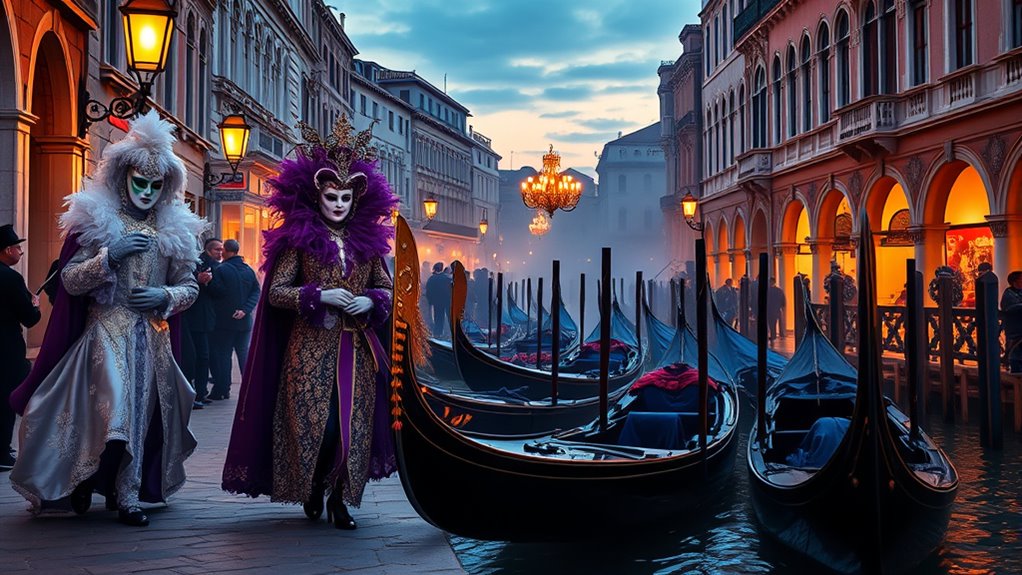
After centuries of dormancy, Venice Carnival was revived in 1979 through the efforts of local citizens and artists enthusiastic to reconnect with their cultural heritage. Today, the celebration blends historic traditions with modern flair, attracting around 3 million visitors annually. You’ll see the return of classic events like the Festa delle Marie and Volo dell’Angelo, alongside vibrant street parades, masked balls, and performances in Piazza San Marco. Modern organizers emphasize authenticity, encouraging elaborate costumes and masks that honor Venice’s past. The festival’s revival has restored its role as a social equalizer, where everyone can participate freely. Additionally, the integration of smart home technology enhances the experience through live streaming and interactive displays during the festivities. Here’s a quick overview of some key aspects: cultural heritage
Frequently Asked Questions
How Did Venice Carnival Influence European Masquerade Traditions?
Venice Carnival shaped European masquerade traditions by popularizing the use of masks for anonymity, social equality, and celebration. You’ll notice its influence in the elaborate masks and costumes seen across Europe during masquerade balls, allowing people to hide their identities and challenge social hierarchies. The carnival’s emphasis on disguise, elegance, and spectacle inspired similar festivals and masked events, fostering a sense of freedom and decadence that spread throughout the continent.
What Are the Origins of the Festa Delle Marie?
You learn that the Festa delle Marie originated in 12th-century Venice as part of the Carnival celebrations. It celebrates the selection of twelve noble maidens, symbolizing the city’s history and social harmony. Originally, it was a procession showcasing their beauty and virtue, linked to Venice’s wealth and elegance. Today, it continues as a key tradition, highlighting Venice’s rich history and the festive spirit of the Carnival.
How Has Venice Carnival Changed Since Its Revival in 1979?
Since its revival in 1979, Venice Carnival has transformed from a secret celebration into a global spectacle. You now witness grand costumes, lively parades, and vibrant street festivities, contrasting with the subdued, exclusive events of the past. The event embraces modern tourism while preserving traditions like the Festa delle Marie. You can enjoy a mix of historic masks and contemporary performances, making the carnival both timeless and invigoratingly new.
Are There Specific Days When Major Events Like Volo Dell’Angelo Occur?
You should know that major events like Volo dell’Angelo typically occur on specific days during Venice Carnival. The Volo dell’Angelo usually takes place on the first Sunday of the festival, often in Piazza San Marco, drawing crowds enthusiastic to see the angel descend from the campanile. Keep an eye on the official schedule, as these key events are often highlighted in carnival programs, ensuring you don’t miss the most iconic moments.
What Safety Tips Should Participants Follow During Carnival Festivities?
During carnival festivities, you should stay aware of your surroundings and keep valuables close to prevent pickpocketing. Wear comfortable shoes, as you’ll likely walk a lot, and be cautious in crowded areas to avoid accidents or injuries. Follow any event-specific safety instructions and stay in well-lit, populated spots. If you drink alcohol, do so responsibly, and always keep an eye on your belongings to guarantee a safe, enjoyable experience.
Conclusion
Now that you know what makes Venice Carnival so special, it’s time to plan your visit. With over 3 million visitors each year, you’ll join a vibrant tradition that dates back over 1,000 years. Whether you’re marveling at the elaborate masks or participating in lively events, this festival offers unforgettable moments. So, get ready to immerse yourself in history, culture, and celebration—Venice Carnival awaits, and you won’t want to miss it!