
Before leaving the U.S., check your flight status and airport updates regularly to stay informed about potential delays. Book early, choose flexible routes, and add extra buffer time for connections. Pack essentials like snacks, warm clothing, and your travel documents, including visas. Stay aware of EU passenger rights and plan for border delays. Being prepared now helps avoid surprises later—continue exploring for more tips to navigate winter travel smoothly.
Key Takeaways
- Check airline policies and EU passenger rights (EU261) to understand compensation and rebooking options for delays or cancellations.
- Book flights early in the day and choose flexible, multi-route options to minimize the impact of winter weather disruptions.
- Monitor real-time flight status via airline apps, trusted tracking tools, and sign up for alerts for gate changes and delays.
- Pack essential comfort items, portable chargers, and necessary travel documents before departure to stay prepared for delays.
- Stay informed about weather conditions and border crossing procedures to adapt your travel plans proactively.

INIU 45W Fast Charging Portable Charger, 40% Smaller 10000mAh with Detachable Cable, Flight-Safe Travel Power Bank, USB C External Phone Battery Pack for iPhone 17 16 Pro iPad Samsung S26 Google etc
40% Smaller & Lighter Portable Charger: Powered by the industry’s first TinyCell high-density battery technology, this ultra-compact 10,000mAh…
As an affiliate, we earn on qualifying purchases.
As an affiliate, we earn on qualifying purchases.
Understand Current European Winter Weather Challenges
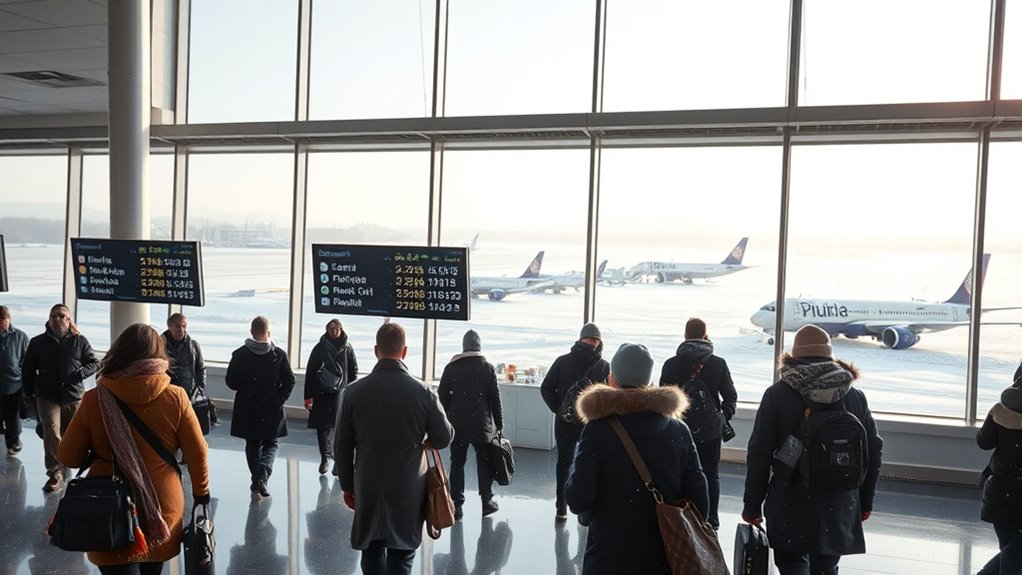
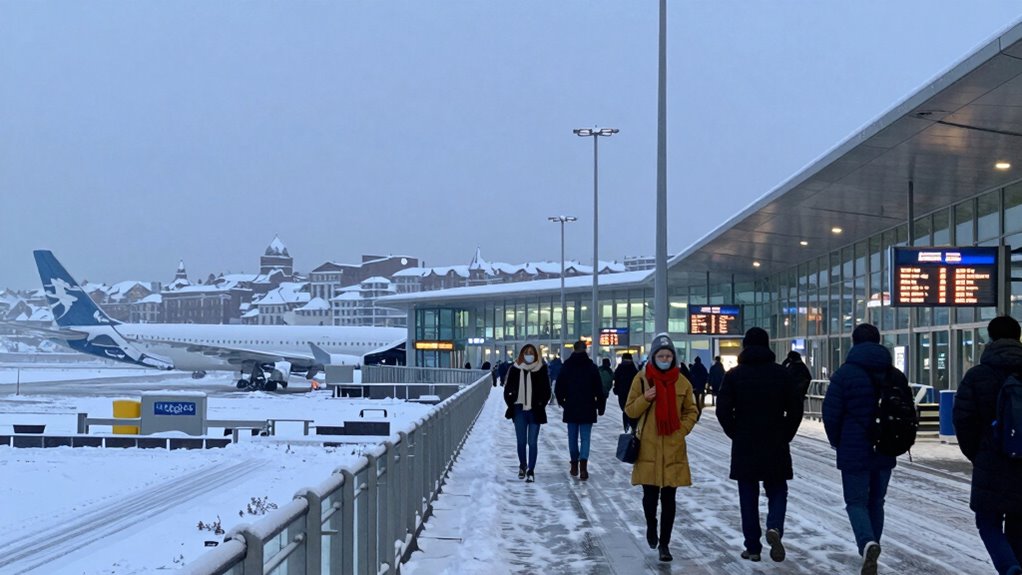
European winter weather presents ongoing challenges that markedly disrupt flight operations across the continent. Cold fronts, ice, snow, and fog create hazardous conditions for aircraft movement and airport ground handling. Ice-fog in northern Europe and thunderstorms in the Mediterranean often lead to delays or cancellations, especially at major hubs like Paris Charles de Gaulle and London Heathrow. De-icing procedures slow down aircraft departures, while snow accumulation hampers runway clearance. Staff shortages caused by adverse weather further strain airport operations, leading to cascading delays. These weather patterns not only affect takeoff and landing schedules but also increase the likelihood of missed connections and passenger stranding. Staying aware of winter weather forecasts and understanding these disruptions prepares you to adjust your travel plans accordingly. Additionally, high contrast ratio in aircraft and airport lighting can influence visibility and safety during winter conditions. Being familiar with seasonal weather patterns can help travelers better anticipate potential delays and plan buffer times for their journeys. Recognizing aircraft de-icing procedures and their impact on delays is also crucial for scheduling your trip effectively. Moreover, understanding airport operational challenges during winter can provide insights into potential delays and help you make informed travel decisions. Being proactive by checking real-time flight updates can further minimize inconvenience caused by these weather-related disruptions.

TOPBAG Passport Holder Family, Women Rfid Blocking Passport Wallet, Travel Document Organizer for Premium Wallets, Waterproof Passport Holders Bag for Women & Men Traveling, Credit Cards Case
【High Quality travel passport holder】This passport wallet and passport book holder is made of super strong and durable…
As an affiliate, we earn on qualifying purchases.
As an affiliate, we earn on qualifying purchases.
Monitor Real-Time Flight Status and Airport Updates

Staying updated on your flight status and airport conditions is key to steering the ongoing winter disruptions effectively. Regularly check your airline’s website, mobile app, or trusted flight tracking tools for real-time updates. Airports like Paris CDG, Amsterdam Schiphol, and London Heathrow often experience cascading delays and cancellations, especially during severe weather and staff shortages. Monitoring live data helps you identify potential delays early, so you can adjust your plans accordingly. Sign up for airline notifications or alerts to receive instant messages about gate changes, delays, or cancellations. Be prepared for unexpected waits, overcrowding, or rerouted itineraries. Staying informed allows you to make timely decisions, seek alternative routes, or coordinate with your contacts, minimizing stress and missed connections amid unpredictable winter conditions.

CEASQVAA Snack Bags, Emergency Food Bag Packing Cubes for Women Trip Gifts Favors Travel Bag Essentials, Emergency Snacks Gifts for Her Makeup Cosmetic Bag Pouch Purse
Size: Each bag is approximately 10 x 7 inches in size.It is perfect for storing cosmetics, earphones, mobile…
As an affiliate, we earn on qualifying purchases.
As an affiliate, we earn on qualifying purchases.
Plan for Extended Border Processing Times

You should allocate extra time for border processing, especially during busy travel periods, as delays at immigration can add significant time to your journey. Make sure you have all necessary documents ready and easily accessible to avoid further hold-ups. Planning ahead helps you stay prepared for unpredictable processing times and reduces the risk of missed connections.
Allocate Extra Border Time
Extended border processing times are increasingly impacting flight schedules across Europe, especially during peak travel periods. You should allocate extra time at border control to avoid missing connections or rushing through airports. With new EU entry procedures and staffing shortages, wait times can skyrocket unexpectedly. To stay prepared, consider:
- Arriving at the airport at least 2-3 hours before your flight
- Checking real-time border wait estimates online before heading to the airport
- Planning for possible delays in border crossing during busy hours
- Keeping all documentation ready and easily accessible for quick processing
- Staying informed about border control procedures and any updates that may affect your entry experience
Prepare Necessary Documentation
Because border processing times are increasingly unpredictable, preparing all necessary documentation in advance can save you valuable time and reduce stress. Make sure your passport is valid for at least six months beyond your travel dates. Have your visa, if required, easily accessible and check its validity and entry requirements for your destination. Keep digital and printed copies of your flight itinerary, hotel reservations, and travel insurance details. If you’re a non-EU national, carry any additional documents that prove your purpose of travel, such as invitation letters or proof of funds. Be ready to answer questions about your trip and provide supporting documents quickly. Staying organized ensures a smoother border crossing and helps you avoid unnecessary delays during busy winter travel periods. Additionally, understanding border processing times can help you better plan your arrival and departure times, reducing the risk of missed connections. Being aware of wave and wind conditions can also influence your travel schedule, especially for flights affected by winter weather. To further streamline your entry, familiarize yourself with customs procedures so you can efficiently navigate any inspections or questions. Preparing exemption documents for specific items you may carry can also prevent delays at customs. Knowing the typical wait times at border crossings can help you allocate extra time during peak travel periods.
winter travel clothing layers
As an affiliate, we earn on qualifying purchases.
As an affiliate, we earn on qualifying purchases.
Incorporate Buffer Time Into Your Travel Schedule
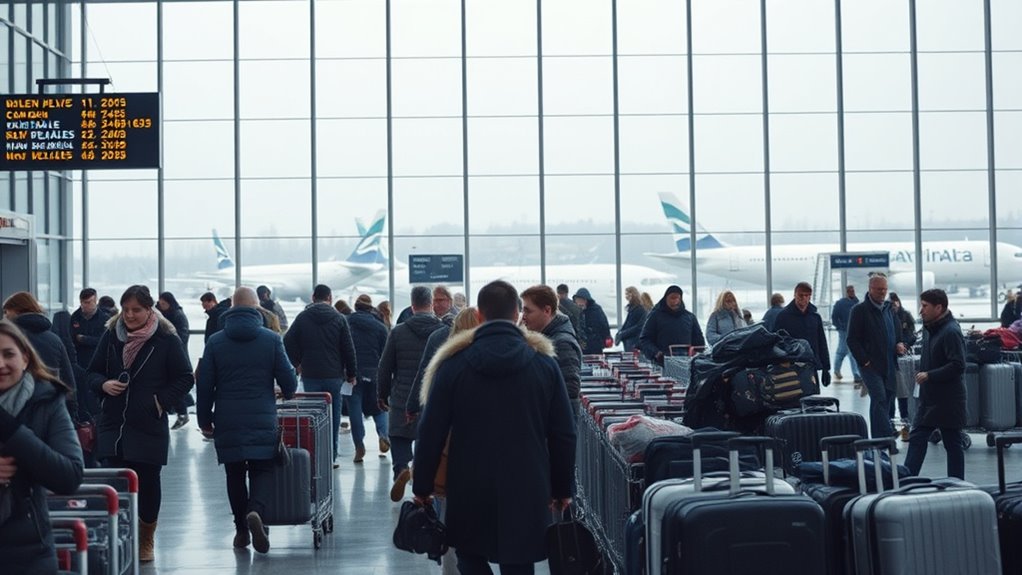
To avoid missing your flight, you should build extra travel time into your schedule, especially during peak periods. Adjust your plans by adding buffer time to account for possible delays and longer processing times at airports. Keep an eye on real-time updates so you can stay flexible and make informed decisions if disruptions occur.
Plan Extra Travel Time
Given the current challenges with winter weather, staff shortages, and border delays across Europe, it’s essential to build extra time into your travel plans. Flight disruptions are common, and delays of 30 minutes or more are frequent. To stay ahead, consider these tips:
- Arrive at the airport at least 3 hours before international flights
- Schedule flexible connections, especially in busy hubs like Paris or London
- Monitor real-time updates from airlines and airports regularly
- Pre-arrange alternative transportation, such as trains, on key routes
- Incorporate connected travel tech to receive real-time alerts and optimize your travel schedule. Additionally, using smart travel apps can help you stay informed about unexpected delays and quickly adapt your plans. Utilizing adaptive scheduling tools can further help you manage your itinerary amidst unpredictable disruptions. Integrating real-time weather alerts can also provide advanced notice of adverse conditions impacting your route.
Adjust for Peak Periods
During peak travel periods, it’s essential to incorporate extra buffer time into your schedule to avoid the stress of unexpected delays. European airports face increased congestion from weather disruptions, staffing shortages, and border delays, which can cause cascading delays. To stay ahead, add at least 2-3 hours for international flights, especially during December and summer months. Consider scheduling your flights early in the day when delays are less likely to accumulate. If possible, plan for alternative routes or multiple airport options within your destination city. This extra time helps you navigate potential bottlenecks at security, customs, or boarding. By adjusting your schedule proactively, you reduce the pressure of tight connections and ensure a smoother journey despite unpredictable disruptions.
Monitor Real-Time Updates
Staying informed with real-time updates is essential for managing unpredictable European flight disruptions. By actively monitoring flight statuses, you can respond quickly to delays or cancellations, preventing missed connections. Use airline apps, airport websites, and trusted news sources to stay current. Keep these strategies in mind:
- Sign up for airline notifications and alerts
- Check airport departure boards regularly
- Follow social media updates from airlines and airports
- Watch for weather alerts and border processing news
Being proactive allows you to adjust plans promptly, reducing stress and avoiding unexpected setbacks. Incorporate buffer time into your schedule based on real-time information, especially during winter weather and peak travel periods. Staying informed empowers you to make smarter choices and stay ahead of delays.
Choose Multi-Route and Multi-Airport Options

To minimize disruptions during winter travel in Europe, you should consider selecting multiple routing options and utilizing various airports within your itinerary. By planning alternative routes, you can avoid hotspots like Paris CDG or London Heathrow, which frequently face delays and cancellations. Incorporate secondary airports nearby, such as Frankfurt instead of Munich or Milan instead of Venice, to increase your chances of smoother connections. Use multi-airport options for your departure and arrival, giving yourself flexibility if one airport faces severe weather or staffing issues. Confirm available routes and airport options ahead of time, and keep updated on potential disruptions. This approach helps you adapt quickly, reduces the risk of missed connections, and keeps your travel plans more resilient amidst Europe’s winter weather and air traffic challenges.
Communicate Proactively With Airlines and Travel Partners
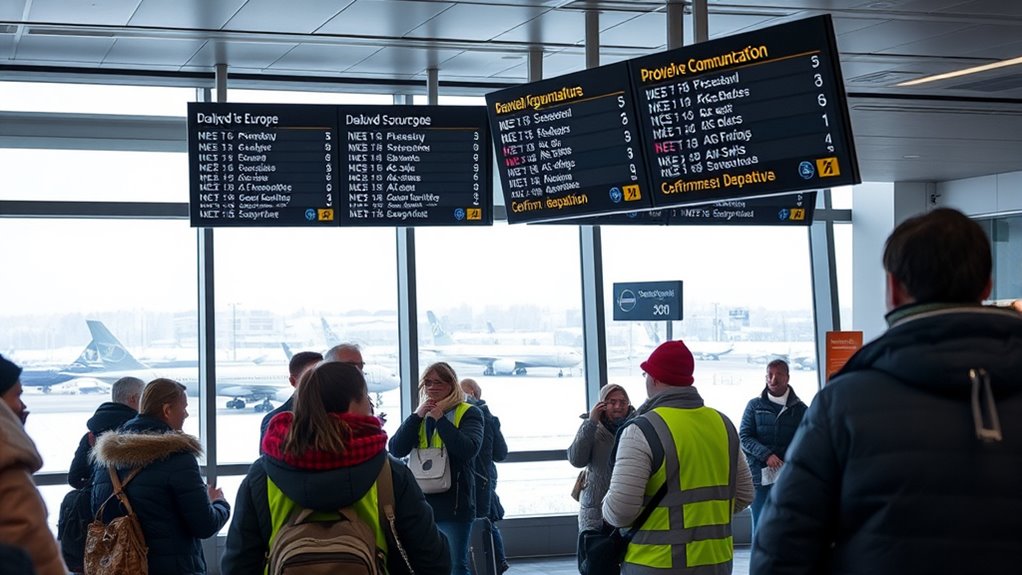
Effective communication with airlines and travel partners can considerably reduce the impact of winter disruptions on your travel plans. By staying proactive, you can get real-time updates, rebook flights quickly, and avoid unnecessary delays. Contact your airline early for the latest status, and subscribe to notifications via their app or email. Reach out to travel agencies or booking platforms to confirm your arrangements and explore alternative routes if needed. Make sure your mobile devices are charged and have access to messaging apps for instant communication. Additionally, regularly checking flight status updates can help you stay informed about any last-minute changes before departure. Utilizing real-time communication methods ensures you receive timely information and can respond promptly to any changes.
Prepare Necessary Documentation for Border and Disruptions

When facing border delays and disruptions, having the right documentation ready can make all the difference in avoiding missed connections and lengthy hold-ups. Make sure your passport is valid for at least six months beyond your travel dates. Carry digital and printed copies of your passport, visa, and any required travel authorizations, like ETIAS or Schengen visas. Keep your boarding passes, hotel reservations, and proof of onward travel accessible. If you’re a non-EU traveler, have your ESTA or visa documentation organized. Prepare a list of emergency contacts, including your embassy, airline, and travel insurance provider. Staying proactive with your paperwork helps you respond quickly during border checks and disruptions, reducing stress and preventing unnecessary delays in Europe’s often congested and evolving border environments.
Explore Alternative Transportation Options (Trains, Ferries)
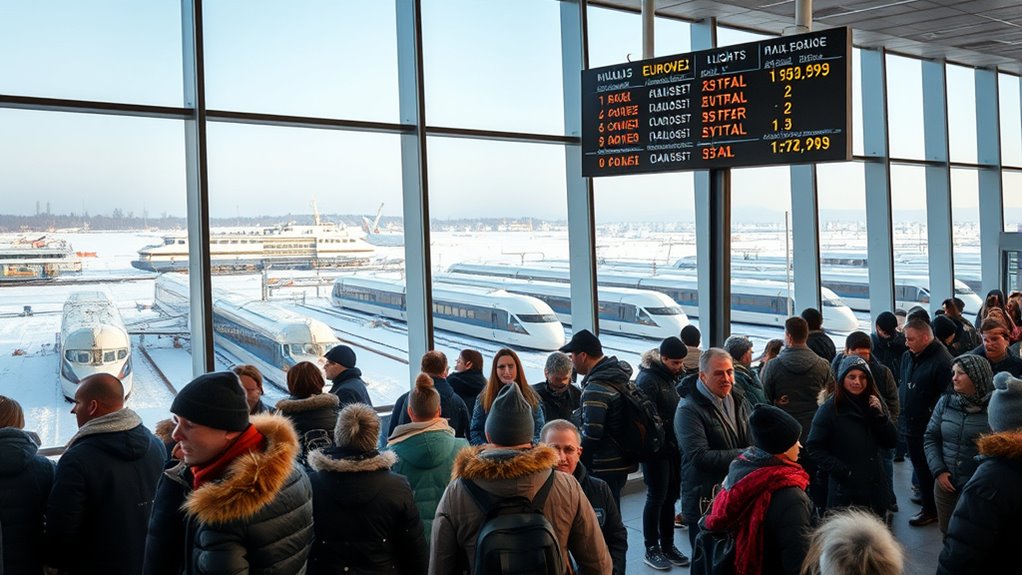
When flight delays disrupt your plans, exploring trains and ferries can save time and reduce stress. Comparing travel times helps you choose the fastest option, while flexible bookings allow easier adjustments if delays happen. Keep border crossing considerations in mind to avoid unexpected hold-ups, making alternative routes more reliable during winter disruptions.
Comparing Travel Times
During peak travel periods or when flight delays are widespread, exploring alternative transportation options like trains and ferries can save you time and reduce travel stress. Comparing travel times helps you decide if switching routes makes sense. Trains often offer faster, reliable options for intra-European travel, especially between major cities, and can bypass delays caused by winter weather or air traffic control issues. Ferries are useful for crossing bodies of water when flights are delayed or canceled. Consider these points:
- High-speed trains can cut travel time substantially compared to flights over short distances
- Ferries provide a flexible option for routes involving islands or coastal cities
- Train routes often run more frequently during winter, offering better schedule reliability
- Ferry schedules can be affected by weather, so check ahead for delays
- Booking in advance for trains and ferries can help secure better prices and ensure availability during busy winter travel periods
Assessing these options lets you choose the fastest, most reliable way to reach your destination.
Booking Flexibility Tips
Booking flexibility is essential in today’s unpredictable European travel environment, especially with rising flight delays and cancellations. To adapt, explore alternative transportation options like trains and ferries. Booking train tickets early through the European rail network can give you reliable, scenic, and often faster routes between major cities, especially when flights are disrupted. Consider flexible or refundable fares, so you can easily change plans if needed. Ferries provide another option for traveling between coastal regions or islands, offering more control over your schedule. Keep a close eye on schedules and availability, and consider booking with providers that allow easy rebooking or cancellations. Additionally, choosing reliable transportation options can help mitigate the impact of delays. By diversifying your transportation plan, you’ll reduce stress and stay ahead of delays, ensuring your trip remains smooth despite unpredictable winter disruptions.
Border Crossing Considerations
With ongoing border processing delays in the Schengen Zone, exploring alternative transportation options like trains and ferries becomes essential for maintaining your travel plans. These options can help you avoid long waits and unpredictable delays at borders, especially during peak winter travel times. Consider these alternatives:
- Use high-speed trains like Thalys or Eurostar for quick, reliable intra-European travel.
- Opt for ferries when traveling between the UK, Ireland, or Scandinavian countries to bypass land border issues.
- Check for regional rail passes that offer flexible, cost-effective routes across multiple countries.
- Monitor ferry schedules and bookings early, as winter weather can impact crossings and cause cancellations.
- Staying informed about border crossing considerations and how to plan for delays can help you adapt your travel plans effectively.
Planning ahead and staying flexible with transportation choices can help you navigate border delays smoothly.
Stay Informed on EU Passenger Rights and Compensation Policies
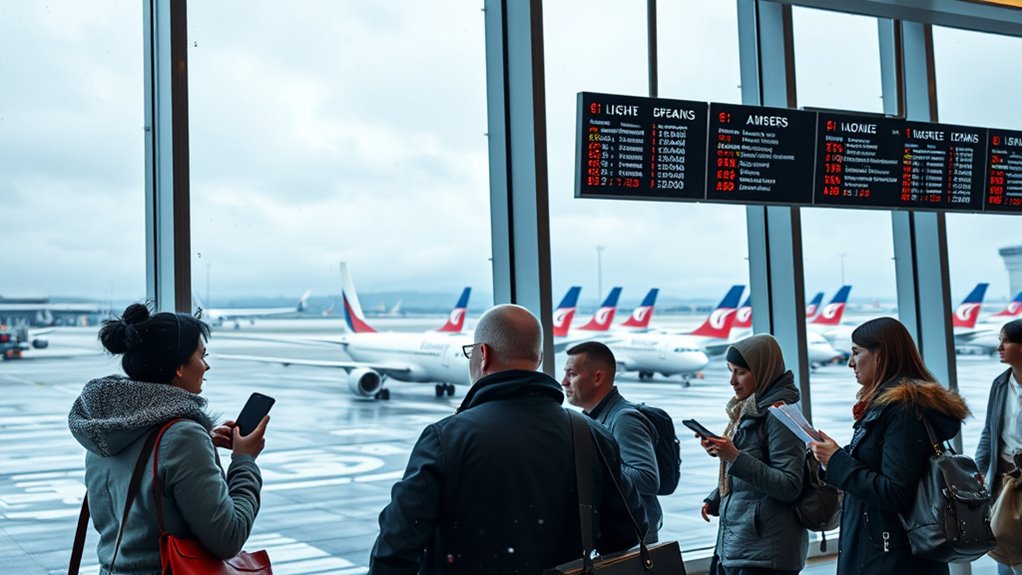
Staying informed about EU passenger rights and compensation policies is essential, especially amid ongoing flight disruptions and delays. The EU has strict regulations, like EU261, that protect travelers by guaranteeing compensation, rebooking, or refunds if your flight is delayed, canceled, or overbooked. Knowing your rights allows you to assert them confidently and avoid unnecessary stress. Keep copies of all travel documents, including boarding passes and correspondence with airlines, as they may be needed to support your claim. Regularly check airline updates and official EU passenger rights websites for the latest information, especially during winter weather disruptions. Being proactive ensures you’re prepared to seek compensation or assistance promptly if your flight experiences delays or cancellations, helping you manage your travel plans more effectively.
Pack Smart for Potential Delays and Overcrowding
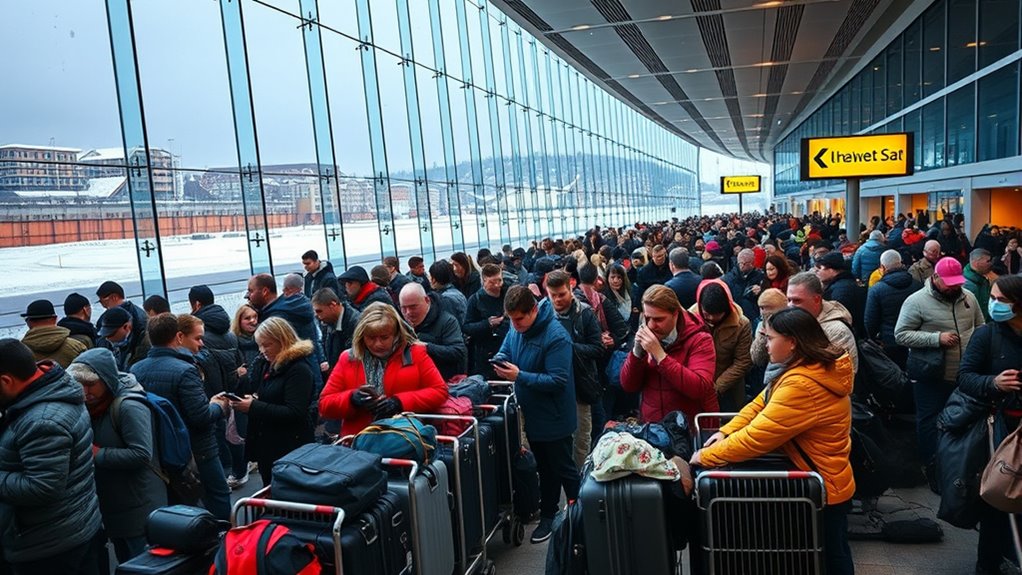
Since delays and overcrowding are likely during Europe’s winter travel season, packing smart can make a significant difference in managing disruptions. Prepare for longer waits and crowded terminals by packing essentials that keep you comfortable and organized.
Consider bringing:
- A portable charger to keep devices powered during extended waits
- Compression socks to improve circulation on long delays
- Snacks and a refillable water bottle to stay nourished and hydrated
- A small, lightweight blanket or shawl for warmth during delays or in cold airports
Packing these items ensures you’re prepared for unexpected delays or crowded spaces, reducing stress and making your journey more manageable. Staying comfortable and self-sufficient helps you navigate disruptions smoothly without relying solely on airport amenities.
Frequently Asked Questions
How Can I Maximize EU Passenger Rights During Delays?
You can maximize your EU passenger rights by staying informed about your flight status and acting quickly if delays occur. Keep all documentation, including boarding passes and receipts, ready for potential compensation claims. Know that EU261 provides compensation for delays over three hours, cancellations, or denied boarding. Contact your airline promptly, request rebooking, and escalate claims if needed. Staying proactive guarantees you receive the full protections you’re entitled to during disruptions.
What Are the Best Ways to Track Flight Updates Before Departure?
You should actively monitor your flight status through the airline’s app or website before departure. Sign up for real-time notifications, enable push alerts, and check airport websites for updates. Consider using third-party flight tracking apps for additional insights. Regularly refresh the information, especially during winter weather periods, to stay ahead of delays or cancellations. Being proactive helps you plan better and respond swiftly to any disruptions.
How Do Border Delays Impact Connecting Flights in Europe?
Imagine crossing a river’s swirling currents—border delays can similarly slow your journey, causing missed connections. When these delays hit, they ripple through your plans, forcing you to rebook or wait longer. You might find yourself stranded, like a boat caught in a storm, with little control. To navigate this, stay updated on border procedures, communicate proactively with airlines, and build buffer time into your schedule to weather these unpredictable delays.
What Key Documents Should I Prepare for Border and Flight Disruptions?
You should prepare your passport, visa if needed, and any supporting travel documents like hotel reservations and return tickets. Carry copies of your passport and important IDs, both digital and printed. Keep your EU261 rights documentation accessible for compensation claims. Also, have a list of emergency contacts and airline customer service numbers. Staying organized ensures you’re ready for border delays or flight disruptions, making your journey smoother.
Which Alternative Transportation Options Are Most Reliable During Winter Delays?
Think of alternative transportation as your safety net woven with threads of resilience. Trains often run on schedule and can bypass winter snarls, making them a dependable choice. Consider bus services for regional travel, especially when flights falter. Rideshare options and rental cars provide flexibility, but check winter conditions and availability beforehand. Keep a close eye on real-time updates, so you can pivot swiftly, turning disruptions into minor detours rather than dead ends.
Conclusion
Did you know that nearly 30% of European winter flights face delays? By planning ahead—monitoring weather, packing smart, and understanding your rights—you can navigate potential disruptions more smoothly. Staying informed and flexible guarantees your trip stays on track despite winter weather challenges. With the right preparation, you’ll be ready for whatever winter throws at your flight, making your journey to Europe less stressful and more enjoyable.