
TL;DR

Get travel and outdoor gear delivered free — and shop member deals
- Fast, free delivery on millions of items
- Access to Prime Big Deal Days deals on October 6–7
- Prime Video, Amazon Music and more included
A portable travel hammock is a lightweight fabric sling (usually ripstop nylon or parachute silk) that packs down to the size of a grapefruit and hangs between two anchor points in under five minutes. The best models weigh 10–25 ounces, hold 300–400 pounds, and cost between $20 and $90. Choose based on fabric strength, suspension system, and packed size — not marketing claims.
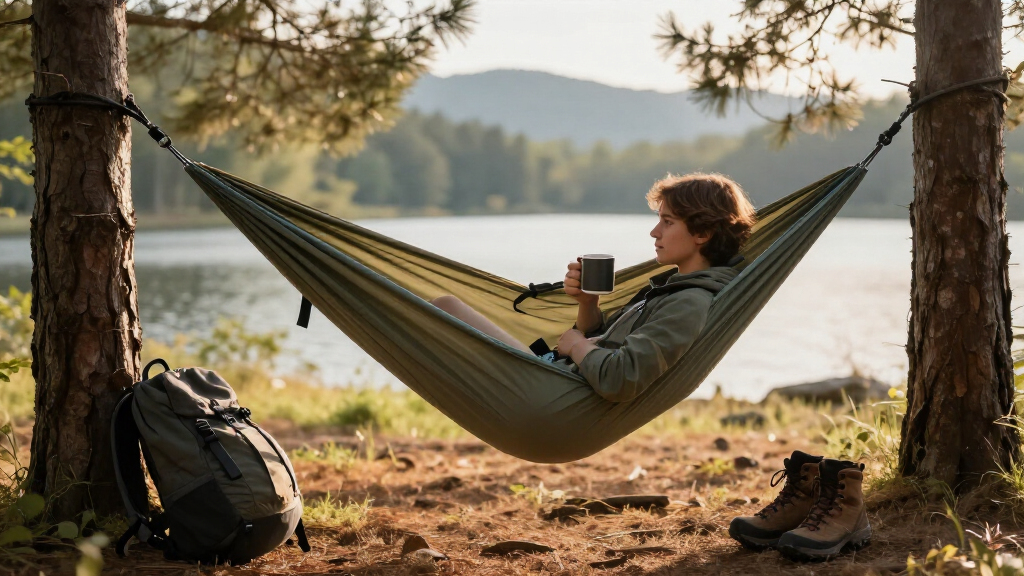
Your hotel room is stuffy, the airport layover is six hours, and the beach chairs are all taken. Now imagine pulling a fist-sized pouch from your daypack, clipping two straps to the nearest sturdy trees, and lying down in the shade 90 seconds later. That’s the whole appeal of a portable travel hammock.
But not every hammock earns its spot in your luggage. Some weigh as much as a hardcover book, some tear on the third hang, and some come with suspension systems that require an engineering degree. Here’s how to pick one that actually works — and how to use it anywhere from a Costa Rican beach to a Tokyo park.
Buy a double hammock even if you travel solo — the extra width lets you lie diagonally, which is the only truly flat, comfortable position.
Match your fabric to your trip: 40D ripstop nylon for weight savings and softness, 70D parachute polyester for months of sun exposure.
Hang with 0.75–2 inch tree straps at a 30-degree sag angle — wide straps protect trees, and slack suspension holds more weight than a taut line.
Verify local park rules before hanging; many cities and national parks prohibit tying anything to trees, and enforcement varies by country.
Air-dry your hammock completely before packing it — damp stuffing causes permanent mildew, the most common way travel hammocks get ruined.
What Is a Portable Travel Hammock, Exactly?
A portable travel hammock is a lightweight fabric sling — almost always ripstop nylon or parachute polyester — that stuffs into its own attached pouch, weighs under two pounds, and hangs between two anchor points using straps or cord. Unlike a backyard rope hammock with wooden spreader bars, travel hammocks have no frame. The fabric itself is the structure, which is why they pack down to roughly the size of a softball.
Think of it like a sleeping bag that hangs instead of lies flat. Same packed volume, same job — getting you horizontal and comfortable — but it turns any two trees, posts, or roof rack bars into furniture. That structural simplicity is the whole point: every feature a manufacturer adds (bars, stands, steel hardware) is weight you carry for comfort the fabric already provides. It’s also why the category tops out around $90 — there’s simply not much material to charge for.
The category exploded in the 2010s when brands like ENO (Eagles Nest Outfitters) made the DoubleNest a backpacking staple. Today you can buy a solid travel hammock for the price of two airport sandwiches. The tradeoff for all that lightness is durability under abuse — a travel hammock shrugs off trees and body weight but will lose to a sharp branch, a lit cigarette, or a dog’s claws. It’s gear designed for suspended comfort, not for being dragged across the ground.
Nylon vs. Parachute Poly: Which Fabric Actually Lasts?
Most travel hammocks are made from 70D (denier) parachute polyester or 40D ripstop nylon — and the difference matters more than the price suggests. Polyester resists UV damage and holds color better, while nylon feels softer, stretches less when woven tightly, and dries faster. For occasional travel, either works. For months of tropical sun, polyester wins.
Here’s a quick comparison of what you’ll actually see on product pages:
| Feature | 70D Parachute Polyester | 40D Ripstop Nylon |
|---|---|---|
| Typical weight (single) | 16–20 oz | 11–14 oz |
| Feel | Slightly stiffer, sandpaper-soft | Buttery, silky |
| UV resistance | Better — resists fading | Weakens faster in sun |
A real-world example: a friend’s cheap nylon hammock left hanging on a Bali rooftop for one summer came back faded and saggy. My polyester one, same rooftop, same sun, still bounces back. Denier count — the thread thickness — matters more than marketing words like “military grade.”
If a hammock’s product page doesn’t list fabric denier and weight capacity, assume it’s hiding something.
Single or Double? The Size Question Everyone Gets Wrong
Travel hammocks come in single (about 9 x 4.5 feet) and double (10 x 6.5 feet) widths, and here’s the counterintuitive part: most solo travelers should buy the double. The extra fabric lets you lie diagonally — the position that actually makes a hammock flat and comfortable instead of banana-shaped. Singles force you into that curled taco posture people complain about.
Why does diagonal lying matter so much? A hammock is a curve, and your spine is a straight line. Lying straight along the curve bows your back into a “C” — fine for 20 minutes, miserable for a nap. Rotate your body roughly 30 degrees off the hammock’s centerline, though, and the fabric flattens out beneath your shoulders and hips. On a single, there simply isn’t enough fabric to rotate into; on a double, the same body position feels like a real bed.
Length matters for the same reason. The golden rule from long-distance backpackers: your hammock should be at least 2 feet longer than your height. If you’re 6’2″, you want a 10- or 11-foot hammock, not a 9-footer that pins your shoulders — an 11-footer is also the minimum length that lets most people sleep flat overnight, which is why thru-hikers overwhelmingly choose it.
Doubles cost about $10–15 more and weigh 4–6 extra ounces. That’s a small price for the difference between napping bliss and a stiff neck. The single makes sense only if you’re counting every gram on an ultralight thru-hike — where 5 ounces equals half a liter of water, and every gram gets scrutinized on a spreadsheet.
Hang It Right: 5 Steps to a Safe Setup Anywhere
Hanging a travel hammock takes five minutes once you’ve done it twice. Here’s the process, whether you’re between palms in Thailand or using a rooftop rack in a campsite:
- Find two anchors 12–15 feet apart — living trees at least 6 inches thick, or fixed posts. Shake each one hard; if it wobbles, walk away.
- Wrap your tree straps at head height or higher, about 5–6 feet up. Angle them roughly 30 degrees from horizontal once loaded.
- Clip the hammock carabiners to the straps, leaving slack — the hammock should droop, not stretch taut like a wire.
- Sit down slowly in the center before lying back, testing the anchors with your full weight.
- Lie diagonally across the fabric so your spine stays flat. This is the single biggest comfort upgrade most beginners miss.
Use wide tree straps (0.75–2 inches), never bare rope — thin cord strips bark and gets you fined in national parks and many city parks worldwide.
When in doubt, lower your hang angle. A 30-degree sag feels slack but supports far more weight than a taut line — tension, not weight, is what snaps suspension systems.
Where You Can Actually Use One (and Where You Can’t)
Travel hammocks shine in parks, beaches, campsites, hostels with outdoor space, and airport layovers — anywhere with two solid anchor points. In Germany and Scandinavia, hanging hammocks in parks is normal and welcome; in Berlin’s Tiergarten or Stockholm’s Djurgården you’ll see a row of them on any sunny Saturday. In parts of the US, some city parks (New York’s, notably) prohibit tying anything to trees, with fines attached — a rule born from years of bark damage, since a single rope looped daily around the same trunk can girdle and eventually kill the tree.
Why do rules vary so much? It comes down to who manages the land and what they’re protecting. National parks tend to be strictest because they manage for tree health at scale; private hostels and campsites are often the most relaxed, since a happy guest hanging a hammock damages nothing. Rules also change over time, so before you string up in a protected area, check the local park authority’s website or ask at your accommodation — a two-minute check beats a fine or an angry ranger.
One thing a travel hammock can’t do: replace a bed in mosquito country without gear. In tropical regions, you’ll want a bug net ($20–40) and, in rain, an angled tarp overhead. Imagine hanging unprotected at dusk in the Amazon basin — the hammock becomes a dinner bell, not a bed. Many travelers buy a netted travel hammock from the start for exactly this reason, since an integrated net weighs less and packs faster than rigging a separate one with cords each evening.
Packing Tricks That Double Your Hammock’s Lifespan
Hammocks die from three things: UV exposure, mildew, and tree-strap abrasion — not from your body weight. The fixes are cheap:
- Never pack it damp. A wet hammock stuffed in a bag for 48 hours grows mildew that smells forever. Air-dry it first, even if that means draping it over your hostel bunk.
- Keep it out of the sun when not in use. UV degrades nylon fibers invisibly; a hammock left hanging all season can lose most of its strength.
- Shake out sand and debris before stuffing — grit acts like sandpaper inside the folds.
- Store it loose at home, not compressed in its stuff sack, if it’ll sit for months.
Packing tip: roll the hammock into its attached pouch from one end rather than cramming it. You’ll fit it back in half the time, and it slides into a shoe’s worth of pack space — a side pocket or the gap beside your packing cubes.
Frequently Asked Questions
How much weight can a portable travel hammock hold?
Most quality travel hammocks hold 300–400 pounds, regardless of whether they’re single or double size. The weak point is almost never the fabric — it’s the suspension. Cheap carabiners and thin straps fail before the hammock body does, so invest in rated tree straps and climbing-grade carabiners if you’re near the weight limit.
Can you sleep overnight in a travel hammock instead of a tent?
Yes, and many thru-hikers do it exclusively. You’ll need a bug net in mosquito territory, an insulating underquilt or sleeping pad (air beneath you gets cold fast), and a tarp for rain. An 11-foot hammock with a 30-degree hang angle lets most people sleep flat on their back — a position shorter hammocks can’t manage.
How do I wash a portable travel hammock?
Hand-wash it in cold water with a small amount of gentle detergent, either in a bathtub or a front-loading machine inside a pillowcase (no agitator, no fabric softener). Hang it to air-dry in the shade — machine drying melts or weakens nylon and polyester fibers. Most hammocks only need washing once or twice a season with regular use.
Are hammocks allowed in parks and public spaces?
It depends entirely on location. Rules differ by city and country and change over time — some parks welcome them, others fine anyone tying anything to a tree. Before hanging, check the park authority’s official website or verify with your accommodation. Using wide tree straps and leaving no marks improves your odds everywhere.
Conclusion
A portable travel hammock is the rare piece of travel gear that costs under $90, weighs less than a paperback, and pays for itself the first time you nap through a layover instead of slumping in a plastic chair. Pick a double in a fabric that matches your climate, hang it with wide straps and a generous sag, and check the local rules before you clip in.
The best trips have a blank afternoon in them. A hammock in your daypack is how you fill it — horizontal, in the shade, doing absolutely nothing.
Fall Picks
fall essentials
As an affiliate, we earn on qualifying purchases.