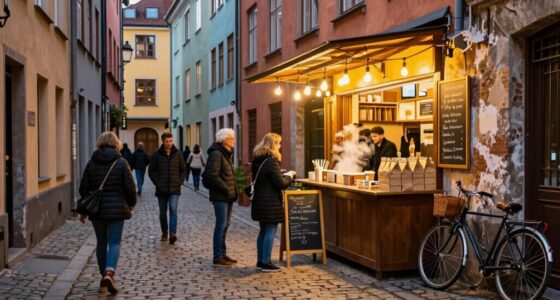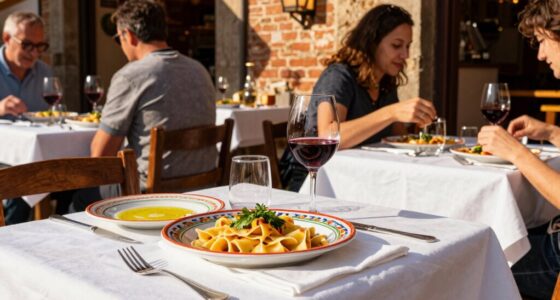

European breakfasts differ because they reflect each country’s unique culture, ingredients, and traditions. In some places, you’ll find hearty bread and cured meats, while others favor light pastries and fresh fruit. Coffee and beverages vary too, influenced by local customs and flavors. These differences highlight regional priorities, whether it’s health, tradition, or social routines. If you keep exploring, you’ll discover how these diverse breakfast habits shape each country’s identity and daily life.

Get travel and outdoor gear delivered free with Prime
- Fast, free delivery on millions of items
- Prime Video, Amazon Music and more included
- Member-only deals all year
Key Takeaways
- Cultural values shape breakfast timing, structure, and food choices across European countries.
- Regional ingredients like rye, baguettes, and cold cuts define local breakfast flavors and textures.
- Coffee rituals and beverage preferences vary, influencing the overall breakfast experience.
- Local traditions and culinary heritage influence the variety of breads, pastries, and proteins.
- Breakfast priorities such as health, nourishment, and social customs create diverse regional differences.
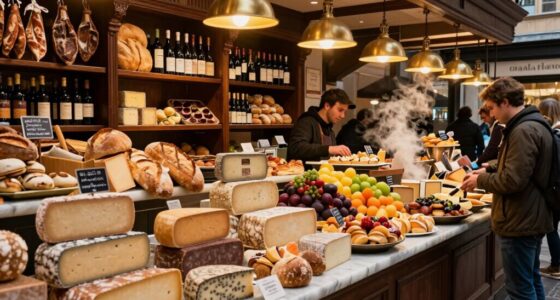
European breakfast bread assortment
As an affiliate, we earn on qualifying purchases.
As an affiliate, we earn on qualifying purchases.
Cultural Priorities and Meal Timing
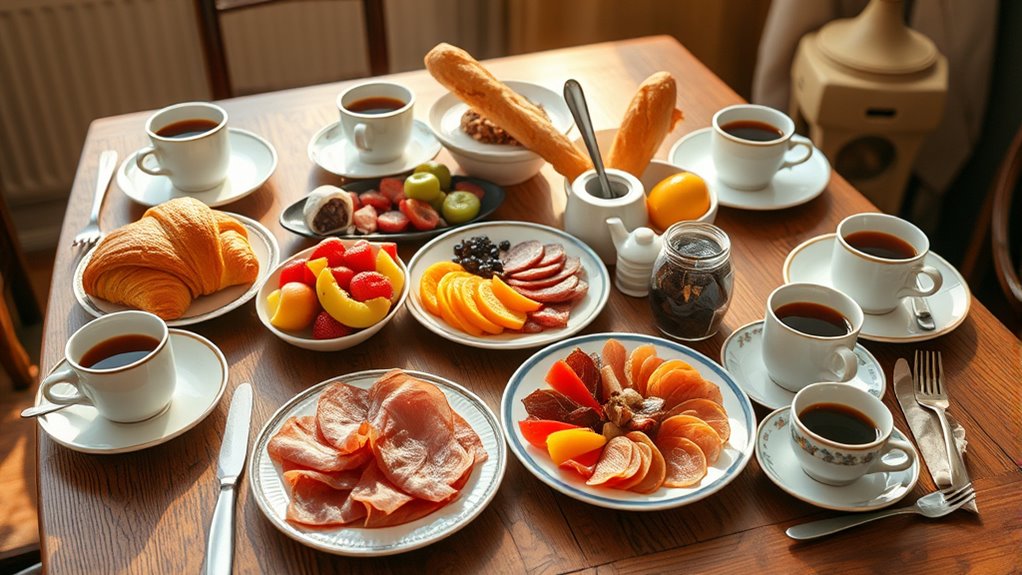
In Europe, breakfast is more than just a meal; it reflects deep cultural values and daily routines. You’ll notice that most European countries serve breakfast between 7:30 AM and 9:30 AM, unlike America’s all-day approach. In nations like Austria, breakfast is considered the most important meal, especially on weekends, and is celebrated with care. Countries such as France, Portugal, and Spain prefer light, quality foods over large quantities, emphasizing timing and savoring. Northern European countries focus on hearty, calorie-dense options, while Scandinavian nations prioritize flavor and nourishment. You’ll also see a clear division between breakfast and brunch, with brunch starting around 10 AM, highlighting how Europeans structure their mornings around specific meal times rooted in cultural priorities. Meal timing plays a significant role in shaping these breakfast habits, reflecting societal values and daily rhythms. Additionally, these habits are often linked to historical culinary traditions that emphasize cultural identity and social cohesion. Such routines reinforce traditional meal patterns that foster community and shared cultural identity.
As an affiliate, we earn on qualifying purchases.
Bread and Pastry Foundations Across Europe
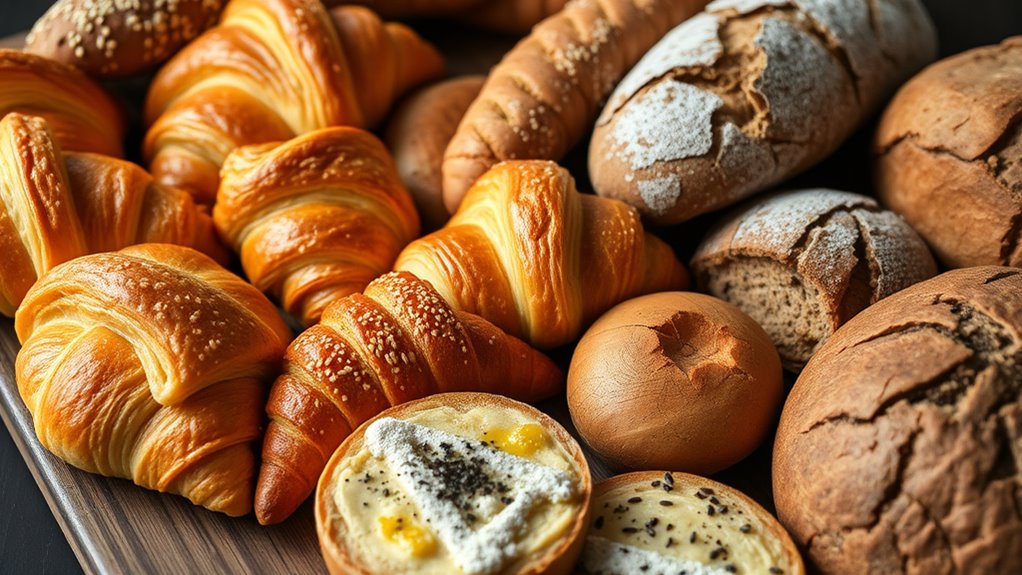
Bread and pastries form the backbone of European breakfasts, showcasing regional preferences and culinary traditions. You’ll find a wide variety of breads and baked goods that reflect local ingredients and baking styles. For example, in Germany, hearty rye and whole grain breads are staples, often served with butter, jam, or cheese. In France, you’ll enjoy flaky croissants, baguettes, and pain au chocolat from local bakeries early in the morning. Swedish breakfasts feature open-faced sandwiches built on white, whole wheat, or rye bread, emphasizing freshness and simplicity. These baked goods aren’t just for eating; they’re functional tools for pushing food onto forks or soaking up sauces. The regional culinary identity is often expressed through these baked goods, highlighting their cultural significance and traditional preparation methods. This diversity highlights how bread and pastries are central to Europe’s breakfast culture and regional identity. The baking styles across different countries further illustrate how traditional techniques influence flavor and texture, creating a truly diverse breakfast landscape. Additionally, the bread types vary significantly, reflecting historical trade routes and local agricultural practices. The regional variations are also shaped by climate and available ingredients, which influence baking techniques and flavor profiles. Furthermore, local ingredients often play a key role in shaping the unique characteristics of regional baked goods, making each country’s offerings distinctive.
As an affiliate, we earn on qualifying purchases.
Regional Variations in Breakfast Traditions
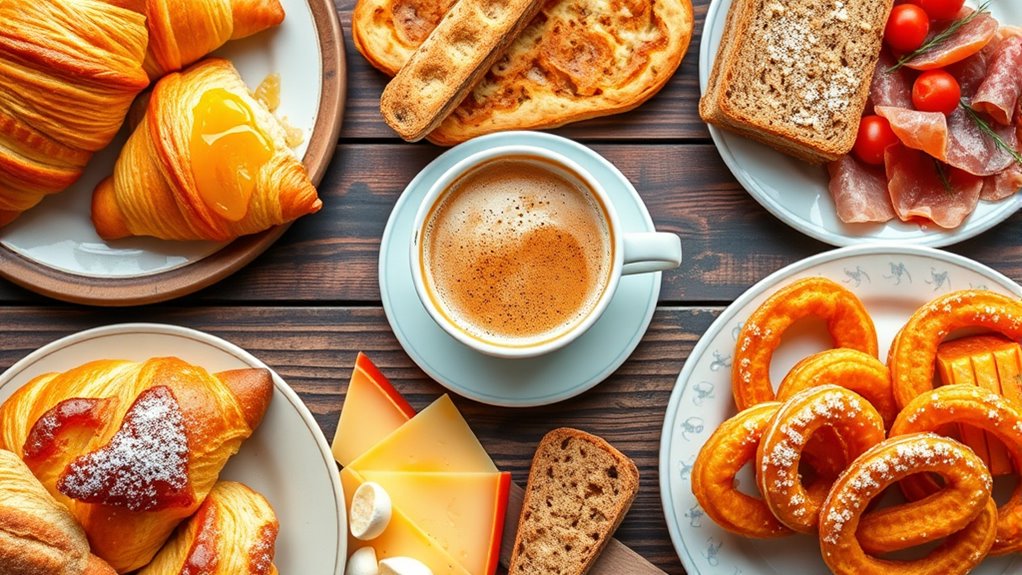
You’ll notice that regional bread preferences shape breakfast tables across Europe, from German rye and whole grain breads to French baguettes and Swedish rye. Local protein choices, like Hungarian cold cuts or Polish eggs and cheeses, reflect regional tastes and culinary traditions. Together, these variations highlight how local ingredients and customs influence European breakfast routines. Colorful and nutritious options, such as beetroot dishes, also contribute to the diversity of breakfast options across different regions.
Regional Bread Preferences
Have you ever noticed how European breakfast tables showcase a remarkable variety of breads that reflect local tastes and traditions? In many countries, bread isn’t just a side; it’s central to the meal. You’ll find different types depending on where you are:
- Germany offers hearty rye, whole grain, and small rolls called brötchen, often served with butter, jam, or cheese.
- France features baguettes, croissants, and pain au chocolat, usually fresh from local bakeries early in the morning.
- Scandinavia prefers rye bread, crispbread, and open-faced sandwich breads like Swedish white and whole wheat varieties.
These breads are crafted to suit regional flavors and eating styles, making each country’s breakfast uniquely local. Understanding regional bread varieties can enhance your appreciation for local culinary traditions.
Local Protein Choices
Across Europe, protein choices at breakfast vary considerably by region, reflecting local culinary traditions and available ingredients. In Germany, you’ll find an abundance of cheeses and cold cuts, often served with fresh bread. Swedes favor smoked salmon, cured meats, and cheese on open-faced sandwiches, emphasizing light, flavorful options. Poland’s breakfast features hearty cold cuts, hard-boiled eggs, and cheeses, often accompanied by pickles and fresh vegetables. Hungarians enjoy cold cuts, cheeses, and eggs, with lighter options like pogácsa or brioche on weekdays. In Croatia, protein choices depend on the region: continental areas lean toward ham and cheese, while Dalmatia prefers bread with jam or croissants. Spaniards typically opt for cured ham, eggs, or churros, with regional pintxos adding variety. Additionally, many European regions incorporate local delicacies like specialty sausages or regional cheeses to enhance breakfast variety. Recognizing these regional differences can help appreciate the diverse culinary traditions that shape European breakfasts.
Scandinavian open-faced sandwich bread
As an affiliate, we earn on qualifying purchases.
As an affiliate, we earn on qualifying purchases.
The Role of Cold Cuts and Proteins
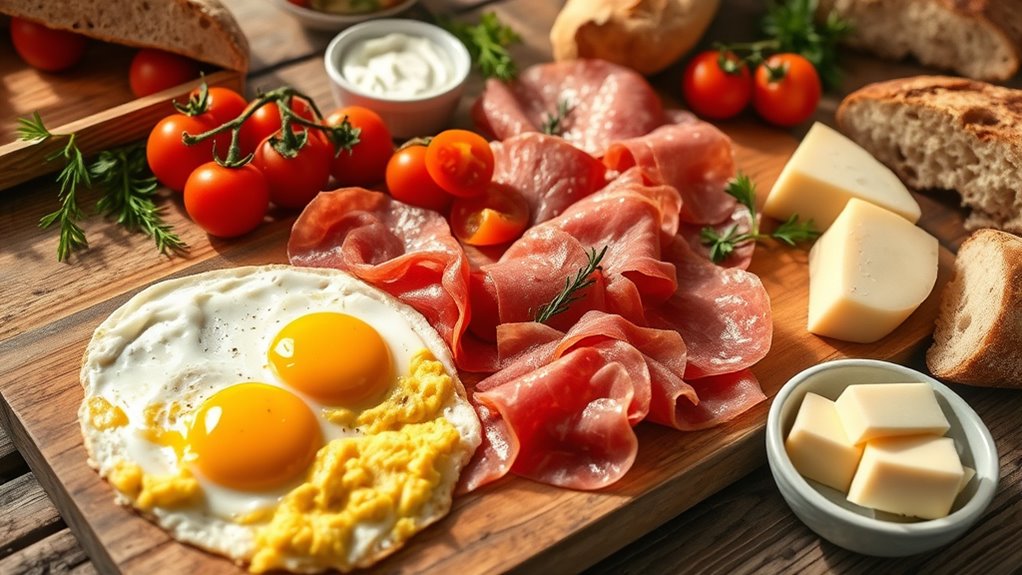
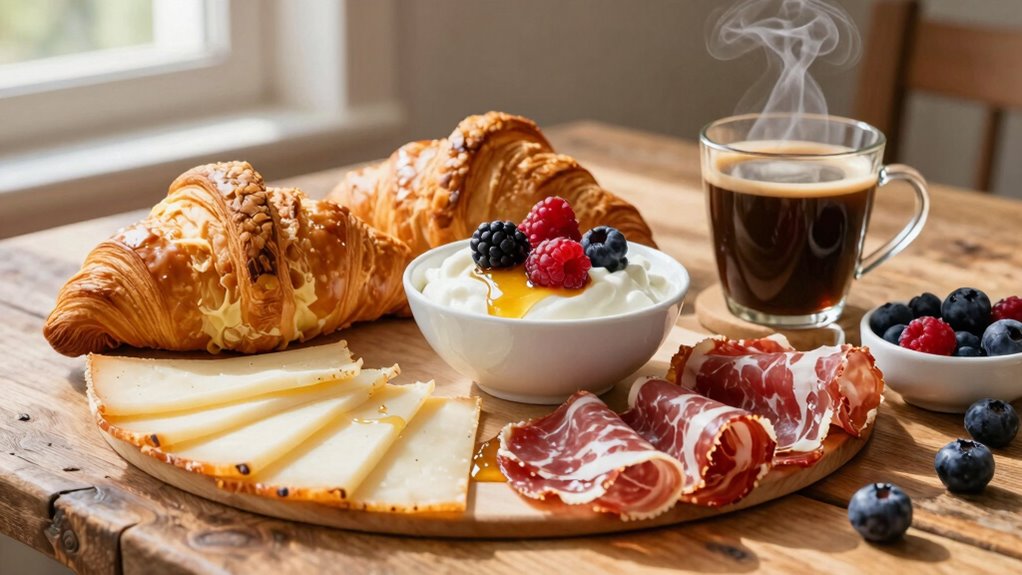
Cold cuts and cured meats play a central role in European breakfasts, serving as essential sources of protein and flavor. You’ll find them featured prominently in many countries’ morning meals, adding richness and variety. In Sweden, open-faced sandwiches often include smoked fish, cured meats, and fresh vegetables. Germany’s breakfast spreads showcase a selection of cold cuts and cheeses alongside bread. In Poland, traditional śniadanie features ham, salami, or other cold cuts layered on rye bread with condiments. These meats do more than provide protein; they add depth to the meal’s taste and texture. Additionally, the variety of meat selection available reflects regional preferences and local curing techniques, enriching the cultural tapestry of European morning meals. The curing process, which varies by region, influences the flavor and texture of these meats, making each one unique. The cultural significance of these meats extends beyond nutrition, representing local traditions and culinary identities. Furthermore, the techniques used in meat preservation are often passed down through generations, preserving culinary heritage. Interestingly, the regional variations in preparation methods contribute to the diversity of flavors across countries. Whether served plain, with bread, or as part of a larger platter, cold cuts anchor many European breakfast traditions, combining convenience with cultural significance and culinary heritage.
Beverage Preferences and Coffee Culture
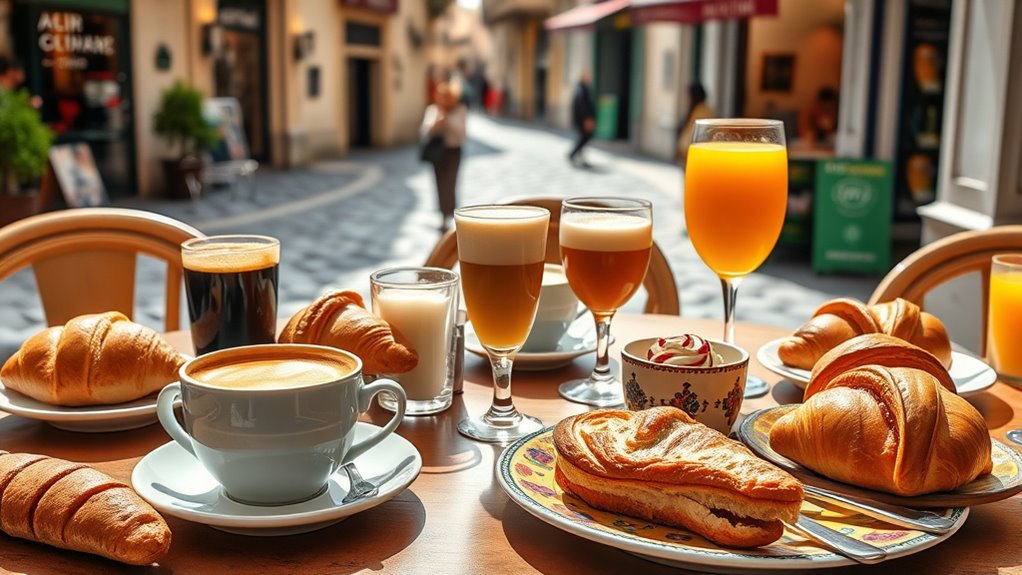
You’ll notice that coffee is a central part of European breakfasts, with espresso often serving as the standard. In many regions, drinks like fresh orange juice or tea complement the coffee, reflecting local tastes. These beverage choices highlight how each country’s culture shapes its preferred morning refreshment. Additionally, the influence of local tax policies can affect the availability and popularity of certain beverages, further showcasing regional differences.
Coffee as Cultural Staple
European cultures have long considered coffee an essential part of the morning routine, with many countries prioritizing it as a pivotal social and cultural beverage. You’ll find that coffee isn’t just a drink—it’s a daily ritual that shapes social interactions and reflects regional identities. In countries like Italy and France, espresso and café au lait are staples, often enjoyed quickly at local cafes.
- Espresso culture dominates southern Europe, emphasizing quick, intense shots
- French cafés serve coffee alongside pastries, fostering leisurely conversations
- Nordic countries prefer lighter roasts, often pairing coffee with social gatherings or work routines
This strong emphasis on coffee highlights its role as a cultural connector, a symbol of hospitality, and a daily necessity across European nations.
Regional Beverage Choices
Have you ever noticed how beverage choices at breakfast vary so distinctly across European regions? In some countries, coffee is the star, while others favor fresh juices or tea. For example, in Italy, espresso is essential, whereas in Spain, high-quality coffee pairs with freshly squeezed orange juice. Scandinavian nations often include coffee or tea with their hearty breakfasts. The table below highlights regional preferences:
| Region | Typical Beverages | Cultural Focus |
|---|---|---|
| Southern Europe | Espresso, orange juice | Balance of energy and flavor |
| Northern Europe | Coffee, tea | Warmth and comfort |
| Eastern Europe | Coffee, herbal infusions | Tradition and health |
| Western Europe | Coffee, milk-based drinks | Quality and simplicity |
These choices reflect local tastes, ingredients, and cultural priorities. Beverage preferences are deeply rooted in regional history and social customs, shaping how Europeans start their day. Additionally, regional beverage customs often influence other aspects of daily life, including social interactions and celebrations. For example, in many areas, morning coffee rituals serve as a social bonding opportunity that reinforces community ties. Interestingly, some regions also incorporate traditional breakfast rituals that reinforce cultural identity.
Emphasis on Fresh Juices
Fresh juices, especially orange juice, play a prominent role in many European breakfast traditions, complementing the robust coffee culture found across the continent. You’ll often find freshly squeezed juices served alongside your morning coffee, emphasizing natural flavors and health benefits. Europeans prioritize high-quality, fresh ingredients, making juices a staple for a revitalizing start.
- In countries like Spain, high-quality coffee pairs perfectly with freshly squeezed orange juice, highlighting the importance of natural flavors.
- Scandinavian nations serve juice as part of a balanced breakfast, often alongside dairy and whole grains.
- Coffee remains central, with espresso and café au lait options, but fresh juices add a lively, nutritious touch to the meal.
This emphasis on fresh juice underscores Europe’s focus on quality, freshness, and balanced nourishment.
Nutritional Values and Health Perspectives
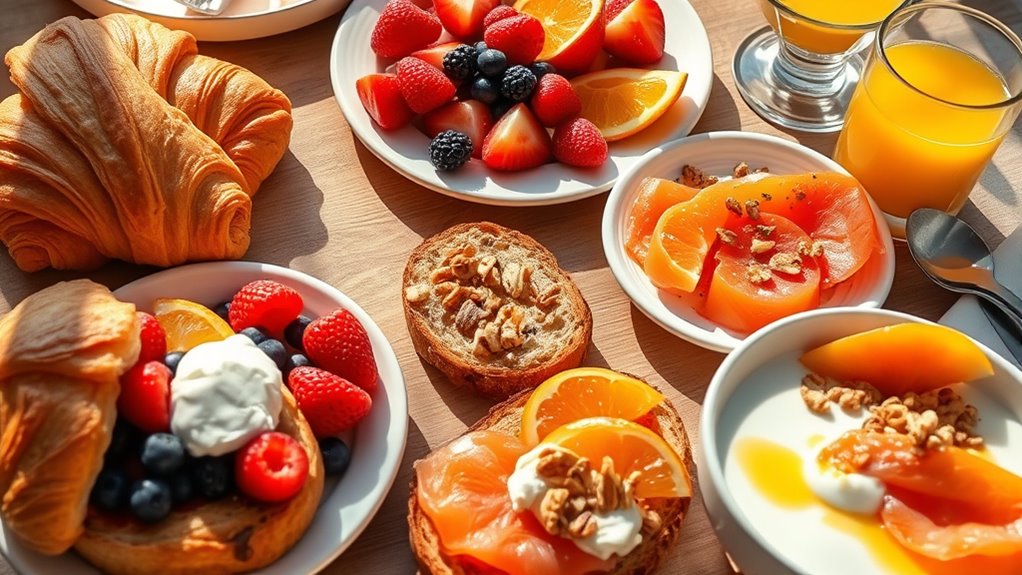
Many European breakfast traditions prioritize balanced nutrition, emphasizing ingredients that support health and well-being. You’ll notice that meals often combine complex carbs, lean proteins, and healthy fats, promoting sustained energy and fullness. For example, Nordic countries favor whole-grain breads, dairy, and fish, providing essential nutrients and omega-3s. Southern Europeans lean toward lighter, fresh options like fruits, vegetables, and quality olive oil, supporting heart health. Cold cuts and cheeses supply high-quality protein and calcium, while fresh breads and pastries offer quick energy. Coffee and juices deliver antioxidants and hydration, enhancing overall health. Rather than fried or heavily processed foods, European breakfasts focus on natural, wholesome ingredients that help maintain balanced blood sugar levels and support long-term wellness. Additionally, these traditional meals often incorporate wholesome ingredients that align with principles of balanced nutrition and health-focused eating.
Frequently Asked Questions
How Do European Breakfast Customs Differ During Holidays Versus Weekdays?
During holidays, you likely indulge in more elaborate European breakfasts, taking your time with pastries, cold cuts, and fresh fruit. On weekdays, you stick to lighter, quicker options like bread, cheese, or simple pastries. You may also enjoy specialty beverages or regional treats, making breakfast a festive event rather than just a morning routine. This shift helps you savor the special occasion and enjoy a more relaxed start to your day.
What Influence Do Local Ingredients Have on Regional European Breakfast Choices?
Think of local ingredients as the soul of regional European breakfasts. They shape what you’ll find on your plate, so if you’re in Spain, fresh tomatoes and olive oil adorn your bread, while in Scandinavia, hearty rye bread and smoked fish dominate. You naturally choose ingredients from nearby farms and markets, making each region’s breakfast unique—like a culinary fingerprint reflecting local flavors, climate, and traditions.
How Has European Breakfast Culture Evolved Over the Past Century?
Over the past century, European breakfast culture has shifted from heavy, traditional fare to lighter, more diverse options. You now see a focus on quality ingredients like fresh bread, regional cheeses, and healthy fruits. Coffee remains central, but many countries embrace healthier choices and local produce. Modern Europeans prioritize balance, convenience, and regional flavors, blending tradition with contemporary tastes and nutritional awareness.
Why Do Some Countries Prefer Bread Over Other Breakfast Staples?
You might find it fascinating that bread remains the top breakfast choice in many European countries, with some nations consuming up to 200 grams daily. This preference stems from bread’s cultural significance, versatility, and historical availability. It provides a nutritious base for toppings like cheese, cold cuts, or jam, making it a practical and satisfying staple. Its role in daily routines and regional traditions keeps bread central to European breakfasts.
How Do European Breakfast Habits Compare to Those in Other Continents?
You’ll notice European breakfast habits focus on quality, fresh ingredients, and regional flavors, unlike many other continents. In Asia, for example, rice, noodles, and soups dominate, while in North America, hearty, all-day breakfasts with eggs and bacon are common. Europe emphasizes light breads, pastries, and strong coffee, prioritizing a balanced start. This cultural approach reflects regional priorities, ingredients, and social views on breakfast as a essential, cherished meal.
Conclusion
So, next time you’re puzzled by Europe’s breakfast differences, remember it’s all about culture, tradition, and a dash of regional pride. While some start their day with pastries or cold cuts, others sip espresso like it’s a national secret. Ironically, whether you’re savoring bread or biting into cured meats, it’s the variety that truly makes European breakfasts so uniquely delightful—proof that even a simple meal can be a cultural adventure.
Columbus Day / Indigenous Peoples' Day Picks
long weekend sales
As an affiliate, we earn on qualifying purchases.