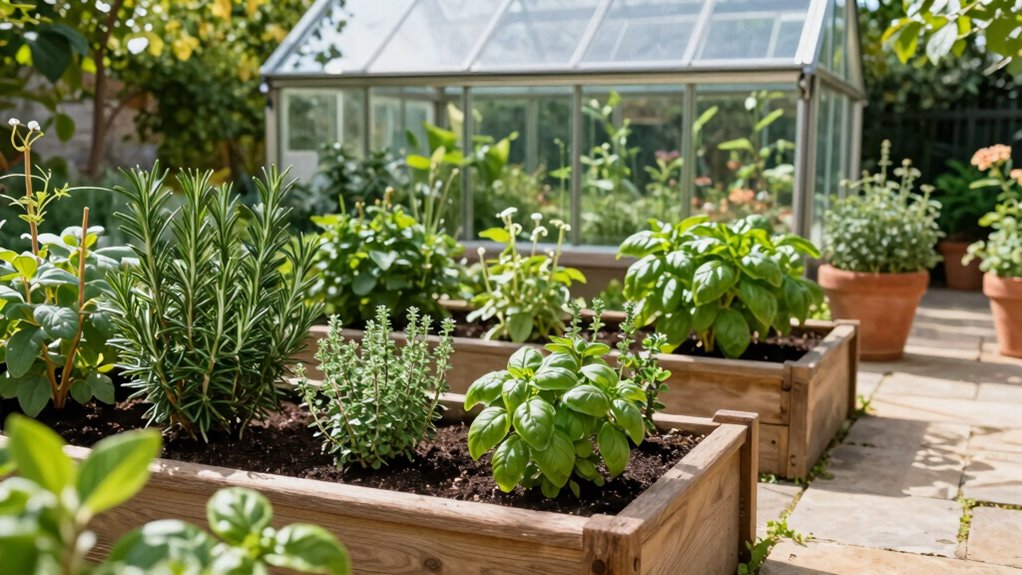

Using raised beds and greenhouses for your Mediterranean herb garden allows you to control the growing environment, ensuring warmer soil and extended seasons. They improve soil quality through composting and drainage, while also making pest management easier with natural methods. Greenhouses provide consistent humidity and temperature, protecting herbs from weather worries. By maintaining these practices, you create a healthy, sustainable garden. Keep exploring to discover more tips for thriving Mediterranean herbs at home.
Key Takeaways
- Raised beds improve drainage, control soil quality, and extend the growing season for Mediterranean herbs.
- Greenhouses provide a stable, warm environment ideal for Mediterranean herb cultivation.
- Enrich soil in raised beds with composted organic matter for healthy herb growth.
- Use pest management strategies like beneficial insects and organic deterrents to protect herbs.
- Regular maintenance, including composting and moisture control, ensures a sustainable, productive herb garden.
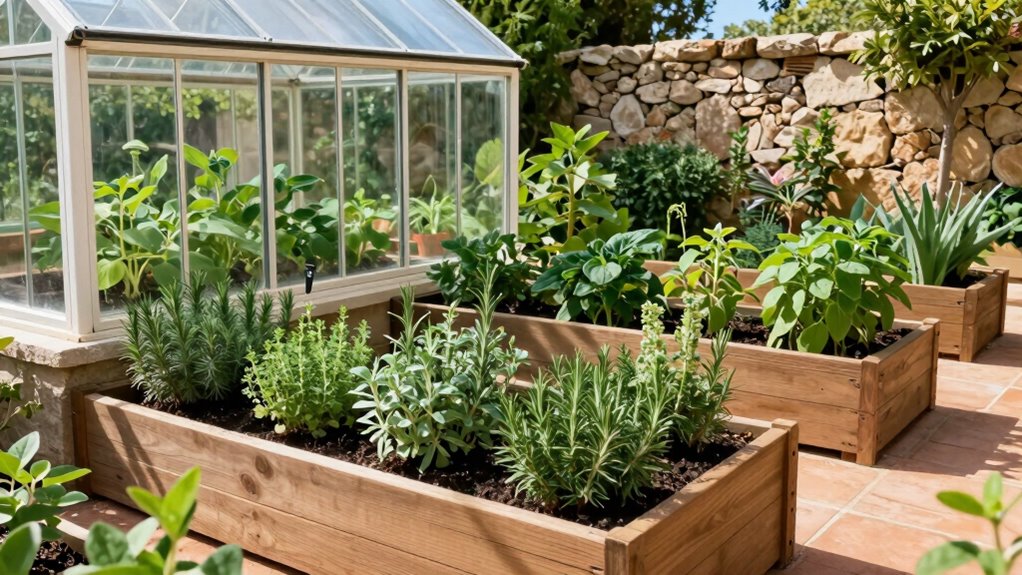
Creating a Mediterranean herb garden at home becomes much easier when you use raised beds and greenhouses. These structures not only give you better control over your growing environment but also simplify essential gardening practices, such as composting techniques and garden pest control. Raised beds provide excellent drainage and warmer soil, which are critical for Mediterranean herbs like thyme, rosemary, and oregano. When you fill these beds, consider enriching the soil with composted organic matter. Composting techniques play an important role here, as they help you create nutrient-rich soil naturally. By composting kitchen scraps and garden waste regularly, you recycle essential nutrients that keep your herbs healthy and vigorous. Plus, compost acts as a natural deterrent against pests, reducing the need for chemical interventions. Incorporating modern composting methods can further streamline this process and maximize nutrient cycling. These methods can include compost tumblers and vermicomposting, which accelerate decomposition and improve compost quality. Additionally, maintaining proper moisture levels during composting enhances microbial activity, leading to faster nutrient release. Implementing proper moisture control is crucial for effective composting and healthy plant growth.
Greenhouses extend your growing season and protect your herbs from unpredictable weather and pests. Inside the greenhouse, you can closely monitor pests and take proactive steps for garden pest control. Introducing beneficial insects or using organic deterrents becomes easier in a controlled environment, preventing infestations that could wipe out your herb crop. With the right setup, pests like aphids or whiteflies are less likely to spread unchecked, and you can address any issues early before they escalate. The greenhouse also allows you to maintain ideal humidity and temperature levels, which benefits your herbs’ growth and flavor development. Developing a pest management plan tailored to your greenhouse setting ensures minimal disruption to your herbs’ growth cycle.
Raised beds and greenhouses combined create a microclimate that promotes healthy growth, but they also demand attentive maintenance. Regularly turning your compost and adding fresh layers ensures your plants receive essential nutrients. This continuous composting process reduces waste and creates a sustainable cycle that supports your garden’s productivity. When managing pests, keep a close eye on your herbs, removing any affected leaves and employing natural remedies like neem oil or insecticidal soaps. These organic methods work well in a greenhouse setting, where chemical-free solutions are preferred for the health of your plants and family. Additionally, practicing integrated pest management helps maintain a balanced ecosystem within your garden, reducing reliance on external interventions. Keeping detailed records of pest occurrences and treatment outcomes can help refine your pest control strategies over time.

LEETOLLA Elevate 32" Raised Garden Bed with Wheels
- Mobile Garden on Wheels: All-terrain wheels and ergonomic handle
- High Steel Capacity: Supports up to 400 lbs with rust-resistant coating
- Comfortable Standing Height: 32-inch height for easy gardening
As an affiliate, we earn on qualifying purchases.
As an affiliate, we earn on qualifying purchases.
Frequently Asked Questions
What Are the Best Soil Types for Mediterranean Herbs?
You should choose well-draining soil with good soil drainage to prevent waterlogging, which Mediterranean herbs dislike. A slightly alkaline pH balance, around 6.5 to 8.0, is ideal for herbs like rosemary, thyme, and oregano. Use a mix of sandy or loamy soil, possibly enhanced with organic matter, to guarantee proper aeration and moisture control. This creates the perfect environment for healthy, thriving herbs.
How Often Should I Water My Raised Bed Herbs?
You should water your raised bed herbs when the moisture levels in the soil start to dry out, typically every 2-3 days during hot weather. Maintain a consistent watering schedule, ensuring the soil stays evenly moist but not waterlogged. Check the top inch of soil regularly; if it feels dry, it’s time to water. Adjust your watering frequency based on weather conditions and the specific needs of your herbs.
Can I Grow Mediterranean Herbs Indoors Year-Round?
A wise man once said, “Where there’s a will, there’s a way,” and with the right setup, you can grow Mediterranean herbs indoors year-round. You’ll need sufficient indoor light requirements, like south-facing windows or grow lights, and choose suitable herb container options that provide good drainage. Keep herbs in a warm, airy spot, and you’ll enjoy fresh flavors all year without outdoor space constraints.
What Pests Commonly Affect Mediterranean Herbs?
You’ll often face pests like aphids, spider mites, and whiteflies, which can harm your Mediterranean herbs. To keep them healthy, focus on herb pest identification early, so you catch problems quickly. Use organic pest control methods like neem oil or insecticidal soap, which are safe for your herbs and the environment. Regularly inspecting your plants helps prevent infestations and keeps your garden thriving year-round.
How Do I Maintain Temperature Control in a Greenhouse?
Think of your greenhouse as a cozy oasis, where climate regulation is your secret to success. You control temperature by installing effective ventilation systems that let fresh air flow, preventing overheating in summer and retaining warmth during cooler months. Use vents, fans, or shade cloths to fine-tune the environment, ensuring your Mediterranean herbs thrive in consistent, ideal conditions. Proper temperature control keeps your garden lush and fragrant year-round.
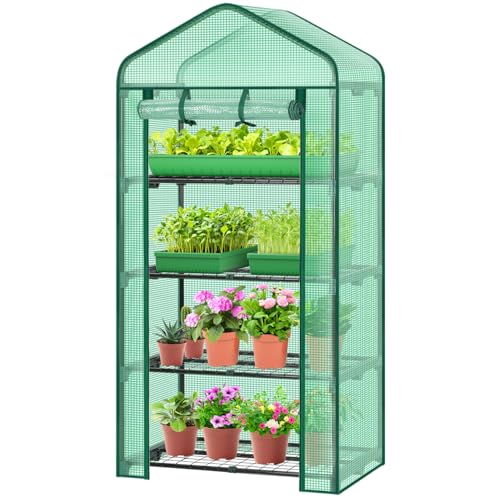
Ohuhu Mini Greenhouse for Indoor Outdoor, 27 x 19 x 62-Inch Small Plant Green House 4-Tier Rack Stand Portable Greenhouses with Durable PE Cover for Seedling, Ideal Gardening Gifts for Women Men
- Seedling Booster for Early Growth: Start 4-6 weeks earlier with thermal cover
- All-Weather UV-Resistant Protection: Resists wind, rain, snow, frost, and sun
- Durable Metal Frame and Shelves: Heavy-duty, rust-proof, supports 22 lbs per shelf
As an affiliate, we earn on qualifying purchases.
As an affiliate, we earn on qualifying purchases.
Conclusion
Imagine stepping into your lush, sun-drenched garden, where fragrant herbs thrive in perfectly crafted raised beds and a cozy greenhouse. As you nurture each plant, you realize this isn’t just a garden — it’s a sanctuary of flavor and serenity, waiting to reveal its secrets. With every passing day, your Mediterranean herbs grow stronger, hints of their aromatic magic whispering promises of culinary delights yet to come. The garden’s true potential is just beginning to unfold.

Roebic CA-1 Bacterial Compost Accelerator: 2.5 pounds, for faster composting
- Complete composting formula: Enhances decomposition for nutrient-rich compost
- Buffered for pH stability: Maintains optimal pH for beneficial bacteria
- Effective in all temperatures: Ensures year-round composting performance
As an affiliate, we earn on qualifying purchases.
As an affiliate, we earn on qualifying purchases.

Farming with Native Beneficial Insects: Ecological Pest Control Solutions
- Publisher: Storey Publishing
- Language: English
- Book Title: Farming with Native Beneficial Insects
As an affiliate, we earn on qualifying purchases.
As an affiliate, we earn on qualifying purchases.