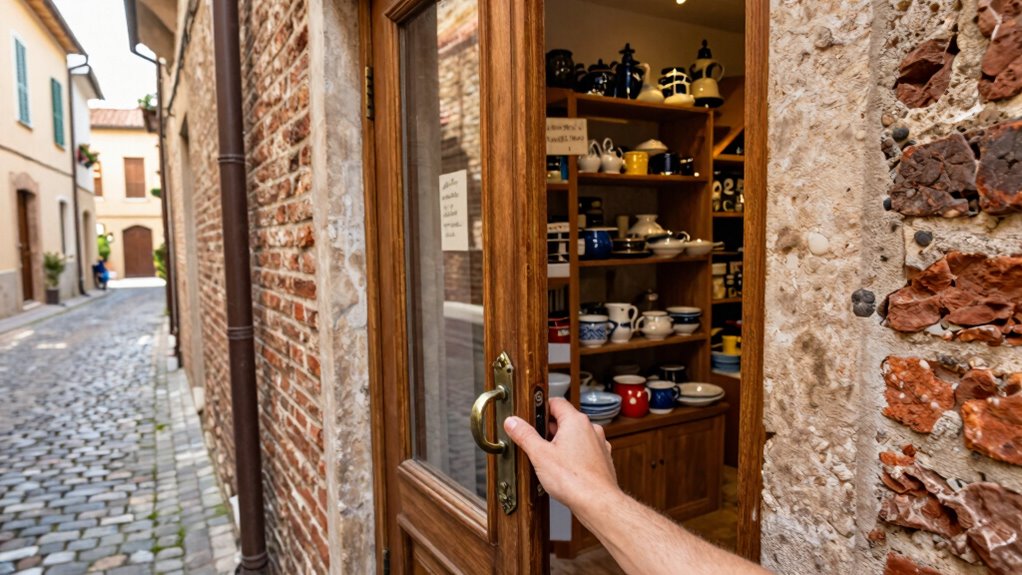

When entering small shops in Europe, approach with confidence, offering a warm smile and eye contact to show friendliness. Respect local customs by observing how shop owners interact—whether they expect a handshake, greeting, or removal of hats. Use simple phrases like “hello” and “thank you,” and gesture if needed. Staying polite and relaxed helps break the ice. Keep these tips in mind, and you’ll soon feel more comfortable while enjoying authentic shopping experiences.

Get travel and outdoor gear delivered free — and shop member deals
- Fast, free delivery on millions of items
- Access to Prime Big Deal Days deals on October 6–7
- Prime Video, Amazon Music and more included
Key Takeaways
- Make eye contact and smile to appear friendly and approachable.
- Greet with a simple local phrase or a polite “hello” before browsing.
- Observe local customs, like removing hats or using specific gestures, to show respect.
- Use gestures or pointing to communicate if language barriers exist.
- Maintain a relaxed and positive attitude to turn potential awkwardness into a pleasant experience.
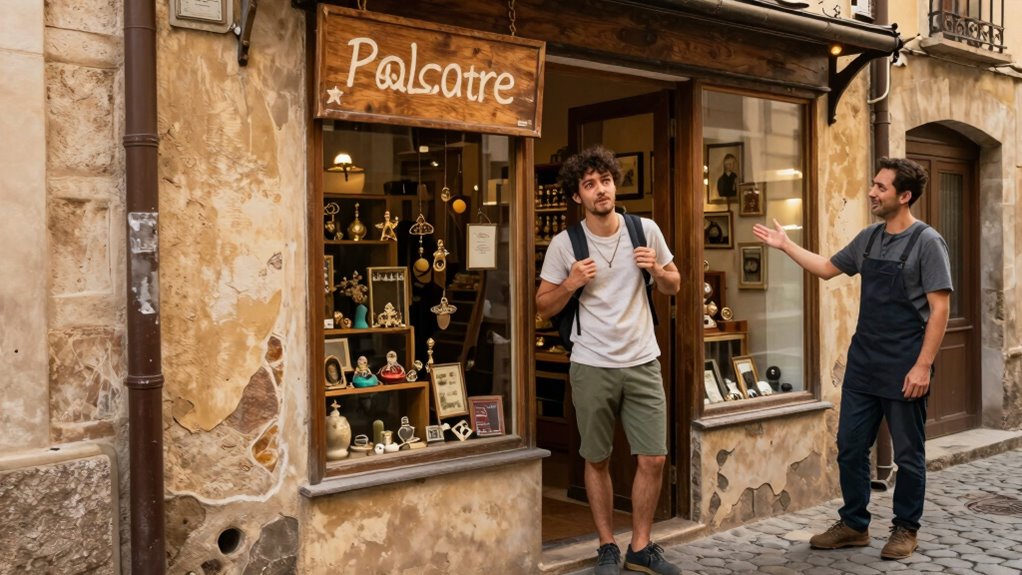
Stepping into a small shop in Europe can sometimes feel intimidating, especially if you’re unsure of local customs or language nuances. You might worry about how to behave, what to say, or whether you’ll be understood. The good news is, most shop owners appreciate genuine effort and a friendly attitude. Recognizing that local customs vary from place to place helps you adapt quickly. For example, in some countries, a simple nod or smile is enough to show you’re friendly, while in others, a handshake is customary. It’s helpful to observe what locals do and mirror their actions. When you’re aware of these customs, you’ll feel more confident entering shops and engaging with shopkeepers.
Language barriers can seem like a hurdle, but they don’t have to be. Most shop owners in tourist areas or larger cities speak some English, especially when they see a visitor trying to communicate. If you don’t speak the local language fluently, learn a few basic phrases like “hello,” “thank you,” and “goodbye.” A friendly smile and a polite tone go a long way in bridging communication gaps. If you’re unsure of pronunciation, pointing at items or using gestures can help you get your message across. Many shopkeepers appreciate the effort you put into speaking their language, which often prompts them to be more patient and helpful. Being aware of local language skills can help you better navigate these interactions. Additionally, understanding local communication customs can make your interactions smoother and more respectful. Being mindful of cultural etiquette, such as appropriate gestures or greetings, can further ease your experience.
When you approach the shop, make eye contact and smile. This signals that you’re friendly and approachable, easing any initial awkwardness. When you’re ready to ask questions or make a purchase, start with a greeting, and keep your tone polite and relaxed. If there’s a language barrier, don’t hesitate to use hand gestures or point to what you want. It’s perfectly normal to feel a little nervous, but remember, shop owners are usually welcoming and eager to assist. Being respectful of local customs, such as removing your hat or greeting with a customary phrase, shows your appreciation for their culture. Understanding local customs can significantly improve your interactions and help you feel more at ease.
In most cases, a warm smile and a bit of patience will turn any awkwardness into a positive experience. Keep your attitude friendly and open-minded, and you’ll find that entering small shops in Europe becomes much easier and more enjoyable. Embrace the opportunity to learn about local customs and connect with shopkeepers—these moments often turn into memorable cultural exchanges. With a little preparation and a positive mindset, you can navigate small shops comfortably, making your European journey richer and more authentic.
European small shop shopping guide
As an affiliate, we earn on qualifying purchases.
As an affiliate, we earn on qualifying purchases.
Frequently Asked Questions
Should I Greet Shop Owners in Their Native Language?
Yes, greeting shop owners in their native language shows respect for local cultural etiquette and warmly opens your interaction. Keep personal space in mind; a friendly smile and a simple “hello” or “bonjour” often suffice. Learning a few basic phrases demonstrates your effort and kindness, making both of you feel more comfortable. This small gesture can set a positive tone, easing any initial awkwardness when entering small shops in Europe.
Is It Polite to Browse Without Buying Immediately?
Browsing without buying isn’t rude; it’s part of good manners, even in tiny shops! You can politely look around, showing respect for the shop’s atmosphere and staff. Follow browsing etiquette by avoiding touching everything excessively and making quick decisions. Non-purchase manners like smiling and saying thank you leave a positive impression. Remember, a relaxed browsing style shows you’re genuinely interested, and most shop owners appreciate your respectful curiosity—like a breeze of kindness through a bustling street!
How Do I Handle Language Barriers?
When facing language barriers, you handle it with respect and patience. Use simple words, gestures, and a friendly smile to communicate, showing cultural etiquette. Carry a translation app or phrasebook to help with basic interactions. Remember, locals appreciate your effort to connect, so don’t hesitate to ask if they speak your language. Clear communication tips like speaking slowly and listening attentively can make the experience smoother and more enjoyable.
Are Tipping Customs Different in Small Shops?
Ever wondered if tipping customs differ in small shops? Generally, in Europe, tipping in small shops isn’t expected, unlike restaurants. Cultural differences influence shopping etiquette, so a small tip or rounding up your bill shows appreciation. Do you want to blend in smoothly? Paying attention to local customs helps you respect cultural differences and makes your experience more authentic, ensuring shopkeepers feel valued without feeling pressured to expect tips.
What Should I Do if I Can’T Find What I Want?
If you can’t find what you want, ask the shopkeeper politely about product availability or alternatives. Be patient and respectful, as small shop owners often have limited stock. They may suggest similar items or tell you when new stock arrives. Showing genuine interest and patience helps build rapport, making it easier to find what you’re after and ensuring a positive experience. Remember, a friendly attitude goes a long way.
language translation phrasebook for travelers
As an affiliate, we earn on qualifying purchases.
As an affiliate, we earn on qualifying purchases.
Conclusion
Remember, stepping into a small shop is about confidence, curiosity, and respect. Smile warmly, make eye contact, and greet with a friendly hello. Be genuine in your interest, patient in your approach, and polite in your questions. Embrace the unfamiliar, appreciate the charm, and celebrate the experience. When you combine these qualities, you create connection, build trust, and turn a simple visit into a memorable encounter. So, step in boldly, explore openly, and enjoy every moment.
As an affiliate, we earn on qualifying purchases.
compact travel phrasebook for Europe
As an affiliate, we earn on qualifying purchases.
As an affiliate, we earn on qualifying purchases.
Fall Picks
fall essentials
As an affiliate, we earn on qualifying purchases.