When strikes hit your European travel plans, stay calm and check official transit websites or social media alerts for updates. Consider walking, biking, or using taxis and rental cars if available. Reassess your itinerary, explore nearby attractions, or ask locals for tips. Keep your phone charged with handy apps and stay flexible. Moving patiently and adaptively helps you make the most of your trip despite disruptions—continue to discover more practical tips to stay ahead of travel troubles.
Get ready for Prime Big Deal Days — try Prime free
Exclusive member deals on October 6–7, plus fast free delivery. Cancel anytime.
As an affiliate, we earn on qualifying purchases.
Key Takeaways
- Stay calm, monitor official updates, and use real-time transit apps for reliable information.
- Explore walking, biking, or scooter options to navigate unaffected areas efficiently.
- Reassess plans, visit nearby attractions, and seek local advice to adapt your itinerary.
- Keep devices charged, stay informed about negotiations, and be prepared for quick changes.
- Practice patience, share info with travel companions, and focus on enjoying accessible local activities.
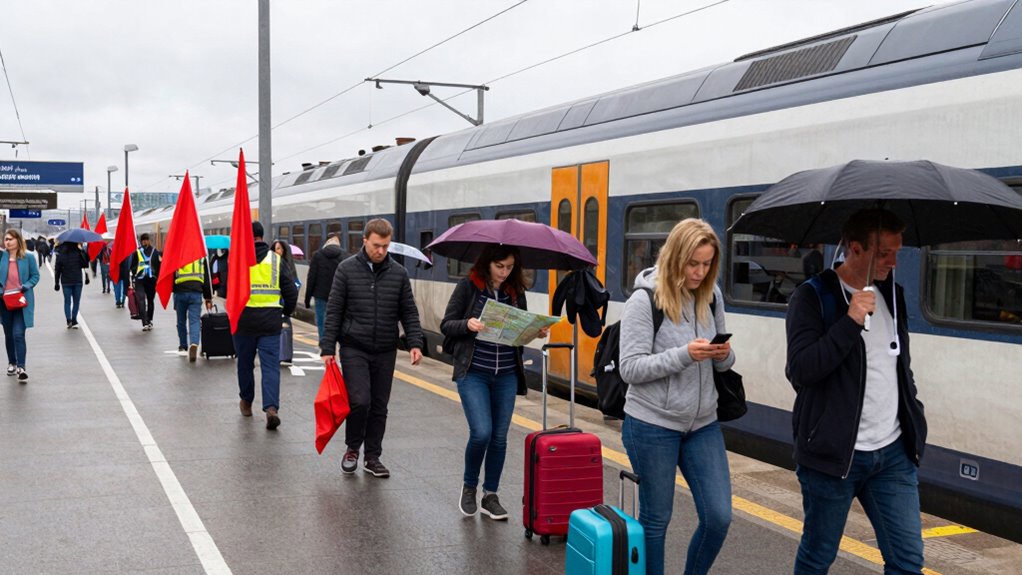
Have you ever found yourself stranded in Europe due to a sudden strike? It’s a frustrating situation, especially when you’re relying on public transportation to get around. Strikes often happen because of ongoing labor negotiations, where workers demand better conditions or pay. These disputes can slow or halt trains, buses, and metro services, leaving travelers feeling helpless. But even if your plans get disrupted, staying calm and knowing your options can make a big difference.
First, don’t panic. Strikes, though inconvenient, are usually temporary. Check official transportation websites or social media channels for updates. Many cities post real-time info about which services are running and which are suspended. This can help you quickly identify alternative routes or modes of transportation. It’s also wise to download local transit apps before your trip; they often have live alerts and can help you manage through the chaos.
Stay calm, check real-time updates, and download transit apps to navigate strikes smoothly.
When public transportation is down, consider other ways to get around. Walking is often the simplest solution, especially in compact European cities. Not only does it save you money, but it also gives you the chance to explore areas you might otherwise miss. If distances are longer, look into bike rentals or scooter shares, which are widely available in most urban centers. Car rentals or taxis can be useful, but they tend to be more expensive and less practical during large-scale strikes. Being aware of alternative transportation options can help you adapt quickly. Additionally, understanding urban mobility can provide insights into effective ways to navigate the city during such disruptions. Familiarizing yourself with local transportation policies can also be beneficial, as some cities implement special measures during strikes. Moreover, staying informed about labor negotiations can help you anticipate when the situation might improve. It’s also helpful to keep an eye on government announcements for any emergency measures or updates related to transportation.
You should also think about adjusting your plans. If key sites or events are inaccessible due to the strike, it might be best to switch your schedule. Use this time to enjoy nearby cafes, parks, or museums that aren’t affected. Talk to locals or hotel staff—they often have the latest tips on maneuvering the strike and can suggest reliable alternatives. Remember, strikes often end sooner than expected, so staying flexible can help you make the most of your trip despite the disruption.
Lastly, stay connected. Keep your phone charged and have a portable charger handy. Being able to access online updates, maps, and communication apps ensures you’re not left in the dark. If you’re traveling with others, coordinate your movements and share information frequently. Patience and adaptability are your best tools during these times. Strikes are inconvenient, but with a clear mind and some quick thinking, you can maneuver through the disruption without losing your cool or your sense of adventure.
portable phone charger for travel
As an affiliate, we earn on qualifying purchases.
As an affiliate, we earn on qualifying purchases.
Frequently Asked Questions
How Long Do Strike Disruptions Typically Last?
Strike disruptions usually last from a few days to several weeks, depending on the strike negotiation process and union demands. You should stay updated through news sources and official announcements, as negotiations can either resolve quickly or extend if demands are complex. By understanding the typical duration, you can better plan your travel or logistics, and avoid unnecessary stress during the disruption. Flexibility and patience are key during these times.
Are Strike Disruptions Covered by Travel Insurance?
Yes, strike disruptions are often covered by travel insurance, but it depends on your policy. Make sure to check the specifics, as some plans cover cancellations or delays caused by strikes. Be aware of legal considerations too, since some disruptions might not qualify if they’re considered unavoidable or part of ongoing labor disputes. Always read the fine print and contact your insurer for clarity before making claims.
Can I Legally Cross Picket Lines?
You can legally cross picket lines, but you should consider legal considerations and picket line safety first. For example, a traveler in France chose to cross a railway worker strike, but they faced potential legal issues and safety risks. Always research local laws, respect safety protocols, and approach picket lines cautiously. Your actions could have legal consequences or put you at risk, so prioritize safety and informed decision-making.
What Alternative Transportation Options Are Available?
You can explore alternative routes by using transportation apps to find buses, trams, or bike-sharing options that avoid strike areas. Consider car rentals or carpooling services for more flexibility. Check local transit websites for updates on strike disruptions and suggested detours. These options help you navigate around picket lines efficiently, ensuring you reach your destination without unnecessary delays or stress.
How Do Strikes Affect Travel Visas and Border Crossings?
Strikes can complicate travel visas and border crossings, as they often result from labor negotiations or picket line laws that temporarily halt services. You might face delays or additional scrutiny during border checks, impacting your travel plans. Stay informed about current labor disputes, carry proper documentation, and check with authorities. Anticipate possible disruptions, remain patient, and modify your plans to guarantee smooth border crossings despite strike-related challenges.
As an affiliate, we earn on qualifying purchases.
Conclusion
When strikes disrupt your plans, staying flexible and informed becomes your best strategy. Keep an eye on official updates, explore alternative routes, and consider adjusting your schedule. Remember, these disruptions are temporary, and patience often pays off. So, why let a strike derail your entire trip? With a calm mindset and proactive approach, you can navigate the chaos smoothly and still enjoy your time in Europe. After all, isn’t resilience the true key to overcoming unforeseen hurdles?
As an affiliate, we earn on qualifying purchases.
As an affiliate, we earn on qualifying purchases.
NFL season / tailgating Picks
team gear
As an affiliate, we earn on qualifying purchases.