
In Europe, you can’t light up in most indoor public places, workplaces, and public transport to protect health. Outdoor restrictions also apply near playgrounds, cafes, and transport stops, with some countries banning smoking entirely in certain outdoor areas. Regulations now cover e-cigarettes and heated tobacco, but enforcement varies across nations. Industry influence and legal gaps slow progress. If you want to see where restrictions are strongest and what’s changing, there’s more to explore.
Listen free for 30 days with Audible
Thousands of audiobooks and originals — cancel anytime.
As an affiliate, we earn on qualifying purchases.
Key Takeaways
- Smoking is prohibited in enclosed public places, workplaces, and public transport across most European countries.
- Outdoor areas like playgrounds, parks, transport stops, and near restaurants or healthcare facilities also often ban smoking.
- Many nations regulate or ban e-cigarettes, heated tobacco, and nicotine pouches to protect public health and youth.
- Enforcement varies, with some countries establishing strict controls and public awareness campaigns, but gaps and delays exist.
- EU-wide legislation is lacking, leading to inconsistent rules and loopholes that industry influence can exploit.
As an affiliate, we earn on qualifying purchases.
Expanded Indoor Smoke-Free Zones Across Europe

Across Europe, efforts to expand indoor smoke-free zones are gaining momentum as part of broader public health initiatives. You’ll find that most member states now prohibit smoking in enclosed public places, workplaces, and public transport, aiming to protect everyone from second-hand smoke. These bans target reducing respiratory and cardiovascular issues linked to passive smoking, which causes tens of thousands of deaths annually. Countries support the EU’s Beating Cancer Plan, targeting a tobacco use rate below 5% by 2040. Enforcement varies, but many nations are strengthening measures, sharing best practices, and establishing focal points to guarantee compliance. These policies reflect a clear shift toward healthier environments, making indoor spaces safer for both workers and the public. Stronger regulatory enforcement is essential to ensure these smoke-free policies are effectively implemented and adhered to. Additionally, increased awareness campaigns are helping to change public attitudes and promote compliance with smoke-free laws. The momentum continues to grow as Europe prioritizes public health and tobacco reduction, with some countries also exploring innovative enforcement technologies to improve compliance. Moreover, public education campaigns play a vital role in fostering a culture of smoke-free environments across the continent. Implementing consistent policy enforcement across nations is crucial for establishing a truly smoke-free Europe.
As an affiliate, we earn on qualifying purchases.
Outdoor Smoking Restrictions in Public Spaces
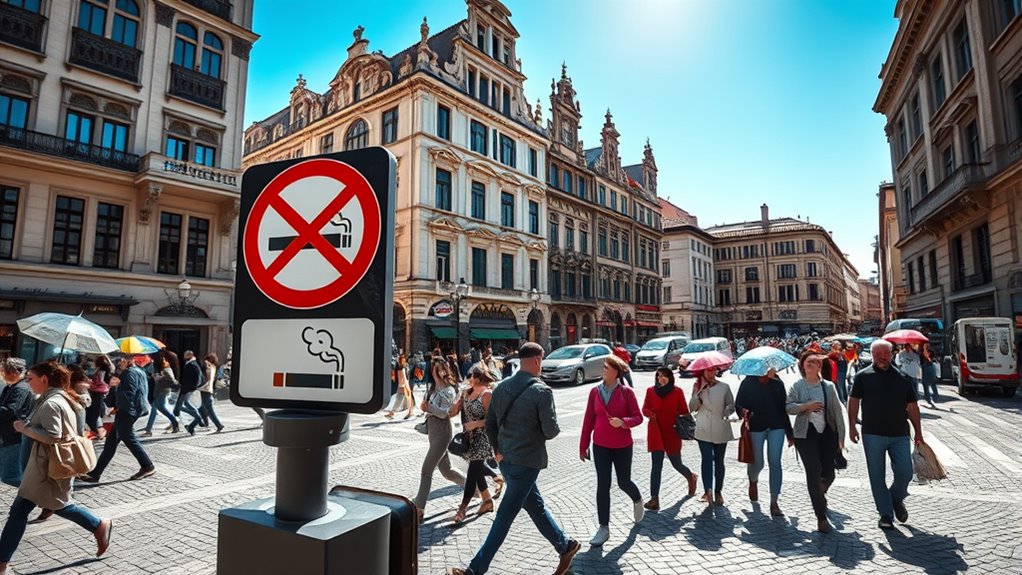
Outdoor smoking restrictions in public spaces are increasing across Europe to protect you from second-hand smoke and related health risks. Many countries ban smoking in places like playgrounds, amusement parks, swimming pools, and near restaurants, cafes, and public transport stops. These laws also cover outdoor areas at healthcare facilities, schools, and workplaces. The goal is to reduce exposure to second-hand smoke, which can cause respiratory and cardiovascular problems. The bans apply to tobacco products and emerging items like heated tobacco and e-cigarettes. By limiting where you can smoke outdoors, authorities aim to lower health risks for everyone, especially vulnerable populations. These restrictions support broader efforts to create healthier environments and reduce tobacco-related health issues across the continent. Additionally, efforts to enforce and expand these laws are driven by the recognition of public health benefits associated with reduced smoking areas. Furthermore, these regulations contribute to air quality improvements that benefit both smokers and non-smokers alike, aligning with environmental health initiatives intended to promote cleaner air. Moreover, public awareness campaigns are increasingly emphasizing the importance of second-hand smoke reduction to further support these measures.
As an affiliate, we earn on qualifying purchases.
Bans on Emerging Tobacco and Nicotine Products
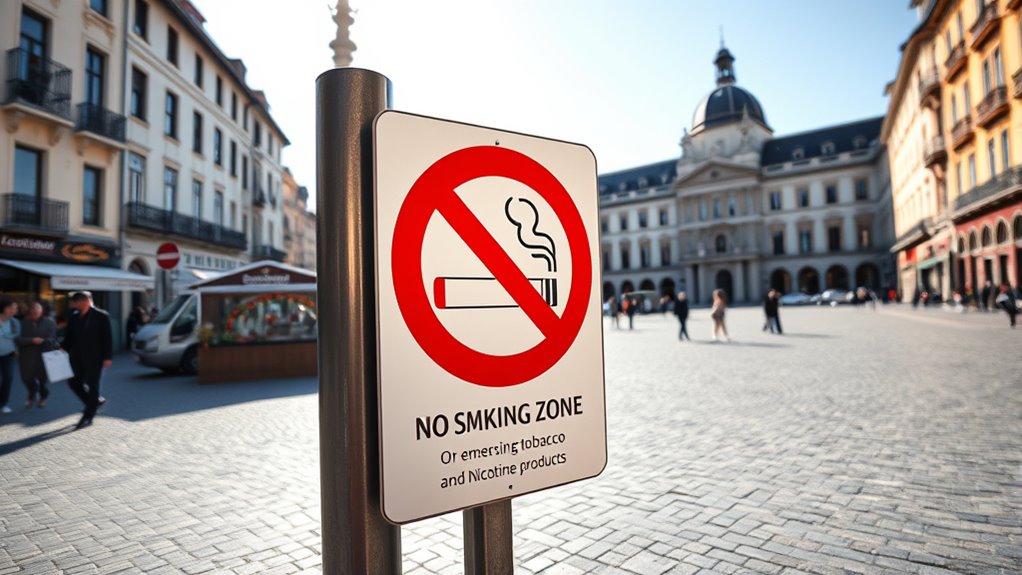
European countries are increasingly banning or strictly regulating emerging tobacco and nicotine products like heated tobacco, e-cigarettes, and nicotine pouches to protect public health. Many nations are taking action against flavored and disposable vaping products, which appeal to youth and contribute to pollution. For instance, Belgium plans a nationwide ban on disposable e-cigarettes starting in January 2025, while the EU considers a ban on filter cigarettes, which make up over 90% of the market. Countries like France aim to restrict oral nicotine products, and others like Spain regulate nicotine pouches more tightly. These measures aim to reduce youth initiation, limit environmental damage, and curb second-hand exposure. By controlling these emerging products, authorities seek to prevent new nicotine addiction pathways and safeguard public health. Regulatory approaches are increasingly being adopted across Europe to address these challenges comprehensively, including industry trends that influence product development and marketing strategies. Additionally, some countries are incorporating cultural considerations to ensure that regulations respect traditional practices and community values, while also leveraging technological innovations to enforce compliance more effectively.
As an affiliate, we earn on qualifying purchases.
Country-Specific Regulations and Industry Influence

Countries in Europe have adopted a patchwork of regulations regarding tobacco and nicotine products, often influenced by domestic industries and political pressures. You might find that France plans a 2025 ban on oral nicotine products, but some countries like Greece, Hungary, and Italy oppose these restrictions to protect industry interests. Germany, with 95% filter cigarettes, is considering banning filters, yet industry ties complicate enforcement. Spain’s strict nicotine pouch rules face criticism, while Belgium justifies disposable vape bans under EU directives for health and environmental reasons. Industry lobbying remains strong, with millions spent and numerous meetings to influence policies. Enforcement varies across nations, making the regulatory landscape inconsistent. These influences often slow progress toward Europe’s goal of reducing tobacco use to under 5% by 2040. Additionally, the presence of tobacco industry lobbying in policymaking processes further hampers the implementation of effective regulations. Moreover, the regulatory inconsistencies across countries often lead to loopholes that undermine public health initiatives. Recognizing the importance of comprehensive regulation can help create more uniform policies across Europe that better protect public health. The complex interplay between industry interests and policymaking highlights the need for stronger public health advocacy to ensure effective and consistent tobacco control measures. Efforts to strengthen regulatory frameworks could help address these disparities and promote more cohesive policies.
Public Health Goals and Ongoing Policy Challenges

Have you ever wondered why achieving Europe’s ambitious public health goals remains a challenge? Despite strong policies, enforcement varies, and industry influence persists. Governments aim for less than 5% tobacco use by 2040, but obstacles block progress. Lobbying by the tobacco industry, with €14 million spent and 257 meetings since 2023, hampers reforms. Public support is high, yet inconsistent enforcement and emerging products like heated tobacco threaten gains. You can see this in the table below, illustrating the emotional toll:
| Challenge | Impact | Response Needed |
|---|---|---|
| Industry lobbying | Delays in regulation | Strengthen WHO FCTC protections |
| Enforcement inconsistency | Continued exposure to second-hand smoke | Uniform policies across states |
| Emerging products | Youth appeal, pollution | Ban flavored disposables, e-cigarettes |
| Public awareness | Misinformation, complacency | Education campaigns |
| Policy gaps | Loopholes, slow progress | Push for all-encompassing EU-wide laws |
Additionally, comprehensive regulations are essential to closing loopholes and ensuring consistent implementation across member states. Addressing industry influence is crucial for creating a level playing field and protecting public health efforts.
Frequently Asked Questions
How Do EU Countries Enforce Outdoor Smoking Bans Consistently?
You can guarantee consistent enforcement of outdoor smoking bans by staying aware of local regulations, reporting violations to authorities, and supporting public awareness campaigns. Encourage strict signage and visible enforcement in places like parks, beaches, and outside public transport stops. Collaborate with local authorities to promote compliance, and hold businesses accountable for violations. Your active participation helps create a smoke-free environment, reducing health risks and protecting others from second-hand smoke.
Are Heated Tobacco Products Included in Current Smoking Restrictions?
Heated tobacco products are increasingly included in current smoking restrictions, much like the walls of the Trojan Horse guarding a city. You’ll find bans extending to these items in many places, especially in outdoor areas near healthcare, education, and public transport. Countries are tightening regulations on these emerging products, addressing their health and environmental impacts, and aligning with broader efforts to reduce tobacco use and protect public health across Europe.
What Legal Challenges Do Proposed Tobacco Bans Face Within Member States?
You’ll find that proposed tobacco bans face significant legal challenges within member states, often from industry groups and governments with economic or cultural ties to tobacco. They argue bans infringe on personal freedoms or challenge existing laws. These groups lobby heavily, file lawsuits, and seek exemptions, making implementation complex. Public opinion varies, and legal battles can delay or weaken these bans, requiring strong political will and harmonized regulations to succeed.
How Does Industry Lobbying Impact the Implementation of Smoke-Free Policies?
You’ll find that industry lobbying considerably impacts smoke-free policies by delaying or weakening regulations. When tobacco companies spend millions on lobbying, they influence lawmakers and stall strict bans, making enforcement inconsistent. This resistance can slow down progress toward all-encompassing smoke-free environments, putting public health at risk. Recognizing this, you can support transparency and advocate for policies that protect health from industry interference.
Will E-Cigarettes and Nicotine Pouches Be Banned Across All EU Countries?
E-cigarettes and nicotine pouches face a turbulent path ahead, like ships steering through stormy seas. While the EU is considering potential bans, not all countries will implement them uniformly. Some nations oppose strict restrictions due to industry influence or cultural ties. You should stay updated, as legislation varies, and some countries may delay or oppose bans, leaving a patchwork of rules across Europe.
Conclusion
As you navigate Europe’s evolving smoking rules, think of each regulation as a shield guarding the continent’s health. These laws are like a rising tide, pushing back against the smoke and clearing the air for future generations. By respecting these boundaries, you help turn the tide, transforming smoky shadows into a gust of fresh air. Together, you’re part of a larger movement—crafting a healthier horizon where the air is cleaner and life more vibrant.
NFL season / tailgating Picks
team gear
As an affiliate, we earn on qualifying purchases.